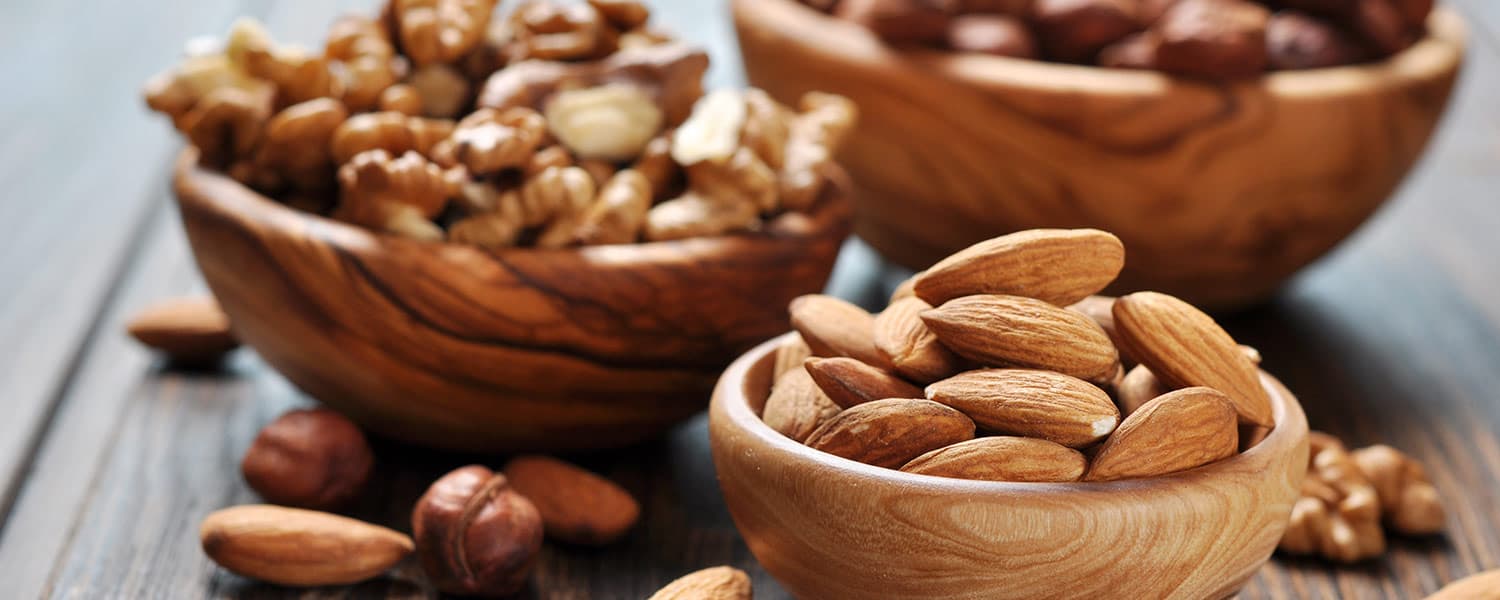
Nuts: Trendy or Timeless?
Nuts are one of the latest food trends in the US and are popping up not only as nut butters/pastes but now in the form of oils, flours, milk, and in a wide array of snack foods. Despite their rising popularity, not everyone is jumping on the nut trend train. Many weight conscious individuals are still limiting or avoiding nuts because of their high calorie content. While nuts are loaded with calories and fat, these monounsaturated and polyunsaturated fats (including Omega-3) help to lower bad cholesterol and have been associated with a lower risk of heart disease. These heart protecting fats in nuts are also accompanied by vitamins, minerals, fiber, and phytochemicals such as antioxidants.
It has been well established that nuts are a heart healthy food, but the nutrition benefits of nuts may extend beyond heart health. Although limited, new research is indicating potential positive properties including:
- Keeping blood sugars from spiking after meals (1).
- Antioxidant, anti-inflammatory, antiviral, and cholesterol lowering properties among others due to the phytochemicals (2).
- Improved memory, cognition and inflammation in rats (walnuts) (3).
- Potentially lower body weight when consumed in moderate amounts (1,4).
How Much Is Enough?
The general recommendation for nuts is 1-1.5 ounces per day for heart health. This however needs to fit within your calorie limit to prevent weight gain. The USDA recommends 1 ounce of nuts as a serving size which equals:
- Pistachios: 47
- Almonds: 24
- Peanuts: 28
- Hazelnuts: 21
- Pecans: 20 (halves)
- Cashews: 18
- Walnuts: 14 (halves)
- Macadamias: 10-12
- Brazil nuts: 6-8
Although chocolate covered, salted, or candied nuts should be considered a treat for moderation, plain, raw, or lightly salted nuts daily can have a place in a healthy diet and provide many nutritional benefits. With the mounting evidence on the healthy properties of nuts, this trend is likely one to stay.
Megan Ostler MS, RD
iFit Dietitian
1. Tan SY, Mattes RD. Appetitive, dietary and health effects of almonds consumed with meals or as snacks: a randomized controlled trial. Eur J Clin Nutr. 2013 Nov;67(11):1205-14. doi: 10.1038/ejcn.2013.184. Epub 2013 Oct 2.
2. Bolling BW, Oliver Chen CY, McKay DL, Blumberg JB. Tree nut phytochemicals: composition, antioxidant capacity, bioactivity, impact factors. A systematic review of almonds, Brazils, cashews, hazelnuts, macadamias, pecans, pine nuts, pistachios and walnuts. Nutrition Research Reviews (2011), 24, 244–275. doi:10.1017/S095442241100014X.
3. Poulose SM, Bielinski DF, Shukitt-Hale B. Walnut diet reduces accumulation of polyubiquitinated proteins and inflammation in the brain of aged rats. J Nutr Biochem. 2013 May;24(5):912-9. doi: 10.1016/j.jnutbio.2012.06.009. Epub 2012 Aug 20.
4. Jackson CL, Hu FB. Long-term associations of nut consumption with body weight and obesity.Am J Clin Nutr.2014 Jul;100 Suppl 1:408S-11S. doi: 10.3945/ajcn.113.071332. Epub 2014 Jun 4.
You might also like

Series Feature: Mood Food: Nutrition for Your Mind
Head to the kitchen for the delicious Mood Food: Nutrition for Your Mind Series with iFIT Guide Dr. Eva Selhub! About iFIT Guide Dr. Eva Selhub Board Certified in Internal Medicine, iFIT Guide Dr. Eva has extensive knowledge of the body and how it works. She combines this knowledge with alternative forms of medicine to help others transform their health and well-being. Dr. Eva encourages others to strive for physical, mental, and spiritual health through redefining their approach to health and fitness. Her goal is to translate complex scientific and medical information into practical and usable knowledge that everyone can access to improve their lives. About the workouts In this 12-part food adventure, Dr. Eva will take a deep dive into all aspects of food, nutrition, and health as they relate to your body and mind. You’ll learn how to eat mindfully to help your brain, your microbiome, your mood, and so much more as Dr. Eva takes you to the iFIT Kitchen. At the end of every video, she’ll challenge you with short exercises that you can do daily or weekly to start implementing these healthy practices into your daily life. Take control of your health and learn more about what your body and mind need to fuel itself! About iFIT Mind™ iFIT Mind offers unique, groundbreaking content that expands the definition of what it means to work out. You’ll learn from experts in both physical and mental training to help you become the best version of yourself through mindfulness, meditation, and movement. You can support your nutrition journey with our printable recipe book, created by Dr. Eva. In it, you’ll find recipes to help you incorporate vegetables and protein into your diet, from breakfast to dinner. Ready to get started? Join this series now! Disclaimer: This blog post is not intended to replace the advice of a medical professional. The above information should not be used to diagnose, treat, or prevent any disease or medical condition. Please consult your doctor before making any changes to your diet, sleep methods, daily activity, or fitness routine. iFIT assumes no responsibility for any personal injury or damage sustained by any recommendations, opinions, or advice given in this article. Always follow the safety precautions included in the owner’s manual of your fitness equipment.
May 12, 2021

Exercise While Taking GLP-1: A Muscle-First Plan
Navigating a calorie deficit on GLP-1 medications often brings unexpected side effects like lower energy and fatigue. Pushing through exhaustion isn't the answer—moving smarter is. This muscle-first guide dives deep into the essential lifestyle pillars that support your training consistency. Learn how precise hydration habits defend against fatigue, and discover the striking science of how sleep duration directly impacts your body composition during weight loss. Complete with a flexible, one-week sample schedule, this guide shows you how to adjust your training intensity on tired days so you can protect your progress without overexertion.
May 26, 2026
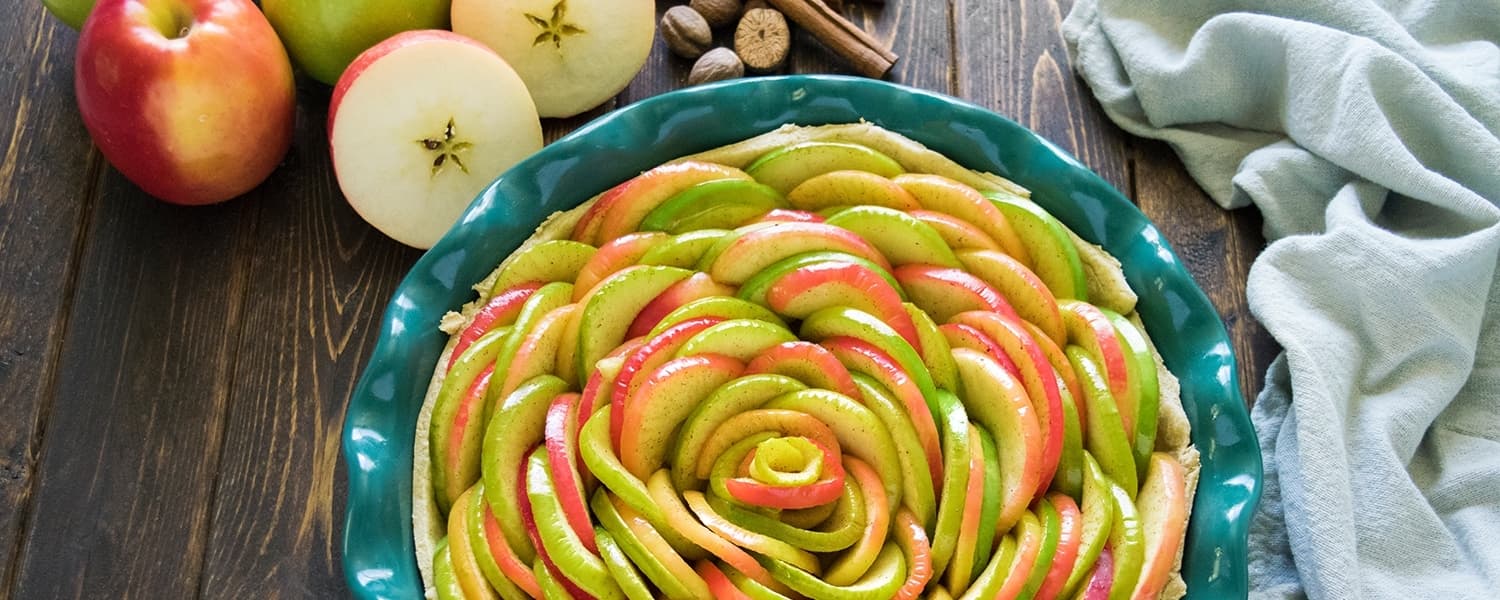
Apple Rose Pie
Ingredients For the pie crust ½ cup all purpose flour ¾ cup whole wheat flour 1 tablespoons sugar ¼ teaspoon salt 2 tablespoons cold unsalted butter, cut into small pieces 2 Tablespoons nonfat Greek yogurt 1 ½ tablespoons vegetable oil 2 tablespoons ice water For the filling 3 Pink lady apples 3 Granny Smith apples 1 tablespoon lemon juice ¼ cup brown sugar ¼ cup granulated sugar 1 teaspoon cinnamon ¼ teaspoon nutmeg Directions Combine flour, sugar, and salt in a medium bowl. Cut in butter with a pastry blender until crumbly. Mix in the Greek yogurt and vegetable oil. Add water, 1 tablespoon at a time, and combine with a fork until the mixture can form a ball. Lightly flour some plastic wrap, then place the dough on top. Flatten out dough. Cover with plastic wrap, then place in the fridge for 20 minutes. While dough is chilling, preheat oven to 425°F. Remove dough from fridge. Roll out on a floured surface to ⅛ thickness. Place dough in a 9-inch pie pan, then trim the edges. While oven is preheating cut the apples into thin semi-circle shapes leaving the skin on. Toss the apples in a large pot with the lemon juice, brown sugar, granulated sugar, cinnamon and nutmeg. Heat on medium high heat just until the apples are soft enough to bend without breaking about ten minutes. And remember to save the juice. Carefully arrange the apple slices around the apple pie crust starting with the outside and making your way to the center of the pie. Once you get to the center of the pie take small pieces and bend them around each other to create the center of the rose. Try to make the apples as compact as possible and go back and fill in any spots as necessary. You should be able to get all six apples in it. Drizzle the leftover juice over the apples and bake for 30-45 minutes. Cut into 8 equal slices and enjoy! NUTRITIONAL INFO PER SERVING Calories 240 (50 from fat) Total fat 6g Saturated fat 2g Cholesterol 10mg Sodium 75mg Carbohydrate 45g (5g dietary fiber, 26g sugar) Protein 3g WARNING: This post is not intended to replace the advice of a medical professional. The above information should not be used to diagnose, treat, or prevent any disease or medical condition. Please consult your doctor before making any changes to your diet, sleep methods, daily activity, or fitness routine. iFit assumes no responsibility for any personal injury or damage sustained by any recommendations, opinions, or advice given in this article.
May 13, 2017