Our Experience: Paleo Diet
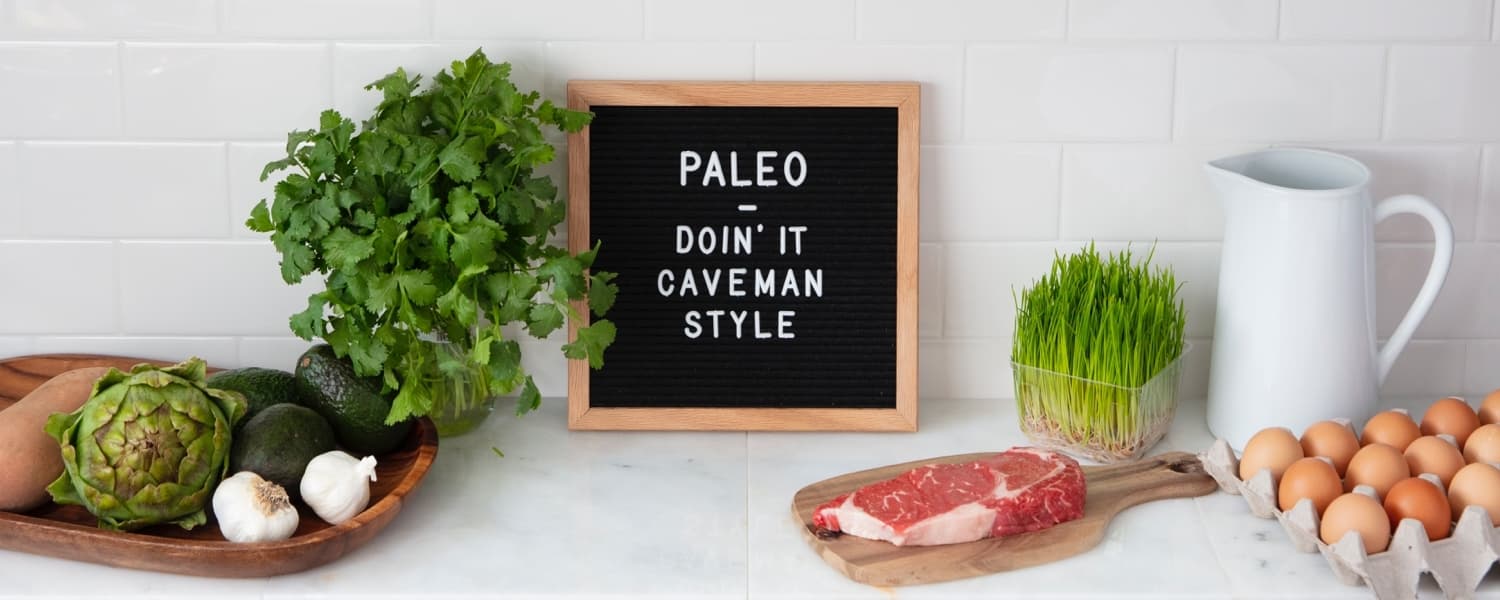
Unless you’ve been living in the Stone Age, I’m sure you’ve heard of the Paleo diet. See what I did there? The whole idea behind this diet is that you eat like our ancestors from the Stone Age, who were hunter-gatherers. The diet consists of meat, fish, eggs, fruits, vegetables, nuts, seeds, herbs, and some oils (avocado, walnut, olive, and coconut), while avoiding processed foods, vegetable oils, sugar, grains, legumes, corn, white potatoes, and dairy. There is some debate about what exactly our Paleolithic ancestors actually ate, and many critics point out that plants, animals, and humans have evolved since then. Not to mention, our ancestors didn’t get their oranges from Florida, avocados from Mexico, and pineapples from Hawaii. They ate what was locally available to them.
There are also disagreements about salt, coconut sugar, vinegars, and many Paleo-labeled foods containing ingredients that are considered un-Paleo by many followers. I even found a Paleo flour that had quinoa and teff flours, which both are mostly agreed upon as un-Paleo. This diet is also considered by many to be unsustainable and unrealistic for eight billion people to follow, based on our planet's resources. So why the following?
There have been studies that demonstrate an improvement in health factors for those following the diet, such as improved insulin sensitivity and decreased blood pressure, triglycerides, weight, and waist circumference. However, these studies have been with small test groups, not blinded, and for short periods of time. Also, most people compare the Paleo diet to the typical Western diet and many other diets have shown health improvements compared to the western diet. So is the Paleo diet actually better? Or is it just the lack of the Western diet? I believe it’s the latter. While I do think eating more fruit, vegetables, seeds, and nuts, and limiting processed foods and added sugars is a great idea, you don’t have to follow a Paleo diet to improve your health.
Since this diet limits multiple food groups, it’s extremely difficult to meet your daily nutrient needs, especially calcium and vitamin D (because of the limitation of dairy). While you can get vitamin D from the sun and calcium from other sources (leafy greens and fish bones), it’s unrealistic for many climates and most people, so I often recommend supplementation for those insistent on following a Paleo diet.
Our takeaway message is:
- What constitutes a Paleo diet is hotly debated.
- A paleo diet may have some healthful benefits.
- Those benefits can be achieved with other non-Western diets.
- It can be difficult to meet your nutrient needs, but high levels of fruits, vegetables, nuts, seeds, lean meats, and limited processed foods can be a good idea to incorporate.
How did the diet stack up nutritionally?
As far as nutrients go, this diet was similar to the Whole30 diet, which isn’t surprising since they have similar rules. Paleo is high in fat and protein, and low in carbs. It also has the potential to be super high in saturated fat and low in polyunsaturated fats, especially omega-3s and omega-6s. So it’s important to limit red meat and choose grass-fed when possible.
While we met our fiber requirements, we were low on soluble fiber and extra high in insoluble fiber, which caused some GI distress for a few. We were above our requirements for most nutrients, but super low on vitamin D, calcium, and chromium. We would have also been low in fluoride and iodine, but those are often supplemented in water and salt, so it would depend on where you live and what kind of salt you are using. Overall, this diet is pretty nutritionally adequate, other than those few nutrients. With the addition of dairy and/or supplements, you can definitely meet your nutritional requirements on this diet.
Our Team’s Quick Review
Megan Ostler—MS, RDN, mom of 2, still breastfeeding
- It didn’t help me to follow a Paleo diet, and ultimately, it made me eat less healthily. See my review here.
Michelle Alley—BS in nutrition, mom of 2, collegiate runner, training for a marathon
- And the GI issues have returned. See my review here.
Hannah Mann—Social media guru, busy mom, and regular gym goer
- One word for this diet: confusing. See my review here.
Trevor Mann—Marketing specialist, father to a stud, gym junkie, and sports fanatic
- This diet checks all my boxes! See my review here.
Individual Experiences
Megan Ostler
 I was expecting the Paleo diet to be terrible for me, but it was much better than I thought, probably because I did my fair share of cheating. For the first week, I stuck to the diet perfectly, but I noticed the same things that happened with Whole 30. I was cranky, obsessive, hyper-focused on food and my body, and less happy than normal. Not wanting to have the same experience as Whole30, I loosened up a bit. If my daughter wanted me to take a bite of her food, I didn’t tell her mommy couldn’t eat that. I just took a bite. If I was at a restaurant and they only had white potatoes and not sweet potatoes, I just ordered the regular potatoes. I didn’t stay home from everything for a month like I did before. I stuck to the diet most of the time, but I wasn’t crazy rigid like I was on the Whole30.
I liked that I was able to enjoy compliant “treats.” There wasn’t a limit on fruit, so I could make things like all-fruit smoothies and not break the rules. However, I found that all I wanted was the sweet stuff. Because meat and veggies were more time consuming, I often snacked on smoothies and spoonfuls of almond butter. While theoretically, I should have been eating healthy, I felt like I was eating worse. I normally don’t eat potato chips, but I got so excited about being “free” to eat plantain chips that I often went overboard. I also got frustrated with all the Paleo-labeled foods in the store that were actually not Paleo-friendly. It made me want to justify all sorts of foods.
So even though there was a little less restriction than Whole30, I still ate more “treats” and “snack foods” than I normally do. And I resented the fact that I couldn’t enjoy some of my favorite healthy foods, like quinoa, black beans, and yogurt. I just couldn’t wait to be off the diet and back to normal eating. I ended up gaining a pound on this diet, which wasn’t a big deal and likely just normal fluctuations, but I didn’t lose weight or feel any sort of benefit whatsoever. When I told my mother-in-law this, she said it was because I already ate healthy, so it “wouldn’t work” for me. My response was “Exactly!” I don’t have to limit multiple food groups or follow arbitrary rules to be healthy, and neither do you.
In the end, it didn’t help me to follow a Paleo diet. It made me tired, decreased my milk supply, messed with my period, caused skin issues, played games with my mind, complicated feeding my family and going to social gatherings, made me obsess over food, and ultimately, made me eat less healthy. The morning I got off the diet, I had a big bowl of quinoa and beans with fresh herbs and avocado. I felt so satisfied, energized, and didn’t think about food all morning.
Michelle Alley
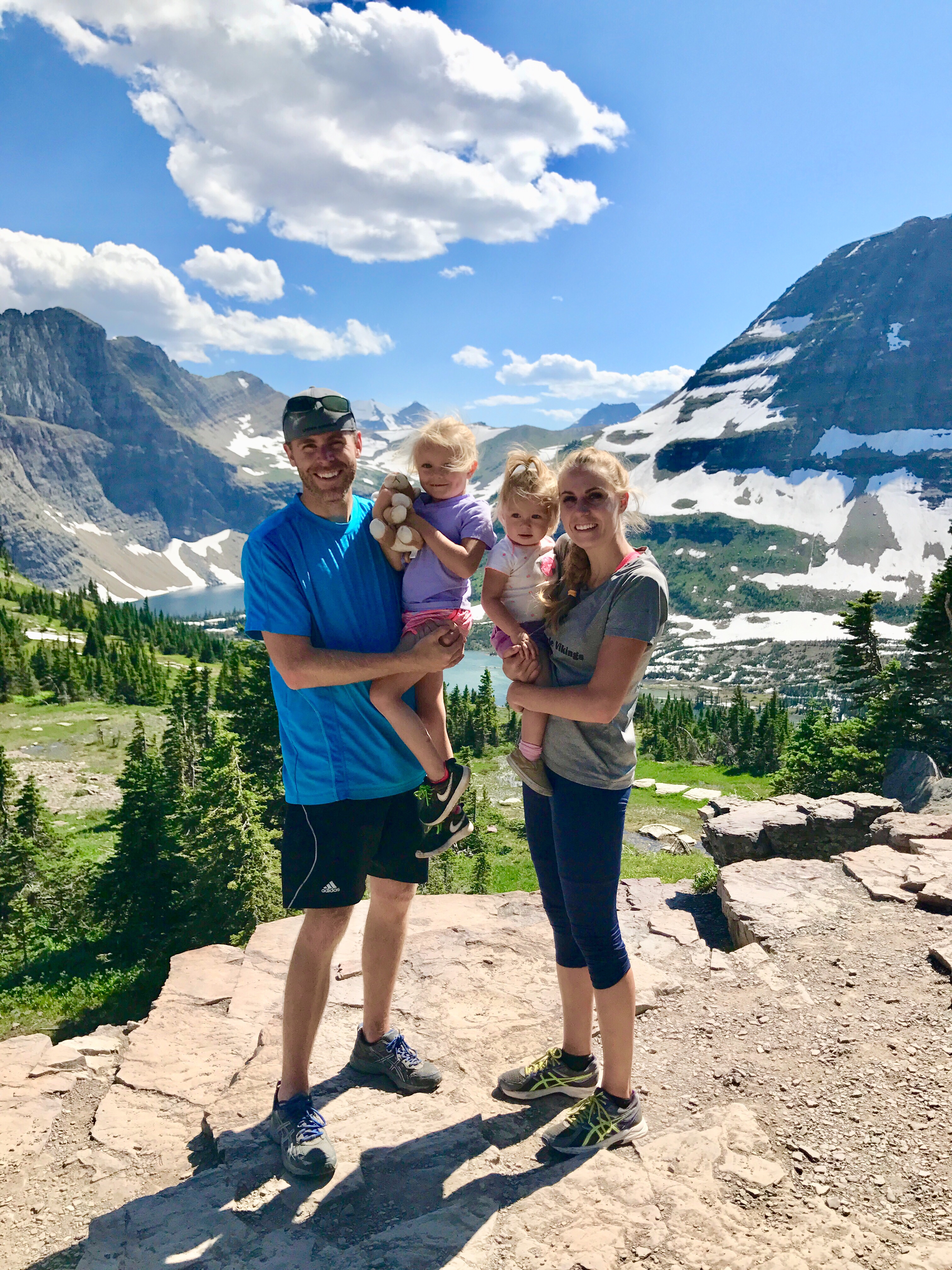 My experience on Paleo was very similar to what I experienced on Whole30. I found Paleo to be much easier for me mentally, as I was still able to allow myself “treats.” I never felt guilty, like I did with Whole30. I will say, I was more confused by Paleo’s rules than Whole30, mainly because you can find a ton of Paleo-labeled foods at the store, but if you take the time to actually read the ingredients, you’ll notice some ingredients aren’t Paleo! This was extremely frustrating, and it caused my mindset to feel like I could justify having things on Paleo, since they were being labeled as Paleo in the store.
If you read my experience with Whole30, you know that I had some GI issues, so it was no surprise it happened again with Paleo. My body just needs that balance between soluble and insoluble fiber to be happy. There were days when I would wake up in the middle of the night to use the restroom. So fun, right?!
I also discovered how hard it can be to follow a diet when the weather turns nice. You may be wondering what the weather has to do with anything, but as soon as Utah decided to grace us with some spring temperatures, the BBQs and lunch/dinner events were popping up often on our calendar. For me, eating is very much a social thing, so it was hard going over to someone's home for a party and not being able to enjoy the food. (I did taste a small sample of a dessert at a friend’s party!) Personally, I feel like a diet should never make you feel like you are missing out on social events.
I also noticed my skin was super dry, which I don’t think was necessarily because of Paleo, but rather an accumulation of all the diets. Now, I know that skin can take longer for symptoms to appear, but if you read my Whole30 and Keto reviews, you know I struggled to stay hydrated, since the no-grains restriction naturally made my carbohydrates go down, and carbs help the body hold on to water. So I really had to up my water game, and I put on lotions and creams multiple times a day. I even invested in some really good chapstick (which I never wear), as my lips were so chapped.
In addition to my dry skin, I also had some acne flare-ups, which is more embarrassing for me to talk about than my GI issues, but I do think it’s important to note. I was having hormonal acne breakouts throughout the entire month. Honestly, I’ve never had such poor skin since high school or when I was pregnant. I’m not sure if it was because I wasn’t getting enough carbs, eating too much meat, or just the combination of doing all the diets. But I was embarrassed to go out or even have my picture taken.
Overall, I feel like Paleo is more sustainable than Whole30, but I wouldn’t do it again due to the GI issues I experienced and how it affected my social life.
Hannah Mann
 My review is short and sweet. I was expecting this diet to be very similar to Whole30, because the guidelines are basically the same, but my experience was pretty different.
First off, I didn’t lose any weight. I actually gained one pound, which obviously isn’t a big deal, but weight seems to be a big reason why people go on a diet. I also didn’t have more energy, less bloating, or glowing skin, which are all things I experienced on Whole30. I didn’t like excluding healthy ingredients from a meal, like beans, and then not see any benefits from doing so.
The Paleo rules are very unclear, too. I could find ways around the rules, like making five pans of Paleo blondies in two weeks. If I wasn’t on the diet, I would never do this! But I felt the need to treat myself or find a way to fit in what I was missing out on. I ended up ending the diet early because I felt like I was eating the treats I could have, just because I could and wasn’t eating healthy at all. I didn’t feel very good and felt like I was cheating the diet, even though I wasn’t!
Mentally, this diet was the easiest for me, because I could have Paleo pancakes or blondies if I was craving a treat. But I wouldn’t recommend this diet, mainly because the rules are unclear and it’s hard to follow. If you’re wanting to live a healthier lifestyle, then I would recommend a diet plan that has more concrete rules.
Trevor Mann
 In my opinion, the Paleo diet makes the most sense as far as a lifestyle change. It’s healthy eating with no limits on quantity and you can make healthy desserts to satisfy that sweet tooth. Now that checks all my boxes!
Going in, I knew the diet was going to be very similar to Whole30. I’ve done Whole30 a couple times, so I sort of knew what to expect and the kind of mindset I needed to have. Getting started wasn’t difficult, but at this point with the diet experiments, my goal was to get my weight back up. I’d lost quite a bit of weight over the last few months, mainly from not eating enough. I was burning more calories than what my body needed to gain muscle mass. For this reason, I really tried to eat as many high-protein foods as I could.
My energy level throughout the day and during my workouts was actually really good during Paleo. I had enough energy to get me through the workday, the gym, and at home to take care of the kiddo. Healthy eating really makes all the difference!
WARNING: This post is not intended to replace the advice of a medical professional. The above information should not be used to diagnose, treat, or prevent any disease or medical condition. Please consult your doctor before making any changes to your diet, sleep methods, daily activity, or fitness routine. iFit assumes no responsibility for any personal injury or damage sustained by any recommendations, opinions, or advice given in this article.‘
You might also like

Series Feature: Mood Food: Nutrition for Your Mind
Head to the kitchen for the delicious Mood Food: Nutrition for Your Mind Series with iFIT Guide Dr. Eva Selhub! About iFIT Guide Dr. Eva Selhub Board Certified in Internal Medicine, iFIT Guide Dr. Eva has extensive knowledge of the body and how it works. She combines this knowledge with alternative forms of medicine to help others transform their health and well-being. Dr. Eva encourages others to strive for physical, mental, and spiritual health through redefining their approach to health and fitness. Her goal is to translate complex scientific and medical information into practical and usable knowledge that everyone can access to improve their lives. About the workouts In this 12-part food adventure, Dr. Eva will take a deep dive into all aspects of food, nutrition, and health as they relate to your body and mind. You’ll learn how to eat mindfully to help your brain, your microbiome, your mood, and so much more as Dr. Eva takes you to the iFIT Kitchen. At the end of every video, she’ll challenge you with short exercises that you can do daily or weekly to start implementing these healthy practices into your daily life. Take control of your health and learn more about what your body and mind need to fuel itself! About iFIT Mind™ iFIT Mind offers unique, groundbreaking content that expands the definition of what it means to work out. You’ll learn from experts in both physical and mental training to help you become the best version of yourself through mindfulness, meditation, and movement. You can support your nutrition journey with our printable recipe book, created by Dr. Eva. In it, you’ll find recipes to help you incorporate vegetables and protein into your diet, from breakfast to dinner. Ready to get started? Join this series now! Disclaimer: This blog post is not intended to replace the advice of a medical professional. The above information should not be used to diagnose, treat, or prevent any disease or medical condition. Please consult your doctor before making any changes to your diet, sleep methods, daily activity, or fitness routine. iFIT assumes no responsibility for any personal injury or damage sustained by any recommendations, opinions, or advice given in this article. Always follow the safety precautions included in the owner’s manual of your fitness equipment.
May 12, 2021
Exercise While Taking GLP-1: A Muscle-First Plan
Navigating a calorie deficit on GLP-1 medications often brings unexpected side effects like lower energy and fatigue. Pushing through exhaustion isn't the answer—moving smarter is. This muscle-first guide dives deep into the essential lifestyle pillars that support your training consistency. Learn how precise hydration habits defend against fatigue, and discover the striking science of how sleep duration directly impacts your body composition during weight loss. Complete with a flexible, one-week sample schedule, this guide shows you how to adjust your training intensity on tired days so you can protect your progress without overexertion.
May 26, 2026
Apple Rose Pie
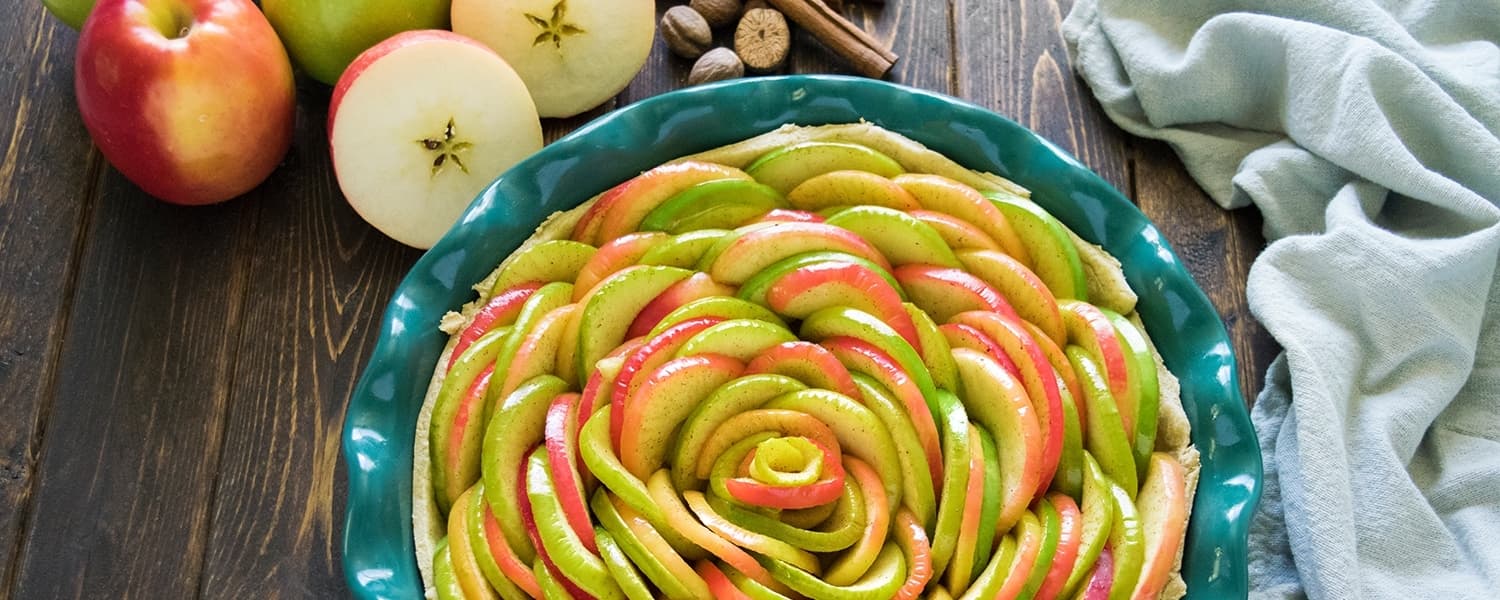
Ingredients For the pie crust ½ cup all purpose flour ¾ cup whole wheat flour 1 tablespoons sugar ¼ teaspoon salt 2 tablespoons cold unsalted butter, cut into small pieces 2 Tablespoons nonfat Greek yogurt 1 ½ tablespoons vegetable oil 2 tablespoons ice water For the filling 3 Pink lady apples 3 Granny Smith apples 1 tablespoon lemon juice ¼ cup brown sugar ¼ cup granulated sugar 1 teaspoon cinnamon ¼ teaspoon nutmeg Directions Combine flour, sugar, and salt in a medium bowl. Cut in butter with a pastry blender until crumbly. Mix in the Greek yogurt and vegetable oil. Add water, 1 tablespoon at a time, and combine with a fork until the mixture can form a ball. Lightly flour some plastic wrap, then place the dough on top. Flatten out dough. Cover with plastic wrap, then place in the fridge for 20 minutes. While dough is chilling, preheat oven to 425°F. Remove dough from fridge. Roll out on a floured surface to ⅛ thickness. Place dough in a 9-inch pie pan, then trim the edges. While oven is preheating cut the apples into thin semi-circle shapes leaving the skin on. Toss the apples in a large pot with the lemon juice, brown sugar, granulated sugar, cinnamon and nutmeg. Heat on medium high heat just until the apples are soft enough to bend without breaking about ten minutes. And remember to save the juice. Carefully arrange the apple slices around the apple pie crust starting with the outside and making your way to the center of the pie. Once you get to the center of the pie take small pieces and bend them around each other to create the center of the rose. Try to make the apples as compact as possible and go back and fill in any spots as necessary. You should be able to get all six apples in it. Drizzle the leftover juice over the apples and bake for 30-45 minutes. Cut into 8 equal slices and enjoy! NUTRITIONAL INFO PER SERVING Calories 240 (50 from fat) Total fat 6g Saturated fat 2g Cholesterol 10mg Sodium 75mg Carbohydrate 45g (5g dietary fiber, 26g sugar) Protein 3g WARNING: This post is not intended to replace the advice of a medical professional. The above information should not be used to diagnose, treat, or prevent any disease or medical condition. Please consult your doctor before making any changes to your diet, sleep methods, daily activity, or fitness routine. iFit assumes no responsibility for any personal injury or damage sustained by any recommendations, opinions, or advice given in this article.
May 13, 2017