iFIT Logo
Our App
Membership
Workouts
Log in
Our App
Membership
Workouts
WordPress blog image - iFIT-Best-Bodyweight-Exercises-Pushup.jpg
BodyweightFitnessiFit AppStrengthWorkouts

Best Bodyweight Exercises

Let’s be honest: Finding the motivation to work out isn’t easy, especially if you’re under the impression that you need to hit the gym to get in a good sweat. Thankfully, you can carry out a powerful workout just about anywhere, with no equipment required. What’s the secret to flexible workouts that go wherever you do? It’s having a few go-to exercises that leverage just your bodyweight, including iFIT’s extensive bodyweight exercise library!

We spoke to Bryn Knowles (NASM-CPT), an iFIT Trainer located in Logan, Utah, who has a BS in Exercise Science from Utah State University.

Bryn says, “Bodyweight workouts are a great way to shape and tone your entire body. With no gym or additional equipment required, you can work the body anytime, anywhere, with your own resistance. Bodyweight training is not only a great way to improve muscular strength but has also proven to be an excellent source of enhanced cardiovascular strength and endurance. It also allows for increased functional movement in day-to-day life with better balance, joint mobility, and flexibility.”

If you’re ready to dump the dumbbells and scrap the pilates ring, read on. All you need to conquer these 22 body-changing moves is YOU.
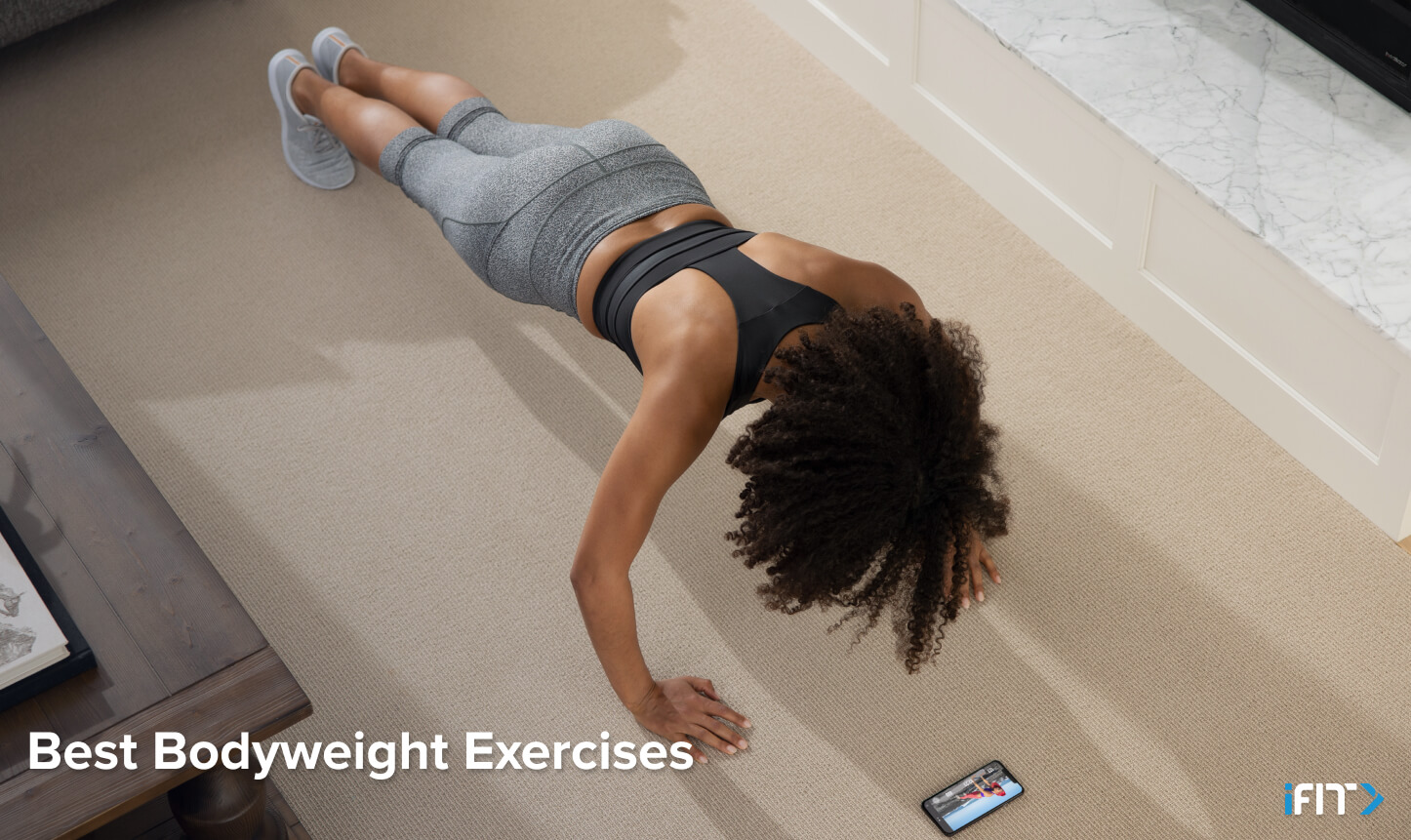
Woman does a pushup during her bodyweight class

Upper-body bodyweight exercises

Upper-body bodyweight exercises primarily target the arms, shoulders, upper back, and core. By integrating these functional exercises within your training, you will learn to move better and perform daily tasks with ease. These tasks can include pushing, pulling, and lifting. These four efficient exercises range from classic moves to personal trainer favorites, with a few modifications included to keep it interesting.

Push-up

Never underestimate the power of push-ups. Use this essential bodyweight exercise to energize your shoulders. They’ll also activate your chest muscles. Employ them when working out in your home gym or on the go.

How to: 

  • Get into a plank position. Place your hands slightly wider than your shoulders, so your hands, elbows, and shoulders are stacked above each other.
  • Next, with your weight on your arms, lower your body in a straight line until your chest almost touches the floor. (Make sure that everything from your hips to your shoulders drop down as one solid, straight unit).
  • To avoid putting additional stress on your neck, be sure to look forward in front of your fingertips to help keep your neck aligned with your back.
  • Hold, then push yourself back up to your original position.
  • Repeat. 

Modification: Knee push-up

If a traditional push-up is challenging for you, take a knee. This game-changing modification gives you the same results while making it easier on your shoulders. 

  • Get into a kneeling position, placing your hands below your shoulders and knees behind your hips. Your back should be tilted at about a 45-degree angle.
  • Next, curl your toes under, and, with your weight on your hands, lower your chest until it almost touches the floor.
  • Hold, then push yourself back up to your original position.
  • Repeat. 

Pull-up

Few bodyweight exercises match the power of this move. Use pull-ups to target your entire upper body. This includes your laterals, biceps, triceps, forearms, and core. It can also improve your posture.

How to: 

  • Grab the pull-up bar, placing your hands shoulder-width apart.
  • Hang from the pull-up bar with your arms slack and your feet off of the floor.
  • Lift yourself until your chin is above the bar by pulling your elbows down.
  • Lower yourself until your arms are slack again.
  • Repeat.

Modification: resistance band kneeling lat pull-down

No, this isn’t a traditional pull-up (or the chin-up). That said, personal trainers love this move because it engages the same muscles as a pull-up. Complete this move often, and you’ll likely have no trouble pulling off a perfect pull-up soon enough. 

How to: 

  • Loop a resistance band over a bar or attachment point.
  • Facing the bar, grab both ends of the band with your palms facing away from your body.
  • Next, lower yourself to one or both knees while maintaining a straight back and neck.
  • Exhale, pulling the bands downward until your wrists are near shoulder height.
  • Repeat.

Tricep dips

Take a break from sitting through your workday and use your chair, a staircase, or any elevated surface to complete this move. You’ll activate your triceps and build shoulder strength!

How to:

  • Find a solid and sturdy elevated surface. You can use a chair, stair, bench, or rock—whatever is handy! 
  • Extend your legs with your knees bent and your heels hip-width apart. Press into your palms to lift your body, then slide forward just enough to move your glutes off of the chair. 
  • Lower yourself until your elbows are bent back between 45 and 90 degrees. Keep your back straight and close to the chair. 
  • After, slowly push yourself back up to the start position. Control the movement throughout the range of motion. 
  • Repeat.

Modification: Bend your knees 90 degrees.
Progression: Extend your legs forward with only a slight bend.
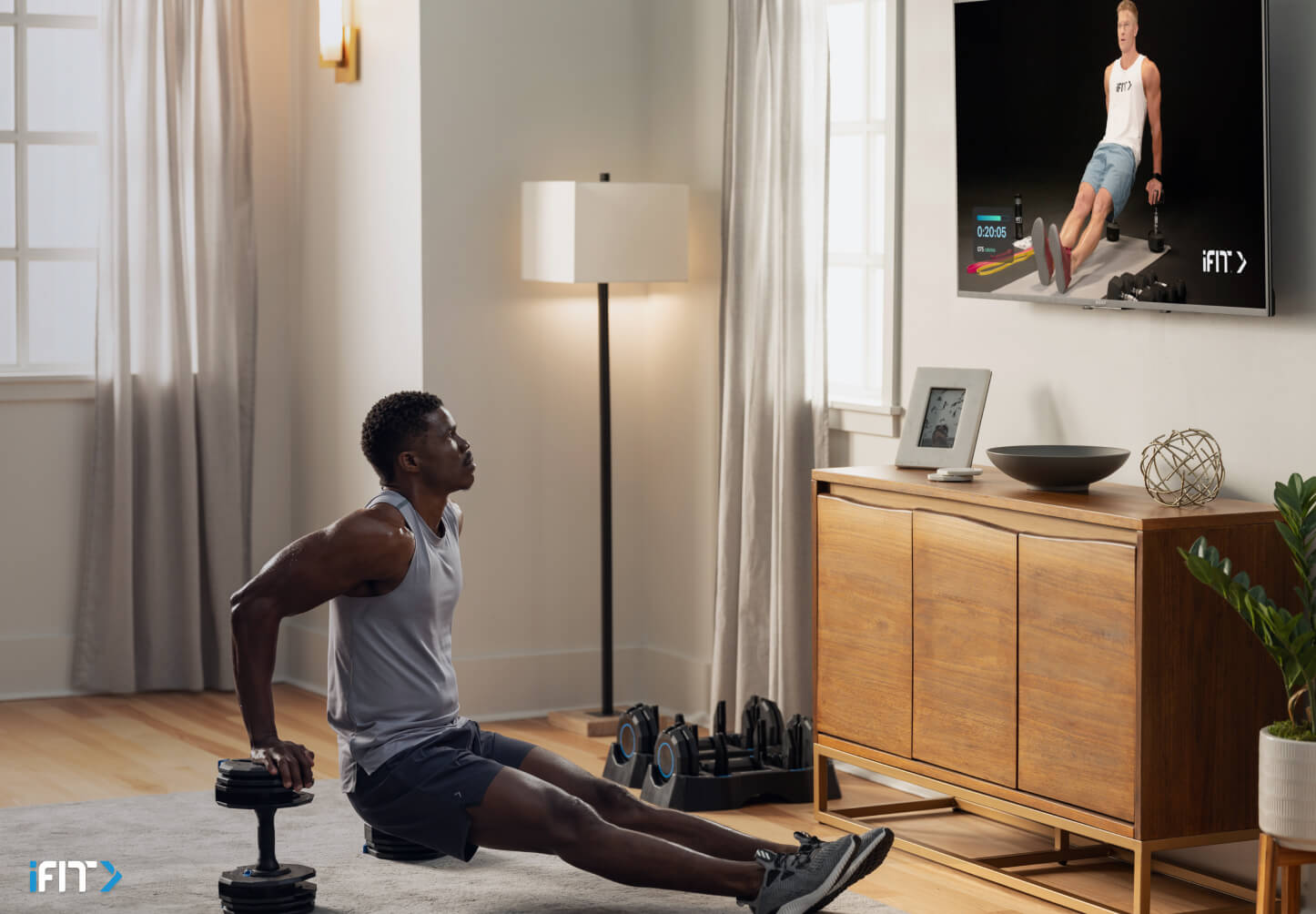
Man does a tricep dip during a bodyweight workout

Supermans

This move is a workout hero. It will help you improve your posture by activating your lower back muscles and glutes.

How to:

  • Lay down with your core and forehead flat on the ground. Keep your arms and legs outstretched.
  • Raise your hands and feet approximately four to five inches off of the floor. Keep your core on the ground.
  • Hold this raised position for three seconds, and then lower your hands and feet slowly back to the floor.
  • Repeat.

Total-body bodyweight exercises

Get in peak physique with these full-body exercises. These moves are designed to work your arms, legs, core, and everything in between. 

Burpee

This two-part bodyweight exercise lights up the entire body from head to toe.

“Not only are burpees a great exercise for developing muscular strength, but they’re a killer cardio move as well,” says Bryn.

How to:

  • Get into a squat position. Keep your knees bent, back straight, and feet shoulder-width apart.
  • Next, lower your hands to the floor in front of you, so they’re just inside your feet. 
  • With your weight in your hands, jump your feet back, so you’re on your hands and toes, in a push-up position. 
  • Do one push-up.
  • Do a frog kick by jumping your feet back to their starting position. 
  • Stand and stretch your arms over your head. 
  • Jump quickly into the air, so you land back where you began. 
  • Come back to a starting position.
  • Repeat.

Modification: Up-downs

Up-downs follow the same general guidelines listed above but omit some of the more challenging moves. This helps to make the sequence easier. Up-downs are gentler on your body, yet they still deliver a total-body burn.

  • Get into a squat position. Keep your knees bent, back straight, and feet shoulder-width apart.
  • Once in position, lower your hands onto the floor in front of you so they’re just inside your feet. 
  • With your weight on your hands, walk your feet back, so you’re on your hands and toes in a push-up position. 
  • Hold the plank position.
  • Do a frog kick by jumping your feet back to their starting position. 
  • Stand and stretch your arms over your head. 
  • Come back to a starting position.
  • Repeat.

Inchworm

This yoga-centric move will engage virtually all of your muscle groups. It will increase your strength and flexibility.

How to: 

  • Stand up tall with your legs straight. Trainer tip: Make sure your knees aren’t locked.
  • Next, hinge your upper body forward and walk your hands out in front of you along the floor, keeping your feet in place.
  • Once you’re in a plank position, begin taking tiny steps until your feet meet your hands.
  • Repeat.

Core bodyweight exercises

Consider your core to be precisely what it sounds like: your body’s center of power. Not only will a healthy core stabilize your body, but it plays a crucial role in allowing the rest of your body to function correctly. Use these bodyweight exercises to revitalize your core and keep your entire body operating at peak performance. 

Forearm plank

Activate your abs with this workout move. What’s the secret to a perfect plank? Try creating full-body tension. Tighten your shoulder blades, press your upper arms into the ground, tighten your core, squeeze your glutes, and firm up your quads to keep your knees straight.

How to:
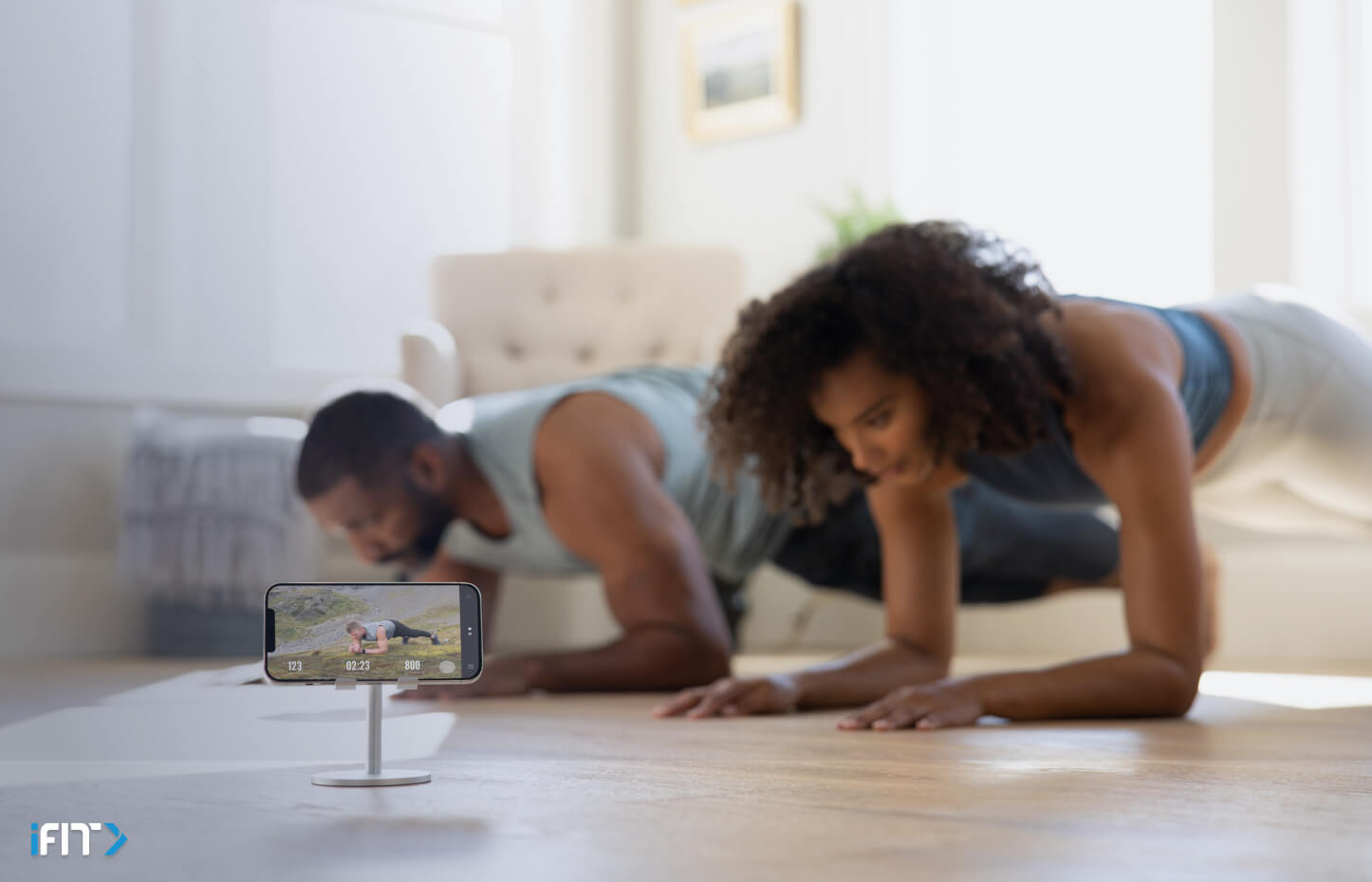
  • Get on all fours. Once in position, walk your hands forward. You'll want to straighten your body before dropping down onto your forearms.
  • Once your elbows are stacked directly above your shoulders, point your arms straight ahead and rise onto your toes.
  • Check your hip positioning. Make sure that your hips aren't up in the air or sagging. Sagging hips can lead to excess pressure on your lower back.
  • Keep your core firm and look straight ahead.
  • Hold this position for 30–60 seconds.
Couple does planks during a bodyweight workout

Russian twist

Athletes tend to be big fans of this dynamic core move that assists with rotational movement.

How to:

  • From a sitting position, lift your feet off the floor, keeping your knees bent.
  • Next, lean back, creating a 45-degree angle between your back and the floor. Your only contact to the floor should be your glutes.
  • Reach your arms out in front of you. Clasp your hands together.
  • Engage your abdominal muscles and twist to the right, then back to the center, then to the left.
  • Repeat.

Modification:

Keep your feet on the floor.

Progression:

Extend your legs up and out into a v-sit position. You can also kick it up a notch by adding resistance to the move by using a dumbbell, kettlebell, medicine ball, or even an object around your home.

V-sit

Rev up your core with this balance-building workout move. It echoes the classic yoga boat pose. 

How to:

  • Sit on the ground with your legs extended straight out.
  • After, lift your legs, creating a 45-degree angle with the floor.
  • Lean back, creating a 45-degree angle between your back and the floor. Your only contact with the floor should be your glutes.
  • Reach your arms straight in front of you, so they are parallel with your legs.
  • Hold this position for 30–60 seconds.

Trainer tip: Want a more challenging move? Turn your v-sit into v-ups!

Modification:

Keep your feet planted on the floor rather than elevated.

V-up

How to:

  • Lay on your back with your legs and arms extended straight out. Your legs and arms should be lifted slightly off the floor. 
  • Once done, lift your torso and legs as if you're trying to touch your toes. 
  • Lower your arms and legs back down. 
  • Repeat.

Modification:

Alternate between your legs, rather than lifting them together.

Leg lowers

Don’t let the name’s emphasis on the legs fool you. This balance-enhancing exercise will accentuate your abs like nothing else.

How to:

  • Lay on your back with your legs extended straight in front of you, and your knees slightly bent. Place your hands on either side of your hips with your palms down.
  • Engage your abs and raise your legs. Make a 90-degree angle with the floor.
  • Press your lower back into the floor and lower your legs as close to the ground as possible.
  • Raise your legs back up to return to your starting position.

Mountain climbers

This bootcamp class favorite accelerates your heart rate and works your muscles simultaneously. To make the most of this bodyweight exercise, envision pulling your belly button toward your spine while you engage your legs and core.

How to:

  • Come to a plank position with your body in a straight line and parallel to the floor.
  • Following this, engage your core as you lift your right knee toward your right elbow. Return the right knee to the starting position, then propel your left knee up toward your left elbow.
  • Continue switching legs to create a fluid, running-like motion.
  • Repeat for 30 seconds.

Lower-body bodyweight exercises

Although the lower body doesn’t often get the same attention as the upper body, plenty of well-being benefits come from a powerful lower body. In addition to maintaining mobility, a well-toned lower body can aid in endurance and help make those upper-body exercises a bit easier to tackle.

Squat

The benefits of this body-building basic are endless when creating lower-body strength.

How to:

  • Stand tall with your feet hip-width apart, and toes pointed forward. 
  • Next, shift your weight onto your heels as you push your hips back into a sitting position. Make sure to maintain a strong, upright chest. 
  • Lower your hips until your thighs are parallel with the floor. Bend your knees at a 90-degree angle. At no point should your knees cave in or out, nor should they extend beyond your toes.
  • Pause at the bottom of the squat with all your joints in proper alignment.
  • Propel yourself back up into your starting position.

Hip raises

Work your body into an exhilarating stretch while simultaneously activating your glutes, hip flexors, hamstrings, abs, and lower back.

How to:

  • Lay on your back with your knees bent, and your feet are flat on the floor with your toes pointing forward.
  • Place your hands at your sides for stability. 
  • Lift your glutes off of the floor by elevating your hips while bearing down through your heels.
  • While exhaling, elevate your glutes until your back, hips, and thighs are in a straight line. Tighten your core and squeeze your glutes. Hold for a few seconds. 
  • Afterward, return to your starting position by lowering your hips back to the floor. 
  • Repeat.

Progression:

Try elevating one leg at a time to challenge your stability.

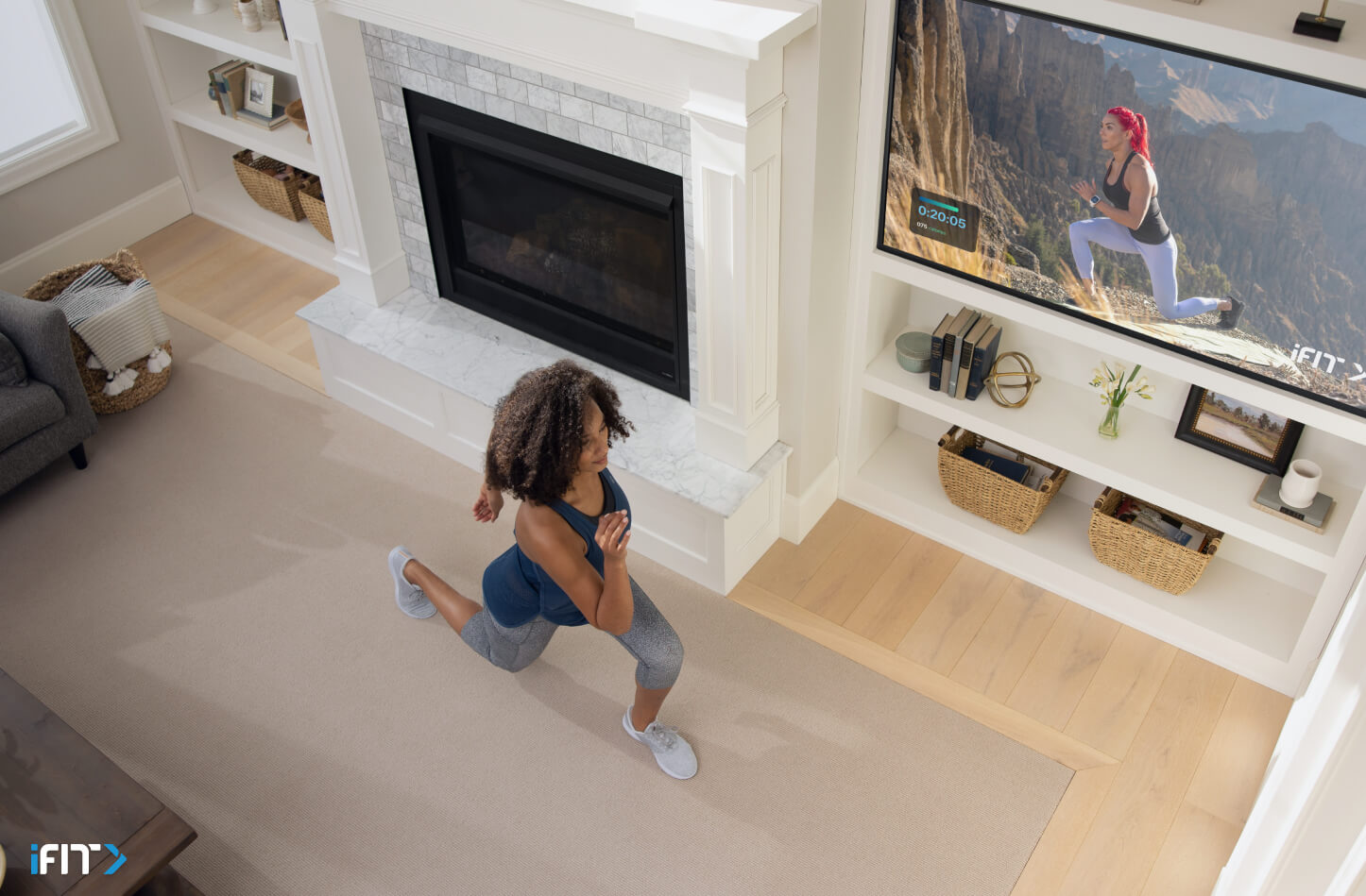
Lunges

Lunges are so versatile—you can incorporate them anywhere! Try them during a walk or a hike. They’ll engage your hips, glutes, quads, hamstrings, and core.

How to:
  • Stand with your feet hip-width apart.
  • Once in position, engage your core and take a swooping step forward with your right leg. Shift your weight forward onto this leg.
  • Lower your body until your right thigh is parallel to the floor and your right knee is at a 90-degree angle. Be sure that your knees do not extend out past your toes and that your chest is tall and upright.
  • Press onto your right heel to propel yourself back up into your starting position.
  • Finally, repeat with your left leg, alternating until you’ve reached your desired number of reps.
Woman does lunges during her bodyweight workout

Calf raises

If shapely calves are a must-have for you, simply integrate a few reps of this simple move into your routine. Not only will calf raises build your leg muscle, but they’ll also assist with better balance and reduce stress on your Achilles tendon (an excellent benefit for runners).

How to:

  • First, stand with your feet shoulder-width apart, then slowly lift your heels off the ground. Keep your knees tight but not locked. Pause for a second or two.
  • Slowly return your heels to the ground.
  • Repeat.

Fire hydrants

This cheekily-named bodyweight exercise takes its name from your puppy’s playbook. It packs significant results, including strengthening your glutes, staving off back pain, and lowering your risk for lower-back injuries.

How to:

  • Get on all fours with your shoulders stacked above your hands and your hips stacked above your knees.
  • Next, pull your navel toward your spine to straighten out your back and fix your eyes straight ahead.
  • After that, while squeezing your glutes and bracing your core, lift your bent right leg out so it’s away from your body. Do your best to maintain a straight back.
  • Lower your knee back down to the ground. Repeat.

Get started today with iFIT bodyweight workouts

Are you inspired to start a guided bodyweight workout routine now? Sign up for an iFIT account today and try a 12-minute bodyweight workout in Capri, Italy, consisting of just three movements. You can also take in stunning views of the Rose Hall aqueduct in Jamaica while you energize with a lower-body-focused flow that consists of stretching, strengthening, and stability. Try engaging in a moderate, full-body strength workout in Thailand that’s interrupted by a parade of playful elephants!

Disclaimer: This blog post is not intended to replace the advice of a medical professional. The above information should not be used to diagnose, treat, or prevent any disease or medical condition. Please consult your doctor before making any changes to your diet, sleep methods, daily activity, or fitness routine. iFIT assumes no responsibility for any personal injury or damage sustained by any recommendations, opinions, or advice given in this article. Always follow the safety precautions included in the owner’s manual of your fitness equipment.

You might also like

WordPress blog image - PowerPlusCHALL_FeaturedImg.jpg

Boost Your Workout With the Power Plus Challenge

Boost your workout this March by joining the Power Plus Challenge! Different from previous Challenges that focus on workouts for specific equipment like treadmills, ellipticals, bikes, and rowers, this Challenge breaks new ground with short, off-equipment exercises emphasizing holistic health. From functional fitness training to mobility, injury prevention, and more, iFIT Trainers John Peel, Shannon Cooper, Richard Biglia, and Jorry Francis will guide you through Warm-Ups, Cool-Downs, and Strength Finishers. These exercises complement your fitness journey, boosting overall performance. Plus, completing multiple exercises in the Challenge unlocks more iFIT Milestones, celebrating your progress with exclusive rewards. Complete the workouts from your selected Challenge level by March 31, 2024, and earn a digital reward viewable in your Trophy Case. Complete all three Challenge levels and earn three digital rewards! Here are this month’s Challenge levels for all workout types: Warm-Ups: Kickstart your workouts with 14 off-equipment Warm-Ups led by iFIT Trainers John Peel, Shannon Cooper, Richard Biglia, and Jorry Francis. Add these essential exercises for a more effective, balanced fitness routine that supports functional fitness, mobility, recovery, and injury prevention. Join the Power Plus Challenge: Warm Ups Cool-Downs: Wrap up your workouts with 14 off-equipment Cool-Downs led by iFIT Trainers John Peel, Shannon Cooper, Richard Biglia, and Jorry Francis. Incorporate these key exercises to cultivate a well-rounded fitness routine, supporting functional fitness, mobility, recovery, and injury prevention for maximum results. Join the Power Plus Challenge: Cool-Downs Strength Finishers: Before you cool down, finish your workouts on a high note with 35 off-equipment Strength Finishers led by iFIT Trainers John Peel, Shannon Cooper, Richard Biglia, and Jorry Francis. Integrate these fundamental exercises to achieve a balanced routine, improving functional fitness, mobility, recovery, and injury prevention for a holistic approach to well-being. Join the Power Plus Challenge: Strength Finishers The exercises featured in this month’s Challenge are for Treadmill, Elliptical, Bike, Row, and Strength equipment. Disclaimer: This blog post is not intended to replace the advice of a medical professional. The above information should not be used to diagnose, treat, or prevent any disease or medical condition. Please consult your doctor before making any changes to your diet, sleep methods, daily activity, or fitness routine. iFIT assumes no responsibility for any personal injury or damage sustained by any recommendations, opinions, or advice given in this article. Always follow the safety precautions included in the owner’s manual of your fitness equipment.

March 1, 2024

Read More
WordPress blog image - iFIT-Ab-Workout.jpg

10 Exercises for Your Next Ab Workout

When it comes to bodyweight exercises, the abdominal muscles are often targeted for training. You don’t need sophisticated equipment to train the abs; bodyweight movements alone can build muscle and strength. However, just like with other muscle groups, specific workouts may stimulate the muscles better than others. In a study comparing 13 common abdominal exercises1, the American Council on Exercise (ACE) identified three ab workouts that stood out from the rest: bicycle crunches, captain’s chair crunches, and crunches performed on an exercise ball. These three core workouts targeted muscle stimulation in the rectus abdominis and obliques. These core exercises should not only strengthen your abdominal muscles, but they should benefit you in other ways too. Strong abdominals2 are crucial for injury prevention, good posture, athletic performance, and staving off lower back pain. Our top 10 picks for ab exercises To try and maximize your ab workout, knowing which muscles make up the abs3 is useful. While some exercises primarily stimulate the rectus abdominis (the front ab muscles), others call the obliques (internal and external) or the transverse abdominis into action. The external obliques are the muscles located on the sides of the rectus abdominis around the waist, whereas the internal obliques are positioned just below the rectus abdominis. The transverse abdominis is an internal stabilizer located on the lateral sides of the abdominal wall. Next time you want to train your abs, incorporate the first three core exercises mentioned below into your workout regimen. The only piece of equipment you’ll need is an exercise ball, which you can find at retail or specialty sports stores. You’ll leverage the power of bodyweight to help build your abdominals! Let’s walk through each of these movements step by step. 1. Bicycle crunches Since this ab exercise utilizes all of your abdominal muscles, ACE highlighted that bicycle crunches are fundamental for ab training. They help stimulate your abdominal muscles so you feel that burn and help improve your fitness. Lie down flat on your back. You can use a yoga mat for comfort during this exercise.Bring your knees to your chest and lift your shoulder blades off the floor.Straighten the left leg and simultaneously turn your upper body to the left. During this movement, bring your right elbow to the left knee. Breathe out as you turn your body.Repeat the process for the other side. 2. Captain’s chair crunches This core exercise4 requires a captain’s chair, a seatless chair with a back and armrests. Don’t be surprised when your obliques feel taxed after these crunches! Press your back against the backrest with your feet on the bottom supports and arms resting on the upper supports.Gripping the handles, lift your feet off the supports and allow your legs to hang straight down.Slowly breathe out as you lift your knees to your chest.Hold the lifted position for a few seconds, then slowly lower the legs back down into the starting position and repeat. 3. Exercise ball crunches Ranked the third most effective abdominal workout5, crunches performed on an exercise ball do a much better job of engaging your core than floor crunches. This exercise targets the abdominals and oblique muscles precisely. Lie back on an exercise ball with your hands behind your head or across your chest. Ensure your feet are stable on the floor.Lean your upper body back on the ball, then use your core to raise yourself forward (just as you would in a traditional crunch). Hold the crunch position for a few seconds, and then slowly lower yourself back down. Other effective ab exercises While the above ab exercises are highlighted by ACE, many others effectively engage your core! When paired with bicycle crunches, captain’s chair crunches, or exercise ball crunches, the following core exercises can offer the variety you need to keep your ab training interesting. 4. V-ups As a total-body movement, V-ups are incredibly powerful and challenging to master! In this core bodyweight exercise, you’re creating a “V” with your upper body and legs, engaging your core during the process. Lie on the floor with your legs extended straight out and your arms by your sides.Lift your legs, arms, and upper body up to where you’re balancing on your glutes. This position should resemble a “V.” Only your glutes should be on the floor.Reach your arms so that they’re parallel to your legs.Hold this position for 30–60 seconds.Lower back down and repeat. 5. Deadbugs Great for all of your abdominal muscles, deadbugs are a functional warmup for lower body workouts, but may also be incorporated as part of your core workout. The key to this movement is to keep your lower back flat on the floor. Lie down flat on your back. You can use a yoga mat for comfort during this exercise.Extend your arms straight up and bring the knees up toward your chest to create a 90-degree angle. Press your lower back into the floor. Focus on keeping it down without allowing it to buckle.Slowly extend your right leg out straight and your left arm overhead. Your heel and hand should almost touch the floor.Hold this position for a few seconds and then return to the starting position. Repeat this process with your left leg and right arm. 6. Planks A plank is a bread-and-butter movement for abs workouts. With bodyweight alone, planks6 are challenging, even to the most advanced fitness enthusiasts. Position yourself on your hands and knees. You can use a yoga mat for comfort during this exercise.Place your hands shoulder-width apart, directly under your shoulders. Your feet should be a bit wider than your hips but you can bring them closer together for a greater challenge.During the plank, keep your body straight, from your heels to your head. Look down at the floor to keep your spine neutral. Engage your core, quads, and glutes. Hold the plank position for however long feels comfortable. For example, beginners can aim for 10 seconds and increase the duration with practice. Do not let your hips or shoulders dip.Come out of the plank position and rest before trying again. 7. Side planks Side planks7 are a great addition to traditional planks, as they help strengthen the shoulders, hips, and obliques. Since you’re on your side in this core exercise, the obliques are doing some heavy lifting here. Lie on your side with your left forearm flat on the floor. Your elbow or hand should be under your shoulder and your legs extended. Your body should be in a straight line.Stagger your feet and engage your core. If this is too difficult, you can instead be positioned on the side of your knees.Slowly lift your hips off the floor and hold the position. You can extend your right arm or keep it immobile.Hold the plank for however long feels comfortable, then lower back down. Repeat this movement on the other side. 8. Heel taps If you’re looking for core exercises that integrate your hip flexors, heel taps are a worthwhile addition to your ab routine. Once you get going with these, you’ll feel your obliques working hard! Lie down flat on your back. You can use a yoga mat for comfort during this exercise.Position your feet on the ground, heels close to your glutes.Engage your core, then lift your shoulder blades off the floor.Reach down to touch your left heel with your left hand and vice versa. 9. Reverse crunches If you don’t have access to a captain’s chair, reverse crunches provide a similar movement. Instead of hanging, you’ll lie on your back without placing strain on your back or neck. Lie down flat on your back. You can use a yoga mat for comfort during this exercise.Lift your legs so that your knees are slightly bent.Press your lower back into the floor and place your hands at your sides.Slowly bring your knees up towards your chest. This will lift your hips off the floor. Keep the lower back pressed down.With control, lower your legs back down, but not all the way to the floor. 10. Hollow holds When performed correctly, hollow holds will strengthen your abs. The contraction of your ab muscles is part of what powers this movement, so it’s important to first nail the form down on these, as is the case with the other exercises. Lie down flat on your back. You can use a yoga mat for comfort during this exercise.Press your lower back firmly into the floor.With the hands placed at your sides, raise your legs about one to two inches off the floor. Ensure the lower back does not buckle.Lift your shoulder blades one inch off the floor. Again, keep the lower back pressed firmly into the floor.Hold this position for a few seconds and then relax. Try an iFIT ab workout When paired with a healthy diet, these ab exercises can help you build stronger abdominal muscles. As you work on your core, you’ll better understand which muscles you’re utilizing in these movements. Plus, our iFIT Trainers are here to help you strengthen your core! The above ab exercises are ideal for a challenging home workout. Although they only require your bodyweight, you’ll find that they offer a range of physical and mental benefits. Depending on which exercises you choose to do, you can easily knock out a 10 minute ab workout in the morning, on your lunch break, or in the evening after work. Once you’re ready to take your ab training to the next level, your iFIT Trainers will be waiting for you! With dozens of bodyweight workouts available in our Library, you’ll have access to a variety of challenging, trainer-led ab workouts that incorporate many of the above exercises. When you download the iFIT fitness app, you’ll have access to ab workouts that will keep your everyday fitness routine exciting. References 1. American Council on Exercise. (2001, May 14). American council on exercise (ace)-sponsored study reveals best and worst abdominal exercises. ACE Fitness. https://www.acefitness.org/about-ace/press-room/press-releases/246/american-council-on-exercise-ace-sponsored-study-reveals-best-and-worst-abdominal-exercises/. 2. Waehner, P. (2020, December 7). Strong abs are more important than flat ones. Verywell Fit. https://www.verywellfit.com/strengthen-your-abs-beyond-the-six-back-1229504. 3. Quinn, E. (2021, July 12). Abdominal muscles location and function. Verywell Fit. https://www.verywellfit.com/abdominal-muscles-anatomy-3120072. 4. Ritschel, C. (2018, August 12). The 3 most effective ab workouts, according to experts. Business Insider. https://www.businessinsider.com/the-3-most-effective-ab-workouts-according-to-experts-2018-8. 5. McGuire, J. (2019, March 5). The ab exercises you shouldn't be doing, according to research. Runner's World. https://www.runnersworld.com/uk/news/a776336/best-and-worst-abdominal-exercises-according-to-research/. 6. Goldman, A., & Mateo, A. (2019, September 6). How to do a perfect plank: your guide to mastering the abs exercise. Women's Health. https://www.womenshealthmag.com/fitness/a19983224/plank-exercise/. 7. Yetman, D. (2020, November 10). The Benefits of a side plank and how to do it safely. Healthline. https://www.healthline.com/health/side-plank#benefits. 7. Yetman, D. (2020, November 10). The Benefits of a side plank and how to do it safely. Healthline. https://www.healthline.com/health/side-plank#benefits. Disclaimer: This blog post is not intended to replace the advice of a medical professional. The above information should not be used to diagnose, treat, or prevent any disease or medical condition. Please consult your doctor before making any changes to your diet, sleep methods, daily activity, or fitness routine. iFIT assumes no responsibility for any personal injury or damage sustained by any recommendations, opinions, or advice given in this article. Always follow the safety precautions included in the owner’s manual of your fitness equipment.

September 7, 2021

Read More
WordPress blog image - iFIT-Bodyweight-Workout.jpg

10 Must-Try Cardio Bodyweight Exercises

When you hear “strength workouts,” your mind may conjure images of dumbbells or weight machines. For “cardio workouts,” you’ll likely think of walking, running, hiking, or even sprinting. Just like you don’t need weights to build strength, you don’t need to become a runner to work on your cardiovascular health1. Cardio classes can take on a whole new meaning with bodyweight workouts! Bodyweight exercise is another way to try to become more physically fit and hit those daily cardio goals. Traditional avenues of cardio exercise may not always be what you’re in the mood for. Fortunately, you can harness the underrated power of bodyweight exercises2 to ramp up your heart rate and get your sweat on anytime, anywhere (even in your living room!). With regular bodyweight training3, you may notice a difference in your endurance, metabolism, and general fitness ability. In a recent study4, researchers found that after four weeks of whole-body aerobic-resistance training, participants demonstrated improved cardiovascular fitness. This was in opposition to the other control groups, one that solely performed treadmill exercise and another that engaged in no exercise. Using your weight as resistance is one of the easiest, most convenient ways to get fit. There are many different types of bodyweight exercises to choose from for your next workout, some of which you may find are better for cardio than others. Below are 10 cardio bodyweight exercises to try the next time you’re ready to work on your endurance! Since they only require your bodyweight, you can create a workout to do right in your home gym. Note that these exercises can be challenging, but don’t worry—we’ve included modifications to accommodate any fitness level. 1. Skaters With this side-to-side bodyweight exercise, skaters allow you to work on your balance and agility. Stand with your feet hip-width apart. Knees should be slightly bent.Jump to the right with your right foot. Sweep the left foot behind your right leg. Tap your right foot with your left hand.Alternate sides by jumping to the left with your left foot while the right foot sweeps behind you. Tap your left foot with your right hand.Use your arms to help keep the momentum. Note: Instead of distributing your weight on the foot, land lightly on the ball of your foot and quickly alternate to the left. Modification Instead of lateral jumps, you can also perform skaters by taking lateral steps. 2. Jumping jacks A timeless, full body exercise! It’s easy to get into the rhythm of jumping jacks, which makes them a worthwhile exercise to add to any workout routine. Stand with your feet shoulder-width apart and arms by your sides.Jump with your feet out to your sides and your arms overhead. Your body should resemble an “X.” Return to the starting position. Modification To make jumping jacks easier, replace the jump with alternating left and right steps. 3. Woodchops Work your core with no sit-ups necessary! Woodchops are one of those cardio exercises that target your obliques and help strengthen your abdominals. Start with your hands together towards your right side. Hold them about eye-level so your arms are bent at the elbows.Put your weight on your right foot with the left foot slightly raised.As if you were holding an axe, chop your arm across your body with bent knees. Transition your weight from your right to left foot, slightly raising your right foot at the end of the exercise. You should be in a slight lunge position.Bring your arms back to the starting position.Repeat for your left side. 4. High knees High knees are a bodyweight workout that challenges your quads, hamstrings, glutes, calves, and abdominal muscles. Stand with your feet shoulder-width apart.Begin to run in place, lifting your knees to waist level. Make sure you engage your abs during this exercise. Watch your posture—don’t slouch!You can hold your arms out and use your hands as a measure of knee height. Modification Instead of hopping from one foot to the other, perform high knees at a slower pace. Bring one knee up, pause, and then bring the leg back down. Repeat this for the other side. 5. Mountain climbers Testing your stability, mountain climbers simultaneously work your shoulders, arms, core, and legs. These can be taxing for beginners, so take the time to nail down the form. Begin on your hands and knees. Position yourself in a high plank position with your core engaged. Make sure your lower back is not bowed.Bring your right foot up towards your right hand until you reach a lunge position.Quickly jump and switch your feet, so that the left foot is now in front.Continue this alternating pattern. Modification You can modify this bodyweight exercise by slowing it down without jumping. Instead of the quick bursts to transition your feet, you can simply start with the right foot and then bring it back down to alternate to the left foot. 6. Burpees The burpee is a bodyweight workout that is both loved and hated. They are highly effective and offer an intense cardio workout all on their own! Get into a squat position with your knees bent and back straight. Your feet should be shoulder-width apart.Lower your hands to the floor in front of you, so they’re just inside your feet. With your weight in your hands, jump and kick your feet back. You will be in a plank position. Do one push-up, and then perform another jump moving your feet back to their starting position. Stand and jump into the air with your arms outstretched over your head. Land where you began.Come back to a starting position.Repeat. Modification If burpees are a little too advanced, that’s okay! You can bring the difficulty of this exercise down with up-downs. These will help build your strength up so you can easily move through a set of burpees in the future. Get into a squat position with your knees bent and back straight. Your feet should be shoulder-width apart.Lower your hands onto the floor in front of you, so they’re just inside your feet. With your weight on your hands, walk your feet back, so you’re in a plank position. Hold the plank position.Jump to move your feet back to their starting position. Stand and stretch your arms overhead. Come back to a starting position.Repeat. 7. Squat jumps This variation of a classic bodyweight squat calls the leg muscles into action in a big way. A few sets of these will give you that feel-good muscle burn. Position your feet shoulder-width apart.Perform a squat with your arms bent and hands together in prayer position.Rise up into a jump with your legs fully extended. Pushing your arms down during the jump will help get you going.Land lightly and immediately transition into another squat. Do not land with your knees locked, but instead slightly bent to absorb the jump. Modification Are squat jumps feeling too challenging? Perfect regular squats first! Ensure your feet are stable with your back straight and head neutral. You can also perform squat reaches, which are regular squats that require you to bring your arms overhead and hold the squat position. 8. Up-down planks Add more of a challenge to the classic plank by lowering yourself onto your forearms with up-down planks. Get into a plank position on your hands and toes. Engage your core.Lower your left elbow to the floor and then the right. You should be on your elbows.Bring yourself back up to a full plank position by straightening your arms and putting weight back onto your palms. During this exercise, keep your lower back straight.Alternate sides from left to right and vice versa during these planks. Note: If you encounter wrist pain, think about gripping your mat with your fingers. This will create a hollow space between the floor and your palms, which may help ease discomfort. Modification Perform up-down planks starting on your knees instead of a full plank. Make sure your body stays in a line without dipping your lower back. Do not hinge at the waist for this exercise. 9. Lateral bunny hops Bunny hops are an easy way to keep your heart rate up during bodyweight workouts. Start with your feet together.Pretend there is an invisible line at your side.Using your arms for momentum, quickly jump side to side over the line. Keep your legs close together during this exercise. 10. Split lunge jumps Upgrade your classic lunges with explosive jumps! Split lunge jumps are all about power and form with focus on the leg muscles. Stand with your feet together with soft knees.Get into a lunge position first and then continue with a jump. Land in an opposite lunge (if you began with the right foot forward, land with the left foot forward).Quickly jump back up and into the starting position with your feet together.Repeat on the other side. Cardio bodyweight classes with iFIT After getting the hang of these cardio bodyweight exercises, you’ll always have an exercise routine ready for a home workout or while on vacation, a work trip, or wherever else life takes you. With the iFIT fitness app, you'll have access to a wide variety of bodyweight classes that will incorporate exercises like these and more. Simply join an iFIT bodyweight workout series and get ready for a unique, immersive workout experience that will keep you coming back for more. Not sure where to start? Here are a few cardio bodyweight workout series that will get you going! Bodyweight Cardio Series with iFIT Trainer Ashley PaulsonBeginner Plus Bodyweight Cardio Series with iFIT Trainer Ashley PaulsonSt. Lucia Weight Loss Walking Series with iFIT Trainer Chris Clark and Stacie ClarkFrench Polynesia Fast & Fit Series with iFIT Trainer John PeelTrain Like A Pro: Alex Morgan Strength These bodyweight series are led by iFIT Trainers, who will build up your confidence alongside your endurance. With iFIT, you can travel to destinations all over the world while chipping away at your fitness goals. Try an iFIT cardio bodyweight workout No matter what bodyweight workout you choose, each is designed to challenge you in ways that will keep your motivation high. With a personal trainer guiding you through your iFIT cardio workout, you might be surprised by how much you progress! Cardio workouts can be so much more than a run or casual walk. Whether you’re new to fitness or consider yourself a fitness enthusiast, there are bodyweight classes for every level! You don’t need to be a runner to learn new cardio exercises and techniques while building strength. References 1. Gaz, D. V. (2017, January 20). Body-weight training: Ditch the dumbbells. Mayo Clinic. https://www.mayoclinic.org/healthy-lifestyle/fitness/in-depth/body-weight-training-ditch-the-dumbbells/art-20304638. 2. Laskowski, E. (2020, October 10). Is body-weight training effective as a strength training exercise? Mayo Clinic. https://www.mayoclinic.org/healthy-lifestyle/fitness/expert-answers/body-weight-training/faq-20147966. 3. Gaz, D. V. (2017, January 20). Body-weight training: Ditch the dumbbells. Mayo Clinic. https://www.mayoclinic.org/healthy-lifestyle/fitness/in-depth/body-weight-training-ditch-the-dumbbells/art-20304638. 4. McRae, G., Payne, A., Zelt, J. G., Scribbans, T. D., Jung, M. E., Little, J. P., & Gurd, B. J. (2012). Extremely low volume, whole-body aerobic-resistance training improves aerobic fitness and muscular endurance in females. Applied physiology, nutrition, and metabolism = Physiologie appliquee, nutrition et metabolisme, 37(6), 1124–1131. https://doi.org/10.1139/h2012-093. Disclaimer: This blog post is not intended to replace the advice of a medical professional. The above information should not be used to diagnose, treat, or prevent any disease or medical condition. Please consult your doctor before making any changes to your diet, sleep methods, daily activity, or fitness routine. iFIT assumes no responsibility for any personal injury or damage sustained by any recommendations, opinions, or advice given in this article. Always follow the safety precautions included in the owner’s manual of your fitness equipment.

September 9, 2021

Read More
See More

Get the iFIT app

iFIT for Equipment

Follow Us

Social Icon - Youtube
Social Icon - Pinterest
Social Icon - Facebook
Social Icon - X (Twitter)
Instagram

Our Company

About UsOur LeadershipCareersNewsroomBlogShop

Support

Help CenterStatusContact

Legal

AccessibilityConsumer Health Data NoticeMobile TermsPrivacy PolicyTerms of Use

Copyright© 2025 iFIT Inc.