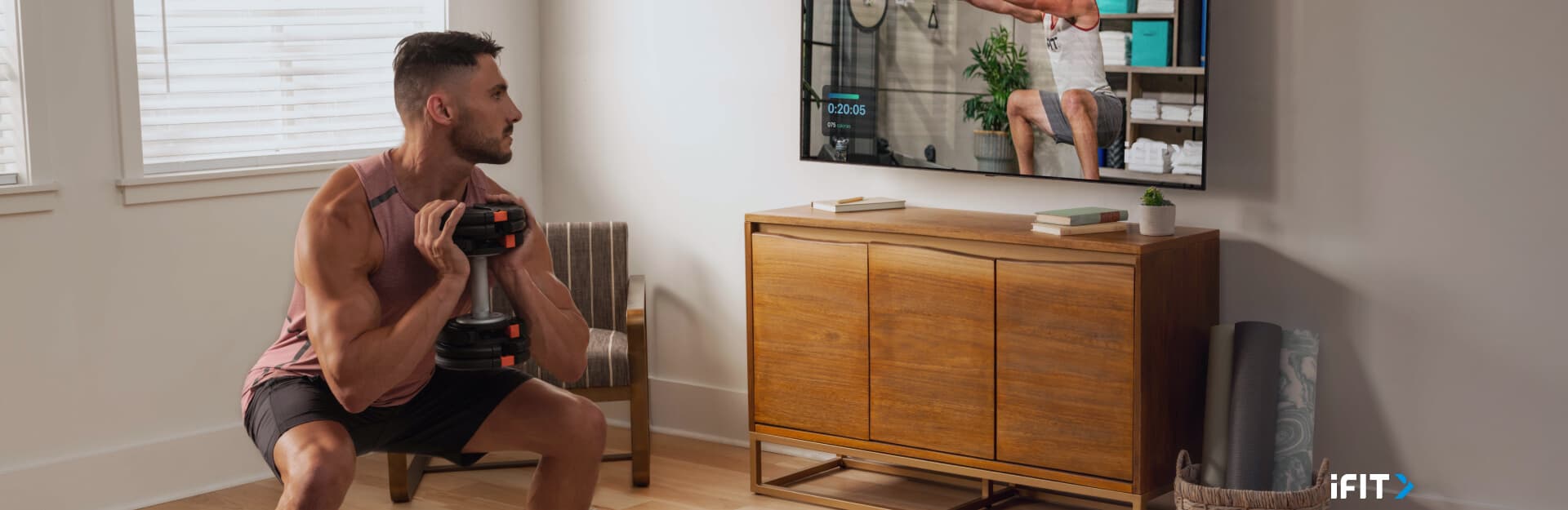
Split training gets a lot of praise in the fitness world. With this style of training, you isolate different muscle groups by body part. The idea behind split training1 is that specific attention is given to muscle groups in the legs, back, chest, and elsewhere for better muscle growth potential. However, as with any style of exercise, it has drawbacks. One of the downfalls of split-style training is frequency. When isolating muscle groups, you’re typically training them once a week with the addition of rest days. This focus on isolation equals more time spent working out, which could be another con for some. With full body workouts, these are non-issues.
Unlike split training, full body training2 targets all of your muscle groups in an effort to promote muscle growth and increase calorie expenditure. If you’ve never tried full body training before, you may not be entirely sold on the idea. After all, split-style training is incredibly popular with many of the fitness industry’s biggest players. However, there are enough benefits of full body training to make it a viable option for virtually anyone.
For starters, full body exercise goes beyond bodyweight movements. If you enjoy using weights, you won’t be missing out. Many exercises, like overhead presses and deadlifts, recruit the lower and upper body, as well as the core, for proper form. You may already do exercises that are technically full body movements! While there is no right or wrong answer between split workouts and full body workouts, full body exercises can be more useful for some. Want to learn more about this efficient style of exercise? Here are three reasons why full body workouts can be a plateau-breaker in your fitness journey.
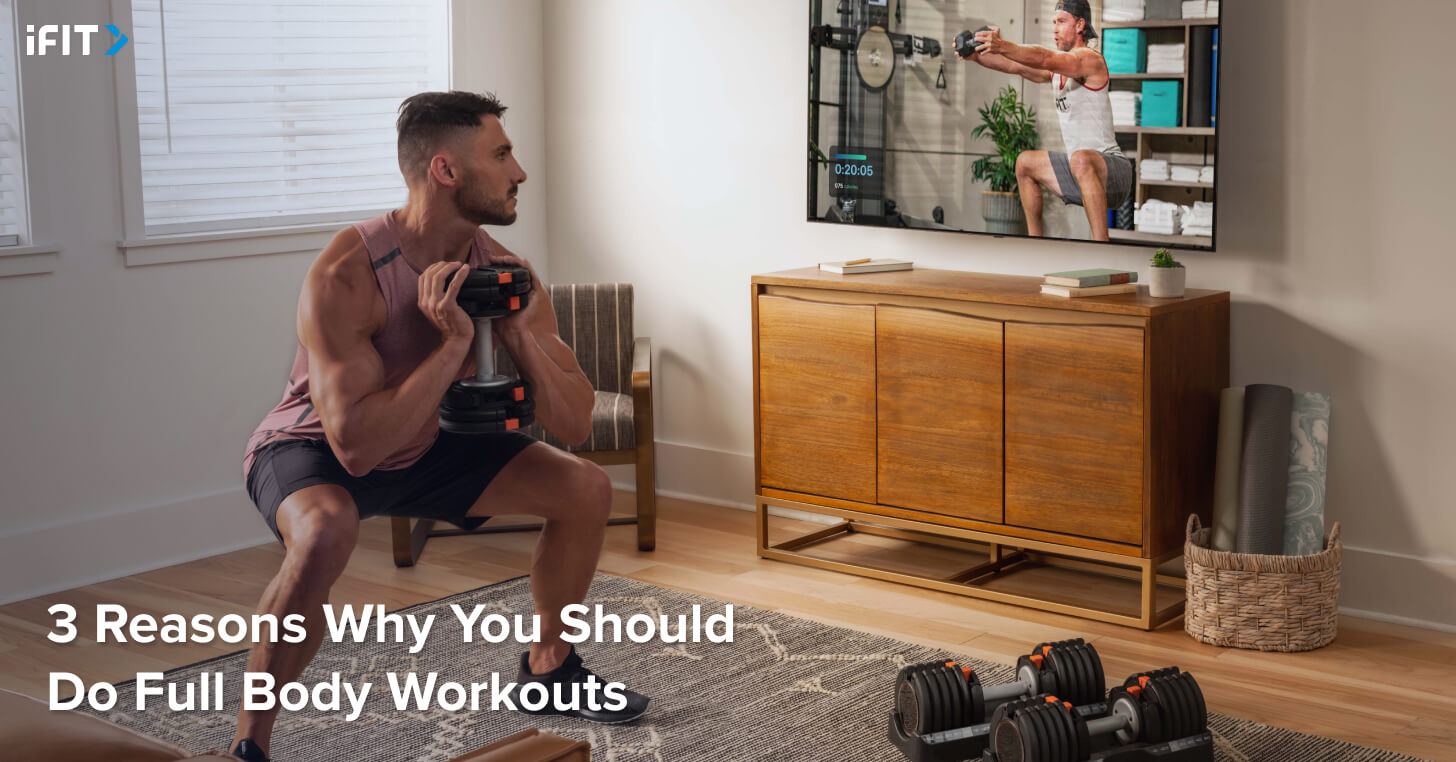
1. Full body workouts are time-efficient
Because it isolates different muscle groups, split training often takes more time across the board. Those who use this approach work out specific body parts, choosing separate days to focus on their chest, arms, back, shoulders, or legs. Since these are carried out on different days, you can expect to exercise at least five times a week.
Naturally, full body workouts3 are less time-consuming, because you might not need to work out as frequently. This all depends on the quality and efficiency of your workouts. These exercises, whether used with weights or bodyweight alone, work multiple body parts at some point during a workout. Instead of hitting isolated muscles on different days, it may be possible for you to knock out a total body routine three times a week with plenty of recovery time scheduled in. During these workouts, you might perform bodyweight squats and push-ups in a single session. A great example of this is HIIT, which is a specific type of full body training. HIIT workouts are generally capped at well under an hour, making them worthwhile to those short on time.
Full body exercises offer an excellent style of training for those with busy lifestyles. For example, maybe you work late and can’t devote every night to working out. Or, perhaps you’ve recently had a child and no longer have time to spend in the gym every day. Swapping a split-style routine for a full body regimen might be just what you need to keep moving. This training style can benefit practically anyone, including students, those with lively social schedules, and even people who simply don’t enjoy working out daily. Best of all, full body workouts4 can be done anywhere, including a home gym!
2. Full body exercises combine cardio and strength training
Full body workouts provide a way to work on both strength and cardiovascular conditioning. For those interested in building strength, this type of exercise can deliver in a measurable way! In a recent 2021 study5 comparing total body and split routine workouts, researchers randomly assigned participants to either a total body or split routine group. Each group then went through a 10-week resistance training program, where they performed isokinetic bench presses and isometric squats. Isokinetic exercises use a specialized machine so the line of movement is always the same. With isometric exercise, tension is placed on a certain muscle without movement in surrounding joints. The participants’ one repetition maxes and muscle thickness in the pectoralis major, trapezius, and vastus lateralis were recorded before and after the training program.
At the end of the training period, each group showed improvements in both strength and muscle thickness. However, the total body group had significantly greater strength gains in the isokinetic bench press. Based on the above study’s results, total body (also known as full body) training may be more effective for strength improvement than split routine training.
So, how do full body workouts integrate cardio? Depending on the exercises chosen, full body workouts can be considered anaerobic exercise. Many full body exercises, like inchworms, burpees, mountain climbers, and squat jumps, target your whole body. Your cardiovascular conditioning becomes a factor when using different muscles to power the movements. These exercises rely on explosive movement, usually completed over short intervals. When first starting out with full body exercises like these, you might become easily fatigued. Over time with regular training, you may be able to gradually improve your ability to carry out these exercises with better form and improve your endurance6! You may also find that anaerobic exercise contributes to improved balance, flexibility, and strength. This is crucial for advanced compound full body movements, such as barbell squats, deadlifts, and overhead presses.

3. Calorie expenditure increases during full body workouts
Since they call on your entire body, full body workouts are great for those looking to increase their calorie expenditure. A recent 2019 study7 found that HIIT training (specifically 20-second intervals on a hydraulic resistance system) resulted in a greater calorie expenditure than resistance training, endurance cycling, and endurance treadmill sessions. While the resistance training sessions used 75% of the participants’ 1-repetition max, the endurance cycling and treadmill sessions were set at 70% maximum heart rate. Though a small study, these results may suggest that HIIT and other full body workouts can contribute to higher calorie expenditure.
Think about all the muscles needed to perform a classic burpee. Your arms, core, and chest power half of the burpee movement, followed by your quads, glutes, and hamstrings to complete the exercise. When major muscle groups like these activate together, you’ll probably feel exhausted after just a few sets. Full body exercises can be challenging for all fitness levels for this reason. This is a much different experience than with a standard bicep curl, which targets one small muscle group.
Calorie expenditure is reliant on a variety of factors, which greatly depends on the individual. The exercises you select for your full body workout, as well as your diet, sleep patterns, and general health each contribute to your total expenditure. What kind of full body exercises should you choose then? HIIT or bootcamp workouts are great options for targeting your entire body. Each with its own subjective pros and cons, HIIT and bootcamp are go-to workouts for people interested in improving their body conditioning and building strength. They’re fast-paced and typically combine several bodyweight exercises into one set, so get ready to sweat! When paired with a healthy diet, you can put your best foot forward in your fitness journey.
Should I be focused on calorie expenditure?
While calorie expenditure is a popular topic within the fitness community, it’s important to note that it should not be one of your top priorities. Instead, focus on building your strength! The energy required to engage in full body workouts can contribute to increases in strength. As you become stronger, your muscle mass and body composition may change as well. Placing emphasis on strength and muscle gain will help keep you in a more positive headspace, which is crucial for sticking to your goals!
Top 10 iFIT full body workouts
Interested in giving full body workouts a try? While you can do these on your own, you might feel more motivated with a personal trainer leading the way. That’s where iFIT comes in! Our workout Library offers full body workouts for everyone, including people new to fitness and more proficient athletes. Here are our current top 10 full body workout series we have to offer, taking you to our iFIT studio and beyond into stunning global locations.
- Full-Body HIIT Series with iFIT Trainer Hannah Eden
- Advanced HIIT Training Series with iFIT Trainer Hannah Eden
- HIIT and LIIT Series with iFIT Trainer Elyse Miller
- Total-Body HIIT Series with iFIT Trainer Stacie Clark
- Costa Rica Cardio HIIT Series with iFIT Trainer AnaMaria Ramirez
- Functional HIIT Series with iFIT Trainer Paulo Barreto
- Iceland Strength Series with iFIT Trainers Hannah Eden and Jonnie Gale
- Bodyweight HIIT Strength Series with iFIT Trainer Hannah Eden
- Hills & HIIT Series with iFIT Trainer Tennille Boseman
- Train Like a Pro: Tiki Barber
Our full body workouts are led by world-class personal trainers that keep the energy high through your workout! Once you sign up for iFIT, you can join a full body workout series on the fitness app whenever you’d like. Trainers like Hannah Eden, Jonnie Gale, and AnaMaria Ramirez will guide you through these full body classes, helping you build strength and chip away at your fitness goals.

Spice up your fitness routine with an iFIT full body workout
Start on a new style of training with guidance and inspiration from iFIT Trainers! Our full body workouts help make exercise interesting and accessible, meeting you where you are in your fitness journey. Your next home workout could be game-changing for your goals!
References
1. Rogers, P. (2020, November 2). Pros and cons of split system training routines. Verywell Fit. https://www.verywellfit.com/split-system-training-purpose-and-routines-3498381.
2. MacMillan, A. (2020, May 7). Burn more calories and build more muscle with full-body workouts. Livestrong. https://www.livestrong.com/article/13725816-full-body-workout-benefits/.
3. MacMillan, A. (2020, May 7). Burn more calories and build more muscle with full-body workouts. Livestrong. https://www.livestrong.com/article/13725816-full-body-workout-benefits/.
4. MacMillan, A. (2020, May 7). Burn more calories and build more muscle with full-body workouts. Livestrong. https://www.livestrong.com/article/13725816-full-body-workout-benefits/.
5. Bartolomei, S., Nigro, F., Malagoli, L., Masina, F., & Di Michele, R. (2021, June). A comparison between total body and split routine resistance training programs in trained men. The Journal of Strength and Conditioning Research. https://doi: 10.1519/JSC.0000000000003573.
6. Cronkleton, E. (2019, December 17). How to do body conditioning exercises. Healthline. https://www.healthline.com/health/exercise-fitness/body-conditioning.
7. Falcone, P. H., Tai, C. Y., Carson, L. R., Joy, J. M., Mosman, M. M., McCann, T. R., Crona, K. P., Kim, M. P., & Moon, J. R. (2015). Caloric expenditure of aerobic, resistance, or combined high-intensity interval training using a hydraulic resistance system in healthy men. Journal of Strength and Conditioning Research. https://doi.org/10.1519/JSC.0000000000000661.
Disclaimer: This blog post is not intended to replace the advice of a medical professional. The above information should not be used to diagnose, treat, or prevent any disease or medical condition. Please consult your doctor before making any changes to your diet, sleep methods, daily activity, or fitness routine. iFIT assumes no responsibility for any personal injury or damage sustained by any recommendations, opinions, or advice given in this article. Always follow the safety precautions included in the owner’s manual of your fitness equipment.
You might also like

Introducing SmartAdjust™ for Your Treadmill: iFIT’s New Personalized Workout Experience
SmartAdjust personalizes your treadmill workout before it even starts, adapting speed and incline to your fitness level in real time.
March 16, 2021

Strength Training While on GLP-1: A 6-Week Plan
When your body weight changes, you aren’t just losing fat—research shows you risk losing lean muscle mass, too. Protecting that muscle is the key to maintaining your metabolism and everyday strength. This practical 6-week guide breaks down exactly how to structure a simple, 20-to-30 minute full-body strength routine 2–3 times a week. Built around foundational compound movements like squats and rows, this plan shows you how to safely implement progressive overload without burning out your energy. Give your body a clear signal to keep its muscle and build a routine that sticks.
May 26, 2026

Find Your Stride with Tommy Rivs in the Joy of Running Part 2: Redwoods, Workouts 1-10
There’s just something magical about taking your next step forward, especially when it means you’re surrounded by the towering redwoods and rugged beauty of California’s northern coast. iFIT Trainer Tommy Rivs’ newest series will help you experience the magic of this region with the Joy of Running Part 2: Redwoods, Workouts 1-10. This beginner-friendly program is designed to help you progress from walking to running at your own pace.Explore California’s Scenic CoastSet along breathtaking coastal trails and through scenic redwood groves, this series brings the natural beauty of Northern California to your treadmill. From the peaceful paths of Laguna Point to the rolling meadows of Mendocino Headlands, each workout is an opportunity to breathe, move, and connect with the pure joy of movement.Make Progress with Tommy RivsKnown for his thoughtful coaching and love of movement, Tommy Rivs will guide you through a mix of walking and running intervals to gradually build your endurance and confidence. Each workout keeps the speed steady while changing your movement so you can focus on how your body feels and adapts as you move.Whether you’re returning to fitness or taking your first steps toward running, this series is all about moving forward with purpose. Tommy will help you to:Develop endurance and build strength with progressive intervalsImprove your form and consistency with his expert guidanceReconnect with the joy of movement in an inspiring settingBuild confidence to take on your next running challengeThis is only the beginning; there’s so much more to come with Rivs. For now, lace up those shoes and join him for an incredible journey amongst the redwoods.Join Tommy Rivs in the Redwoods
November 3, 2025