If you thought iFIT workouts were solely meant for strengthening your lower body, think again! Outside of compelling workout series designed to help you build strength and stamina in your legs, iFIT also has many more fitness options that you may not know about. We’re all about body balance, offering engaging workouts geared toward improving both your lower and upper body when done properly and regularly.
What do we mean when we say “upper body?" Which body parts are we including in that umbrella term? In this instance, we’re talking about the muscle groups located in your chest, shoulders, back, and arms. Maybe you’re interested in chest workouts or other upper body workouts that target your biceps and triceps. You may even want to exercise all four of these muscle groups in your weekly workout regimen! With iFIT, your next upper body workout is only a few taps away.
We’re taking a closer look at the main muscle groups in your upper body and pairing each group with a corresponding iFIT workout series to help you get started. With this quick overview, you’ll have a better understanding of how the muscles in your chest, shoulders, back, and arms work. Whether you’re looking for an at-home back, shoulder, arm, or chest workout, read on to find your next upper body workout!
Chest muscles
The chest muscles are responsible for many of our bodily functions, some of which you may not realize. These muscles, including the pectoralis major and minor, help us breathe, move our arms, hold on to heavy objects, and more. There are also a variety of benefits that come from working out your chest1, so let’s get to know the muscles that make up this portion of your upper body.
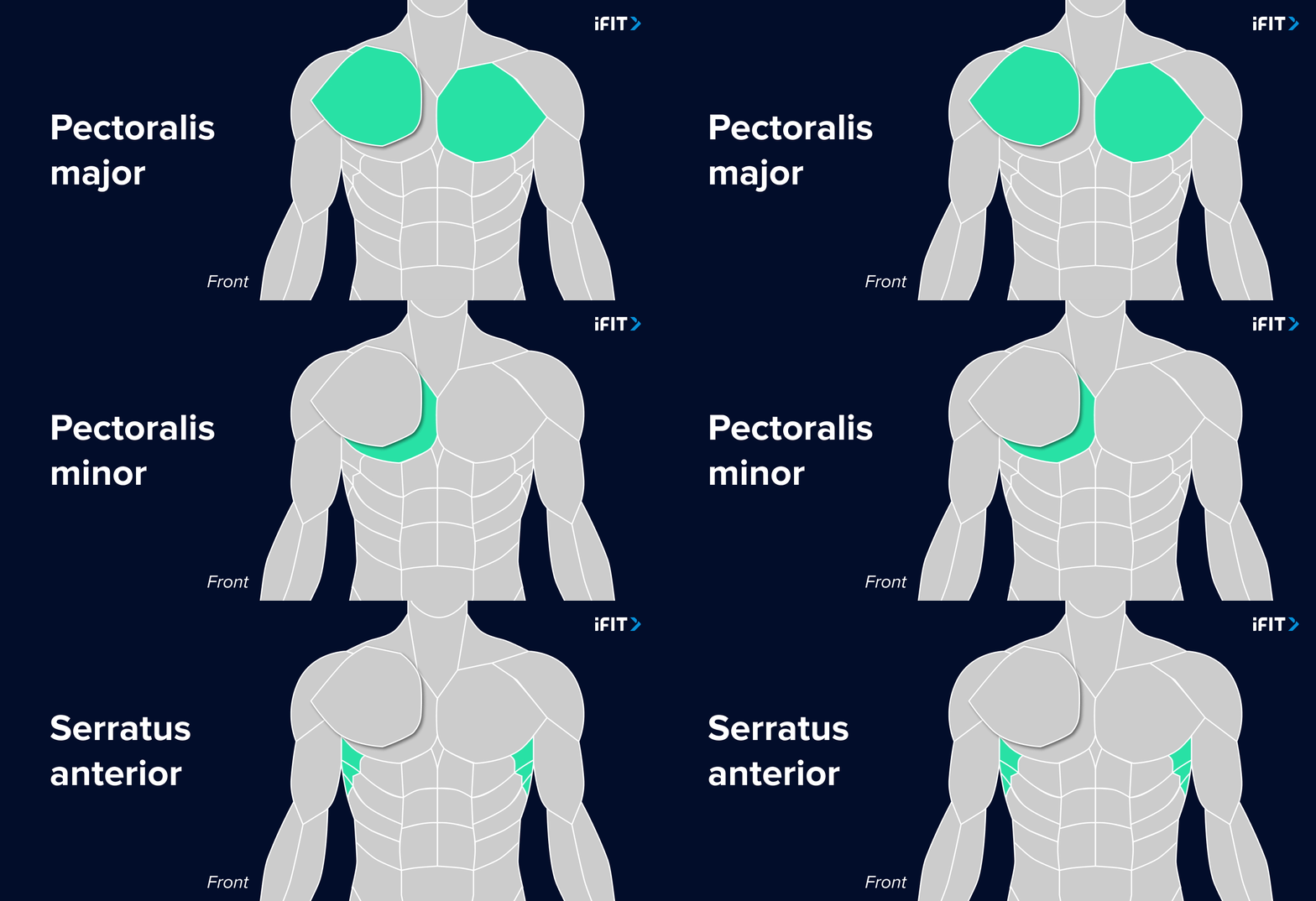
The two pectoralis major muscles (AKA your “pecs”) make up the majority of your chest. These muscles are in charge of pulling your rib cage up during deep inhalation, so your lungs have room to expand. The pectoralis major also helps with arm movement, especially with pushing movements like bench press or push-ups.
Beneath the pectoralis major is a very flat muscle called the pectoralis minor. This chest muscle directly aids your scapula (AKA your shoulder blades), helping with abduction, protraction, depression, upward tilt, and downward rotation. During a chest press exercise, your pectoralis minor helps move your shoulder blades back and forth.
Known as the “boxer’s muscle,” the serratus anterior is responsible for scapular movement, much like the pectoralis minor. It allows for protraction and retraction of the scapula, which is like reaching your arm straight out in front of you and then pulling it back. The serratus anterior also assists with breathing and overhead lifting.
iFIT chest workout
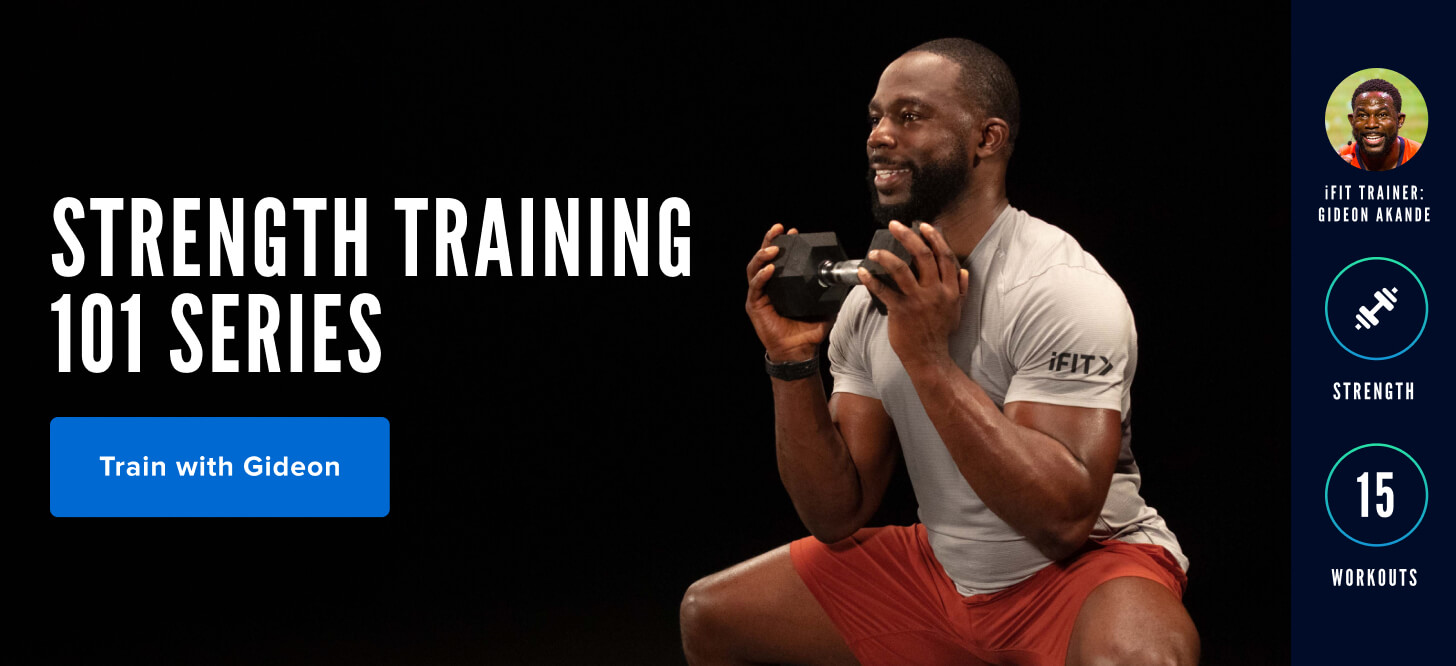
If you’re looking for upper body workouts that target your chest, give an iFIT workout a try! Many of our strength workouts feature curated chest exercises by our team of personal trainers. Consider iFIT Trainer Gideon Akande’s Strength Training 101 Series, which takes you through 15 beginner workouts. In this lower and upper body series, Workout 10 specifically focuses on chest exercises!
Shoulder muscles
Assisting in virtually all upper body movements, your shoulders help you push, pull, lift, and press down. Your shoulders are naturally integrated into chest, back, and arm exercises.
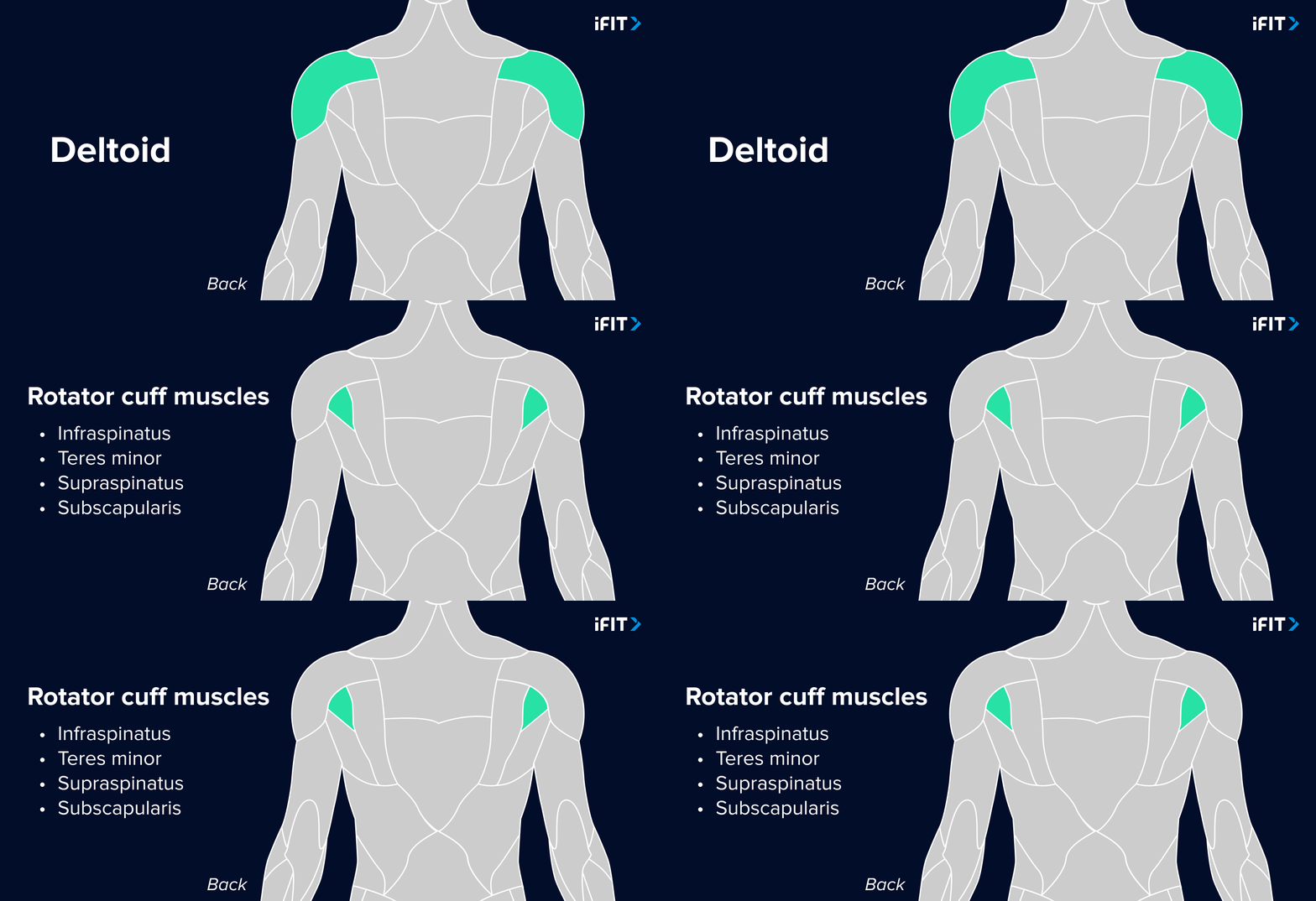
Your deltoid is the largest part of your shoulder, creating the rounded shape atop your triceps and biceps. With three different heads, this muscle keeps joint dislocation at bay, assists in arm rotation, and makes carrying heavy loads easier on the upper body. When you’re holding something away from your body (like several bags of groceries), your deltoids help power these motions and keep the shoulder joints safe.
These four muscles comprise your rotator cuffs, which provide stability to your shoulders. While each of these interior shoulder muscles aid your arms in specific ways, the rotator cuffs themselves allow your arms to rotate, raise, lower, and move away from your body. Think of these muscles as you perform upper body exercises like shoulder presses and lat raises.
iFIT shoulder workout
You can start trying to build strength and muscle in your shoulders with iFIT Trainer John Peel! In his Resistance Band Miniseries, John will coach you through seven challenging workouts that each fall under an hour. While the miniseries is a must-try, Workout 3 may just be the upper body class that you’re looking for! If you enjoy it, find more like it on our fitness app.
Back muscles
Your back is to thank for your upper body’s ability to move. Your back muscles provide the structural support your spine, neck, head, shoulders, and arms need. Every time you bend down to tie your shoe, twist in your chair to talk to someone, or reach up for a big morning stretch, your back muscles activate. Making up a large portion of your upper body, your back has many muscles that work in sync to help you move!
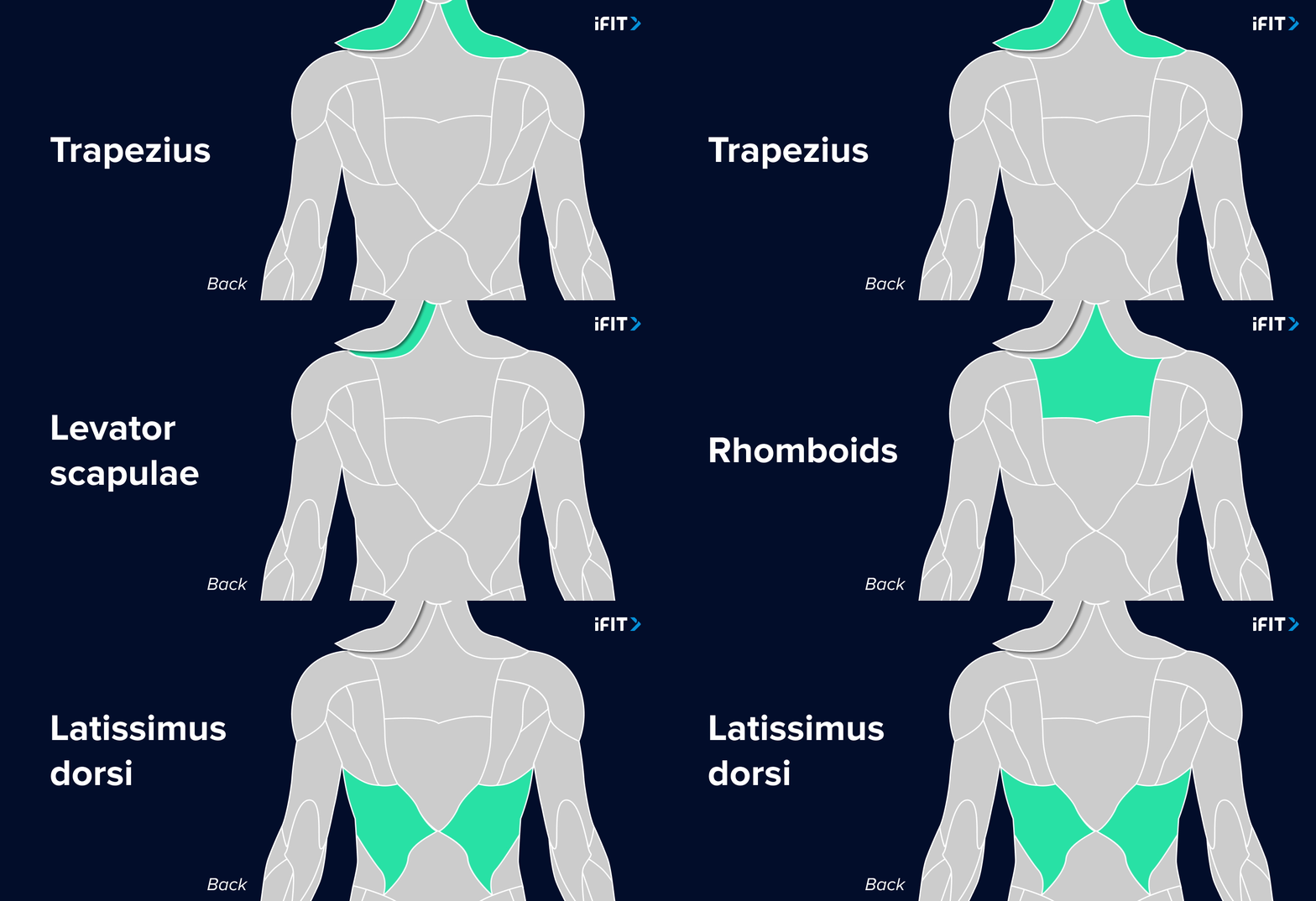
The trapezius, sometimes referred to as the “traps,” is positioned on your upper back behind your shoulders and neck. This muscle helps you move your shoulder blades and neck, as well as remain erect while standing. While performing shoulder shrugs, your trapezius facilitates the up and downward motion of your shoulders.
The levator scapulae is a back muscle that functions to raise your shoulder blades in conjunction with the trapezius. In bouts of neck stiffness, this muscle is usually involved, as it’s positioned at the sides of your neck connecting to the scapulae.
Comprised of the rhomboid major and minor, this muscle group is located in the upper middle section of your back. Rhomboids facilitate scapular retraction and provide stability to your scapulae and shoulder girdles.
As the largest muscle in your back, the latissimus dorsi symmetrically spreads across your spine. Working with the pectoralis major and teres major, this muscle contributes to upper extremity motion. When you raise your arms for a pulldown exercise, your latissimus dorsi stretches to allow for this upper body movement.
iFIT back workout
Try challenging your lats, traps, and other back muscles with the Next-Level Strength Training Series! With iFIT Trainer John Peel, you’ll move through 12 weeks of strength exercises focused on your entire body, including your back. If you’re ready for a challenge, John can bring it over the course of 42 workouts!
Arm muscles
Arm workouts are a favorite of fitness lovers all over the world. In upper body classes, you will usually encounter some arm exercises. Besides existing as an aesthetic muscle group, your arms make much of your everyday life a reality! Every push, pull, and lifting motion is made possible by the biceps brachii and triceps brachii.
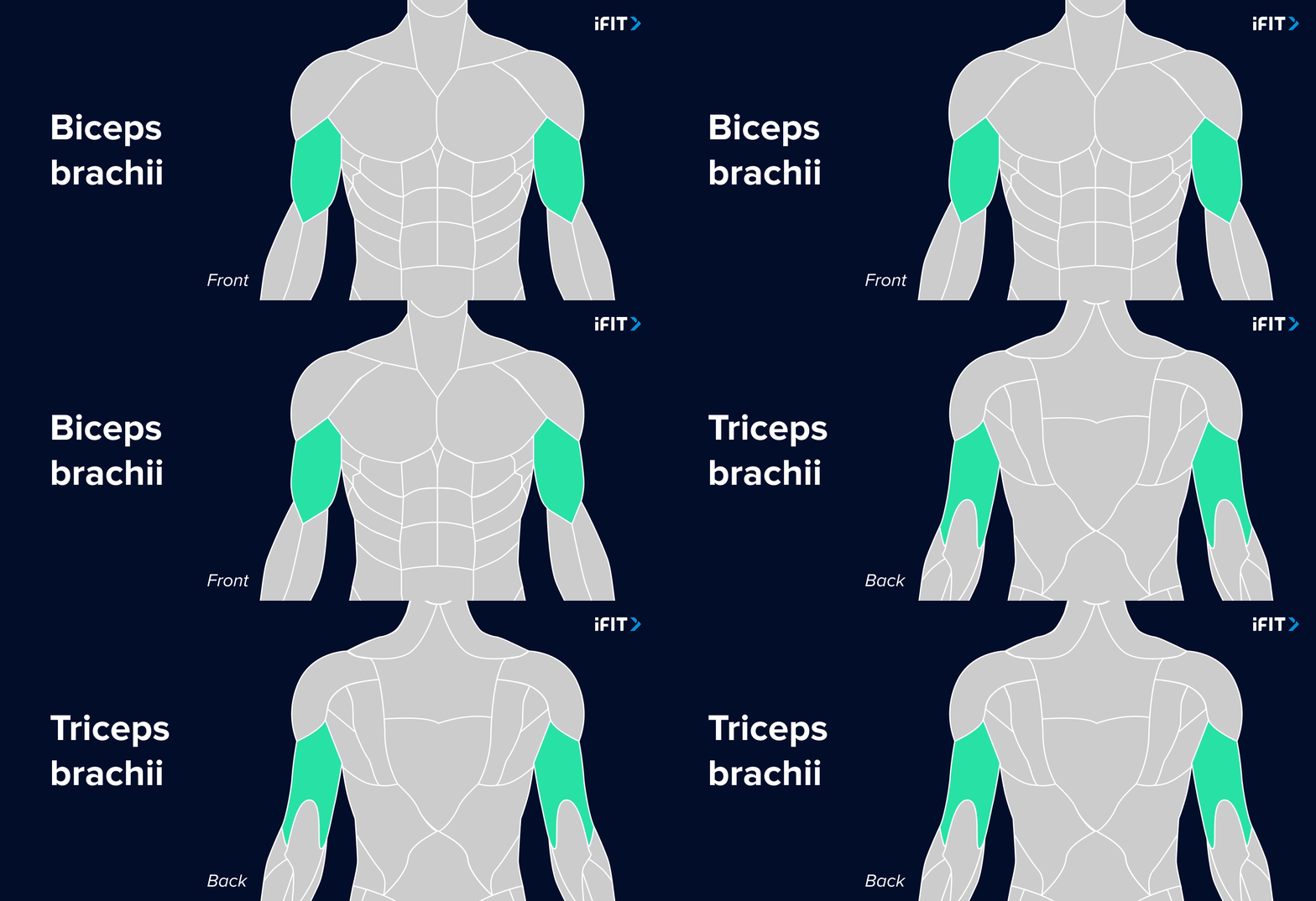
Your biceps, as you may have guessed, are located on the front of your upper arms. These muscles assist in elbow flexion, allowing you to raise your forearms up at the elbows (as with a bicep curl) and turn your palms inwards. When at rest, your biceps naturally overpower the triceps12. This is why your arms appear slightly bent at your sides!
As the antagonist muscle of the biceps brachii, the triceps brachii is situated on the back side of your arms. This muscle allows for extension of the elbow joint, which is what lets you place your arms straight down or out. Your triceps also help stabilize your elbows, which is needed for movements requiring precision.
iFIT arms workout
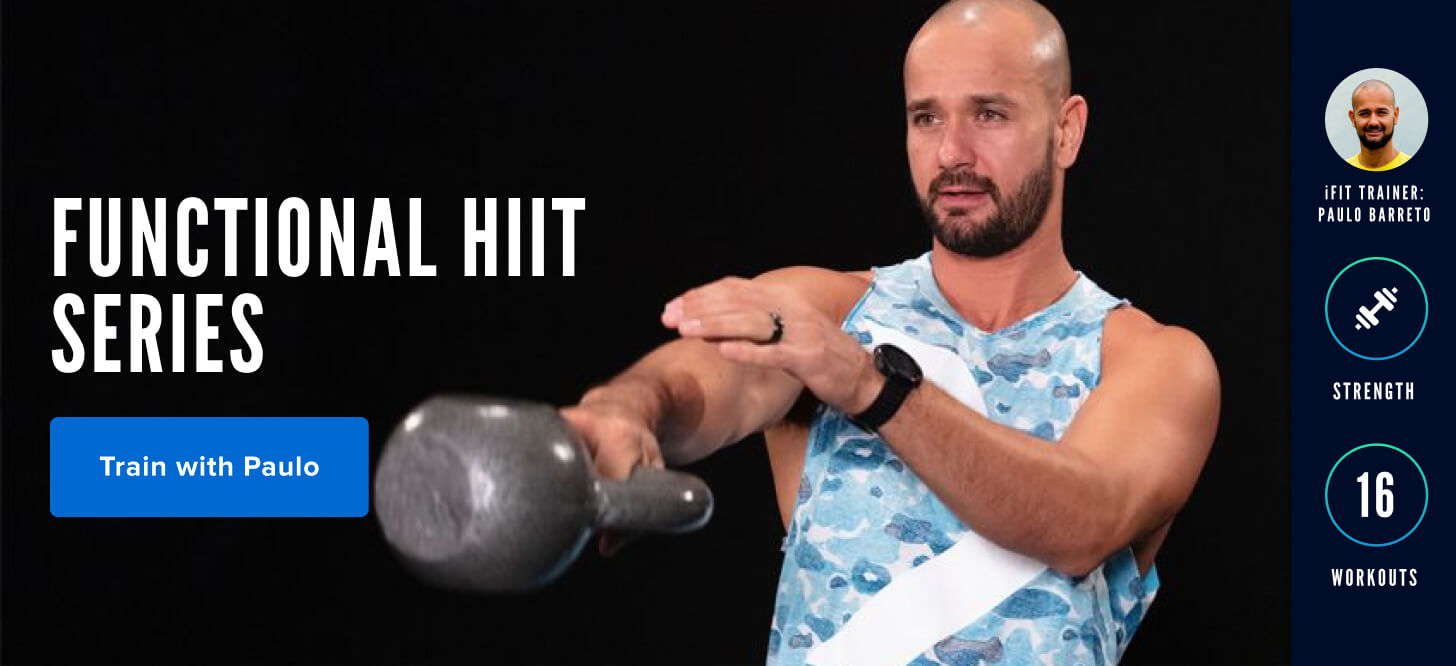
Ready to make your next home workout one to remember? Work on your biceps and triceps with iFIT Trainer Paulo Barreto in his Functional HIIT Series! Focusing on cardiovascular and muscle endurance, Paulo will guide you through workouts that target specific muscle groups. Many of these HIIT workouts target your arm muscles, so get ready for lower and upper body strength exercises!
Start an iFIT upper body workout today
Now that you know much more about the major muscle groups that make up your chest, shoulders, back, and arms, you can put that knowledge to use with iFIT upper body workouts. When you sign up for a 30-day free trial of our fitness app, you’ll gain access to a huge selection of strength workouts you can do right from your home gym. Designed for all fitness levels, our workouts, if done properly and regularly, may meet you where you’re at in your fitness journey. Even if you’re a beginner, you can get going with our beginner-level workouts today!
Whether you choose to knock out the previously suggested workouts or find more on your own, you can do them anywhere! Try a chest workout while on your lunch break or an arms workout during your seasonal vacation. Make an iFIT workout a part of your daily schedule or download the fitness app for on-the-go workouts. Upper body exercise is crucial for functional living, helping you continue to do all the things you enjoy. With an iFIT personal trainer leading you through each workout, you’ll feel these upper body muscles working hard!
References
1. Northside Hospital. (2019). 4 unexpected benefits of chest exercises. 4 Unexpected Benefits Of Chest Exercises. https://www.everydaywellness.org/community-health/blog/4-unexpected-benefits-of-chest-exercises.
2. Healthline Editorial Team. (2018, January 24). Pectoralis major. Healthline. https://www.healthline.com/human-body-maps/pectoralis-major-muscle#1.
3. Healthline Editorial Team. (2018, January 19). Pectoralis minor. Healthline. https://www.healthline.com/human-body-maps/pectoralis-minor#1.
4. Lung, K., St Lucia, K., & Lui, F. (2021, October 7). Anatomy, thorax, serratus anterior muscles. NCBI. https://www.ncbi.nlm.nih.gov/books/NBK531457/.
5. Healthline Editorial Team. (2018, January 20). Deltoid. Healthline. https://www.healthline.com/human-body-maps/deltoid-muscle#1.
6. Healthline Editorial Team. (2018, January 23). Shoulder muscles. Healthline.https://www.healthline.com/human-body-maps/shoulder-muscles#1.
7. Ourieff, J., Scheckel, B., & Agarwal, A. (2021, July 26). Anatomy, back, trapezius. NCBI. https://www.ncbi.nlm.nih.gov/books/NBK518994/.
8. Henry, P. J., & Munakomi, S. (2021, August 13). Anatomy, head and neck, levator scapulae muscles. NCBI. https://www.ncbi.nlm.nih.gov/books/NBK553120/.
9. Farrell, C. & Kiel, J. (2021, July 26). Anatomy, back, rhomboid muscles. NCBI. https://www.ncbi.nlm.nih.gov/books/NBK534856/.
10. Jeno, S. H., & Varacallo, M. (2021, August 11). Anatomy, back, latissimus dorsi. NCBI. https://www.ncbi.nlm.nih.gov/books/NBK448120/.
11. Tiwana, S. M., Charlick, M., & Varacallo, M. (2021, August 11). Anatomy, shoulder and upper limb, biceps muscle. NCBI. https://www.ncbi.nlm.nih.gov/books/NBK519538/.
12. Tiwana, S. M., Sinkler, A. M., & Bordoni, B. (2021, August 6). Anatomy, shoulder and upper limb, triceps muscle. NCBI. https://www.ncbi.nlm.nih.gov/books/NBK536996/.
13. Tiwana, S. M., Sinkler, A. M., & Bordoni, B. (2021, August 6). Anatomy, shoulder and upper limb, triceps muscle. NCBI. https://www.ncbi.nlm.nih.gov/books/NBK536996/.
Disclaimer: This blog post is not intended to replace the advice of a medical professional. The above information should not be used to diagnose, treat, or prevent any disease or medical condition. Please consult your doctor before making any changes to your diet, sleep methods, daily activity, or fitness routine. iFIT assumes no responsibility for any personal injury or damage sustained by any recommendations, opinions, or advice given in this article. Always follow the safety precautions included in the owner’s manual of your fitness equipment.
You might also like

Introducing SmartAdjust™ for Your Treadmill: iFIT’s New Personalized Workout Experience
SmartAdjust personalizes your treadmill workout before it even starts, adapting speed and incline to your fitness level in real time.
March 16, 2021
Strength Training While on GLP-1: A 6-Week Plan
When your body weight changes, you aren’t just losing fat—research shows you risk losing lean muscle mass, too. Protecting that muscle is the key to maintaining your metabolism and everyday strength. This practical 6-week guide breaks down exactly how to structure a simple, 20-to-30 minute full-body strength routine 2–3 times a week. Built around foundational compound movements like squats and rows, this plan shows you how to safely implement progressive overload without burning out your energy. Give your body a clear signal to keep its muscle and build a routine that sticks.
May 26, 2026

Find Your Stride with Tommy Rivs in the Joy of Running Part 2: Redwoods, Workouts 1-10
There’s just something magical about taking your next step forward, especially when it means you’re surrounded by the towering redwoods and rugged beauty of California’s northern coast. iFIT Trainer Tommy Rivs’ newest series will help you experience the magic of this region with the Joy of Running Part 2: Redwoods, Workouts 1-10. This beginner-friendly program is designed to help you progress from walking to running at your own pace.Explore California’s Scenic CoastSet along breathtaking coastal trails and through scenic redwood groves, this series brings the natural beauty of Northern California to your treadmill. From the peaceful paths of Laguna Point to the rolling meadows of Mendocino Headlands, each workout is an opportunity to breathe, move, and connect with the pure joy of movement.Make Progress with Tommy RivsKnown for his thoughtful coaching and love of movement, Tommy Rivs will guide you through a mix of walking and running intervals to gradually build your endurance and confidence. Each workout keeps the speed steady while changing your movement so you can focus on how your body feels and adapts as you move.Whether you’re returning to fitness or taking your first steps toward running, this series is all about moving forward with purpose. Tommy will help you to:Develop endurance and build strength with progressive intervalsImprove your form and consistency with his expert guidanceReconnect with the joy of movement in an inspiring settingBuild confidence to take on your next running challengeThis is only the beginning; there’s so much more to come with Rivs. For now, lace up those shoes and join him for an incredible journey amongst the redwoods.Join Tommy Rivs in the Redwoods
November 3, 2025