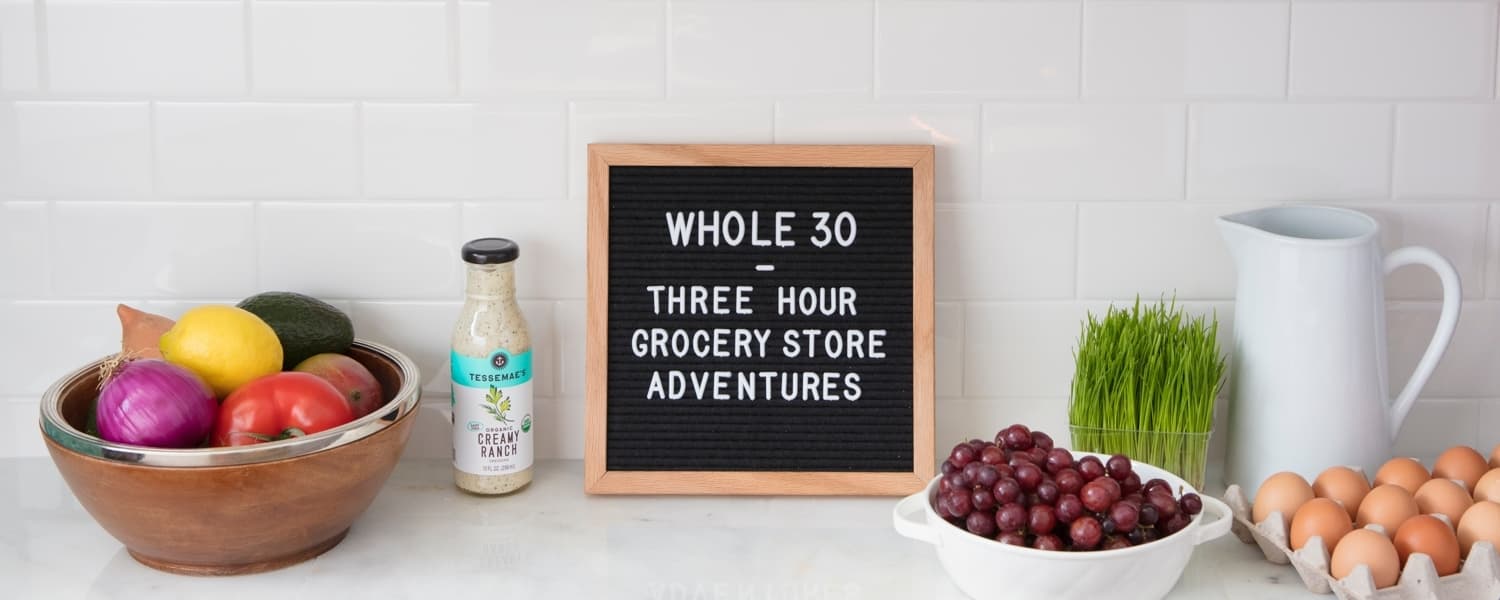
Well, we just finished the first of six diets that we’re testing! We’ve not only learned a lot about Whole30®, but also about ourselves. In the end, we all had a different experience—some noticed positive changes, while others noticed major red flags. We think a lot of this had to do with personalities, current diets, goals, and lifestyle in general. But we’re hoping that having four different perspectives can help you make an informed decision if it’s the right diet for you!
Also, if you're interested in trying some Whole30-compliant recipes, click here to see our favorites!
Our Team's Quick Review
Megan Ostler—MS, RDN, mom of 2, still breastfeeding.
- As a dietitian, I wouldn’t recommend this diet for the majority of people. Click here to find out why.
Michelle Alley—BS in nutrition, mom of 2, collegiate runner, training for a marathon
- This diet is not something I would do again, due to what it did to my GI system and training. Check out the dirty details here.
Hannah Mann—Social media guru, busy mom, and regular gym goer
- I would recommend Whole30 if you’re wanting to reset and prove to yourself that you can make healthy choices. Check out my experience here.
Trevor Mann—Marketing specialist, father to a stud, gym junkie & sports fanatic
- Depending on what your goals are, this diet may or may not be for you. See what my experience was here.
How did the diet stack up nutritionally?
Before starting Whole30, I (Megan) was concerned about eliminating entire food groups and still getting all the nutrients I needed, especially as a nursing mom. In the beginning, I was impressed that I was able to meet most of my nutrient needs, with the exception of calcium, vitamin D, and biotin. However, my milk supply started to decrease because I wasn’t getting enough carbs with all the restrictions.
In general, it’s much harder to meet all of your nutrient needs when restricting so many food groups. So I tried to up my calcium intake by eating cups and cups of leafy greens each day, but it still wasn’t enough. I could have eaten canned fish with bones, which is high in calcium, but I have a hard time with bones in general (like I can barely eat turkey at Thanksgiving due to the presence of bones), so I just couldn’t stomach that. Also, trying to get enough vitamin D was a joke. Yes, you can get it from the sun, but I am in the mountains of Utah during winter, so I needed to get it from my diet/supplements.
Another nutrient that this diet seriously lacks is soluble fiber. Even though our total fiber was on average 38g (about 25% above the recommendation for females), only 4 of those grams were soluble fiber. Now, there are benefits to both types of fiber, but soluble fiber is the one that absorbs water to make a gel and helps lower cholesterol, stabilize blood sugar, and feeds good bacteria. It’s found in grains like oats and barley, legumes, nuts, and some fruits and vegetables. Insoluble fiber is the stuff that moves things through and keeps you regular. While three of us adapted to this imbalance and just had “loose stools,” Michelle had diarrhea for four weeks, so this imbalance can obviously be a bigger deal to some.
Alright, let’s talk macros. On this diet, about 19% of our calories came from protein (for the women). We were eating almost 95 grams a day, which is more than the recommended amount, and what I often suggest for clients (1.5g/kg). About 35% of our calories were carbs, and about 46% came from fat. This led to some decreased energy for us but also increased satiety. We rarely felt hungry and all lost weight.
Overall, from a nutritional standpoint, this diet promoted lots of fruits and vegetables, healthy fats and protein, and whole foods, which are all good things. Our snacks and meals were balanced and we didn’t have the refined sugar high and lows, but restricting whole food groups led to inadequate intakes of certain nutrients and excessive of others, like insoluble fiber. To learn more, read our individual experiences below.
Individual Experiences
Megan Ostler

To start off, I’ll answer the question I get most often. Did I lose weight? Yes, I lost 7.8 pounds in 30 days. I have to say, though, that I was already losing weight from breastfeeding, and prior to starting the diet I’d lost 12 pounds in the previous 4 ½ months. So while it sped up my weight loss, I certainly feel like I would have gotten down to my current weight with a little more time.
My milk supply went down the first week, so I had to increase my fruit consumption to about 4 servings a day in order to get enough carbs and bring it back up. So while I didn’t have to count calories to lose weight, I had to really watch my carb/calorie intake to avoid losing my milk. With that being said, let's talk about my non-nutrition experience and concerns with the diet.
First off, I want to say that Whole30 isn’t all bad. For those with IBS, an autoimmune disease, or any other condition where a certain food may be a culprit, following Whole30 can be a great way to identify trigger foods, since it is an elimination diet. It’d be best to meet with a dietitian before starting a diet like this, but if you want to do it on your own, Whole30 could be a place to start. I know my brother-in-law has seen great relief with his autoimmune disease (ankylosing spondylitis) when he avoids grains and legumes (he does good with dairy).
However, if you’re using it specifically for weight loss or just to eat healthier, I wouldn’t recommend it. Why? Because it restricts many healthy foods like whole grains and legumes, and a healthy lifestyle isn’t just about how much you weigh or how many servings of vegetables you eat.
On this diet, I was grumpy, short-fused, and cursed a lot, which are common side effects of low-carb/restrictive diets (the cursing might just be me). It affected my home and social life since I was eating separate meals from my family and also felt like I couldn’t go out with friends. I spent more time, money, and mental effort following this diet, and by the end, I would just skip meals and grab a handful of nuts ‘cause I was too exhausted to think about it and sick of the food (too much meat makes me feel super heavy/gross and my consumption went way up on this diet). These things are inconvenient, but the biggest red flag was what it did to me mentally.
Now, I work with food all day as a dietitian, but this diet made me preoccupied and obsessive about food. I was constantly thinking about my next meal, watching others eat (often making treats just to watch them be eaten). I dreamt about food, frequently smelled “forbidden food,” and many times had the urge to chew and spit up food so it “wouldn’t count.” When the weight started coming off, I thought “I wonder how low I can get?” Never mind that I was tired, grumpy, not up to exercise, and was skipping meals…as long as the weight was coming off, right?
One benefit often cited is that your cravings go away. Well, my cravings did go away, but so did all the enjoyment of eating. (My cravings came back at week 3 with my period, if you could even call it that since it was so light.) And my stools were also super loose. But then there was the binging. I would skip meals, then binge on handfuls of cashews or a jar of almond butter, barely chewing, and not even thinking about what I was doing. This was all new and scary, as I recognized that these were warning signs of disordered eating. But I wanted another opinion, so I took an eating disorder screening online and was told to see a health professional.
I know that I have a high-risk personality for eating disorders, but I didn’t realize how triggering this diet could be. I work really hard to have a good relationship with food (oddly, something this diet promises to heal). I try to trust and listen to my body, and stay food neutral. I had never been on a diet before this and it was just terrible for me. Now, more than ever, I understand the dangers with diet mentality. I realize this may not be as triggering for others, but I would guess it’s triggering for many people and they just don’t realize how dangerous their thoughts can be. So trust me when I say, you don’t need Whole30 for weight loss or health. There are less restrictive approaches that can help you eat healthily and enjoy your food.
As I write this, it’s been one week off the diet. I’ve gone back to my normal eating (with maybe a few extra treats to make up for last month). I’ve tried to incorporate some good things I did on the diet, like more high-protein breakfasts, more balanced snacks, and more nuts in my diet, but I am reminding myself to listen to my body and get back to food neutrality. Even after just a month, I sometimes think I shouldn’t have bread with my soup. Then I have to remind myself that bread is fine and it’s something I enjoy.
Eating is finally enjoyable again and I actually have the energy to work out, something I rarely did on the diet. Now my body feels energized and craves brisk walks at lunchtime. And not that this is all that important, but I have mostly kept the weight off. I gained about a pound back, but I’m almost back to my pre-baby weight and feel like normal. I don’t imagine I will yo-yo back since this isn’t a low weight for me. But the weight isn’t nearly as important as the balance and happiness I feel again.
Michelle Alley
 Alright, I’m going to be really open and honest about my experience during the Whole30 diet, and some information may be a little TMI (some parts are hard to share as I know my coworkers will be reading this), but if you want to know all the gory details, continue reading.
I actually started Whole30 pretty excited and a little scared. I was excited to see if the promised increase of energy would happen and if it would help with my training. And I was scared because I’d never dieted before and honestly didn’t know if I had the willpower to go 30 days without enjoying some bread or chocolate.
In the first week, I never got the sugar detox headaches like I thought I would. Instead, day two hit and you know who was having GI distress? Me. I had diarrhea for 29 days straight I know some people are wondering how, since I was eating so much fiber (about 38 grams a day and well above the RDA), but it was the type of fiber I was getting. I was eating about 34 grams of insoluble fiber and only about 4 grams of soluble fiber, which is usually found in grains, beans, nuts, and some fruits and vegetables. Soluble fiber is what helps your bowel movements be solid, and I wasn’t getting enough.
Now, was I running to the bathroom every minute? No, but I did have to make adjustments to my training and had to stick to the treadmill to get my miles in since I couldn’t go more than two miles without taking a bathroom break! It was annoying and definitely didn’t give me the edge I was hoping for.
I also never got that extra energy I was promised. In fact, I was a bit sluggish and had difficulty finding the energy to work out. This was partly due to the fact that I was battling with dehydration for the whole month due to the diarrhea. Keep in mind, this was unique to just me in our group. While the others dealt with looser stools, I was dealing with full-on diarrhea. I learned that I am just more sensitive to the balance of fibers than others.
Not only did this diet affect my GI system, but it made changes to my menstrual cycle, too. Female bodies can be pretty sensitive to diet changes, as we have a huge hormone balancing act happening, but what’s fascinating is how quickly dietary changes can affect our natural cycle.
When it was time for Aunt Flow to make her visit, I found myself panicking because I realized I was late. I did end up having my period, but it was extremely light and only lasted two days. I’m sure there are women reading this thinking that’s so lucky. But not having a regular period isn’t a good thing. Typically, if your body is having an abnormal period, it’s a sign that you’re under some type of stress and in need of some TLC.
If some of you are still envious of my easy period last month, let me discuss my mood. Imagine having major PMS for a month. I was grumpy as heck! Or as a loving and kind coworker pointed out, “You seem to be more on edge than normal.” Well, I was on edge—for the whole month!
This diet claims that its main purpose is to help your relationship with food. Unfortunately, I don’t think that was the case for me. I lost my appetite and thought way too much about all the foods I couldn’t eat. I would even smell the treats my daughters and husband were eating. These were all signs of food obsession. Whole30 has a disclaimer about not participating if you’ve had an eating disorder history, as it can be triggering. Pretty confusing, right? For a diet that’s supposed to heal your relationship with food, those that have had eating disorder issues are told this diet isn’t for them.
Another concern I had was the response I received from my peers when they learned I was participating in Whole30. During the first week, people told me I looked skinnier and my skin was great. Well, what woman doesn’t want to hear these compliments?! My first thoughts were “Dang! This must really be working. I should avoid grains, dairy, legumes, and added sugars all the time!” Thankfully, the logical side of me would catch up and I’d tell myself “You’ve only been on this diet for 7 days! There’s no way your friends are able to tell if those changes are really happening in such a short time.” That’s when I realized how our society truly views dieting. We want to praise people for being healthy, which is a good thing and super encouraging for someone who is trying to start a healthier lifestyle or begin their weight loss journey, but we are quick to praise without knowing if someone is losing weight in a healthy way. Personally, I don’t think having diarrhea for a month is healthy, but no one wants to hear about that. They only want to hear about how much weight I lost.
Alright, now for some positives about being on this diet. And yes, there are some positives! For one, I discovered that I can go 30 days without added sugars, legumes, grains, and dairy. I liked the sugar reset after the holidays and might do a 3-day sugar detox in the future. (I felt like it only took me 3 days to not crave sugar.)
I also ate way more vegetables for breakfast than I normally would and I hope that sticks. Plus, we were able to create some pretty bomb recipes for people that might have allergies or follow a restrictive diet for medical reasons.
I even experienced how difficult it is to avoid foods and be forced to read every single label when shopping—a task I’ve had to give clients in the past, but never had to do myself. Our first shopping trip took two hours just to find compliant ingredients. But now I’m familiar with certain brands that I can suggest to people with allergies or those avoiding certain foods.
The biggest thing I learned was the importance of meal planning, though. When I’m eating normal, I don’t put a lot of stress on meal planning. I often change things last minute or do quick meals when things come up. But this is so much harder to do when you’re following a strict diet. I realized how easy it can be to give up on eating healthy, and how emotional and frustrating diets can be. Even though I know our bodies are different, this diet experiment really proved that to me, as no one in our group had the exact same experience.
In the end, I don’t think Whole30 is something I would do again. And I don’t feel like I can suggest it for others, mainly due to the GI distress and mental struggles I experienced. So far in this diet exploration, I’m feeling like moderation is the best bet for a healthy and sustainable lifestyle.
Hannah Mann
 There is no doubt about it, Whole30 is HARD. But I like a good challenge, which is 50% of the reason why I agreed to do it. This was my second time doing Whole30. The first time I did it was two years ago. Since then, I’ve been pregnant, had a baby, moved out of my home state, and moved back. With such major life changes, it became increasingly harder to live what I considered a healthy lifestyle when I was thrown out of my normal routine.
My experience with Whole30 was vastly different this time around. I found it to be so much harder. The main reason being that leading up to the challenge, I was eating nothing for breakfast, a cheese quesadilla for lunch, Swedish Fish for dinner, and ice cream to top the day off. I was stuck in that rut of making sure my baby was 100% taken care and totally forgetting about myself. So you could say there was room for improvement.
Before the end of the first day, I already had a sugar withdrawal headache. My energy was in the dirt as well. Getting through workouts was tough, but doable. The second week seemed to be the easiest for me. I was in the groove and knew what to grab at a moment’s notice. My energy started to pick up and I felt pretty good (but never entirely satisfied). After my meals I was full, but I always wanted a slice of bread with my soup or rice on the side. I wasn’t craving sweets anymore, but I thought about them daily.
Going out to dinner with friends wasn’t too much of a struggle, but I never felt fully satisfied after leaving the restaurant. Eating family dinner was surprisingly easy. My mother-in-law would make a separate batch of chicken and it didn’t seem to be that much of a hassle.
The last two weeks were hard to get through because I was over and done with it. Even though I felt good and I could tell my body was being fueled the right way, I also knew something was missing, whether it was a little extra carbs one day or a handful of popcorn during a movie.
Overall, I got a lot of great things out of Whole30. I experimented with ingredients I’d never cooked with before, and also learned some delicious recipes that were easy to throw together. I realized that it’s just as easy to grab an orange as it is a handful of Swedish Fish. I ended up losing around 7 pounds and haven’t gained any back so far. But I’m mostly excited to start incorporating some of the healthy habits into my everyday life!
Trevor Mann
 I understood how disciplined I needed to be going into Whole30. I had done quite a bit of research beforehand and knew that it was going to be tough, but not impossible. Having this mindset helped me stick to the diet and not get too wrapped up in the things I couldn’t eat.
Throughout my whole experience, my energy levels seemed normal. However, about halfway through, I did start to drag during my workouts. I strength train 5 days a week for 1 ½ hours each day, and have been consistently for the past three years. I would usually rely on a supplement to help me complete my workouts and keep my energy high. Since no supplements are allowed on Whole30, I think this and the low carb intake resulted in low energy during my training sessions.
At the end of Whole30, I’d lost a total of 15 pounds. I noticed it was a combination of fat and muscle, which I believe was due to not eating enough carbs and protein to sustain the muscle I had and was also trying to gain. I lost upper body muscle, mostly in my shoulders and arms, that I worked hard for. I was able to trim my stubborn lower abs and see some definition. The issue here was that I was full after my meals and had no desire to eat during other times of the day. It was especially difficult to hit my protein goals for the day without a post-workout shake. By the end of the 30 days, I wasn’t able to lift as heavy in the gym. Overall, my body became more lean in stubborn areas, but I had less upper body strength.
If your workout regimen is similar to mine and you are trying to increase muscle mass while on this diet, it’s really important to keep up on your protein. You will most likely have to eat large quantities of food. Whole30 may be an option if you’re a weightlifter and looking to cut down on body fat. However, the most difficult part will be to make sure you get enough calories and protein in your diet to sustain the muscle you have.This was my personal experience and your result may differ.
One of the major lessons I took away was to be very conscious about what ingredients are in products that I buy. It was easy to miss all the added sugar in everyday items. It’s become a part of my routine to read the label before I add something to my cart. There are tons of healthier options for almost all grocery items if you take a minute to look around and compare the labels. Overall, my body felt healthier and I had a healthy mindset towards food.
iFit's Whole30 Compliant Recipes
Tzatziki Sauce
Homemade Pesto
Grilled Chicken Shawarma
Sweet Potato Buns
BLT Zoodles
Breakfast Pizza
Zuppa Toscana
Open-faced Buffalo Chicken Sandwich
Sweet Potato Breakfast Salad
Grain-free Sweet Potato Porridge Bowl
Buffalo Chicken Lettuce Wraps
Smoked Salmon and Pecan Salad
Tilapia Fish Cakes
Tuna Lettuce Wraps
All the bacon breakfast sandwich
Pesto Zoodles
WARNING: This post is not intended to replace the advice of a medical professional. The above information should not be used to diagnose, treat, or prevent any disease or medical condition. Please consult your doctor before making any changes to your diet, sleep methods, daily activity, or fitness routine. iFit assumes no responsibility for any personal injury or damage sustained by any recommendations, opinions, or advice given in this article.
You might also like

Strength Training While on GLP-1: A 6-Week Plan
When your body weight changes, you aren’t just losing fat—research shows you risk losing lean muscle mass, too. Protecting that muscle is the key to maintaining your metabolism and everyday strength. This practical 6-week guide breaks down exactly how to structure a simple, 20-to-30 minute full-body strength routine 2–3 times a week. Built around foundational compound movements like squats and rows, this plan shows you how to safely implement progressive overload without burning out your energy. Give your body a clear signal to keep its muscle and build a routine that sticks.
May 26, 2026
How to Make Soup a Nutrition Super Star
There’s something so comforting, warming, and nostalgic about soup. I mean, who doesn’t want chicken noodle soup when they’re sick, or chili after a cold day playing in the snow? Now, you might be thinking, “Yeah, I love soup...as an appetizer!” Soup is often not viewed as satiating enough to be a meal unless it’s full of cream and calories. Lighter soups are often paired with bread, salad, and even large entrées. However, soup done right can be filling, healthy, and all you need for you next meal. There are a few tricks I can teach you to make your next soup a “souper star!” Forgive me...I had to say it!Veggies, veggies, veggiesSoup is the perfect vehicle to pack in an array of vegetables. Aim to include at least 3 vegetables of different colors, preferably. The color of vegetables is important, because it corresponds with various nutrients and phytochemicals your body needs. Each color contains vital nutrients, including vitamins, that play important roles in disease prevention and overall health. Also, veggies provide fiber to fill you up so you’re not as hungry throughout the rest of the day.Pack in proteinIt’s important to get adequate protein at every meal. In soup, it can come in a variety of forms. Meat, legumes, whole grains, Greek yogurt, and tofu can all be great additions to help your soup pack a powerful punch and feel like a real meal. For vegans or vegetarians, if your soup is still lacking, try adding in a vegan protein powder. This works well for strongly-flavored, thick soups like stews, curry, etc. However, make sure you don’t use a sweet protein powder if you want a salty flavor. I made the mistake of mixing vanilla vegan protein powder with lentil soup once. Yuck!Replace the creamCreamy chicken and wild rice, loaded potato, butternut bisque, creamy tomato...no doubt creamy based soups are popular and yummy! However, they’re also loaded with calories and saturated fat. Instead, replace the cream with nonfat Greek yogurt (add at the end to prevent curdling), a basic white roux, milk and cornstarch, silken tofu, or a vegetable puree (such as cauliflower, potato, or butternut squash). The type of sub you choose will depend on your soup, but you can definitely enjoy creamy soup without the heavy cream.Watch the sodiumThe biggest pitfall that keeps soup from entering the nutrition big leagues is the sodium content. Most soups are high in sodium. Even if you don’t add salt to your soup, it still might be super high from canned goods, processed foods, and salty seasoning mixes. The average American diet is super high in salt, and we’ve come to expect all food to be well-salted. To make soup a nutritious super star, aim to have your soup be maximum 700 mg per serving (preferably much lower). Skip canned items and go for fresh or frozen. If you need to get canned foods, buy a low-sodium version and rinse the contents well. Be careful with sodium-packed items like soy sauce, bouillon, spice mixes, etc. Now, once you take out the salt, it might seem like your soup is lacking in flavor. To make up for that, be sure to load up on fresh herbs and spices. For a salty flavor, my favorite substitute is vinegar, which taste salty without the sodium. My favorites are red wine and balsamic. Believe me, you can get big flavor without the salt shaker.Keep it wholeHave fun with your soup and add in any seasonal whole foods you’d like. Soup is a great way to use leftovers or large garden harvests. Just aim to keep the ingredients whole. Whole grains, vegetables, lean meats, legumes, fresh herbs, and spices are all great. Try to avoid lots of processed foods like cream-based soups, mixes, processed cheese, etc. Often, when I have lots of veggies to use such as zucchini, broccoli, onions, green beans, potatoes, carrots, and celery, I’ll chop them all up and put them either in a tomato-based soup with a little balsamic vinegar or with chicken and lots of fresh herbs. Soup is one of those foods that just needs a big pot and fresh ingredients, but for recipe lovers, check out the soup recipes on our blog.By making a few changes, you can have a delicious, comforting soup, healthy enough to make the nutrition big leagues. So grab a spoon and let's get cooking!Megan Ostler MS, RDNiFit DietitianSoup Recipes SamplingsSlow Cooker Beef and Barley Stewhttp://www.ifit.com/blog/slow-cooker-beef-and-barley-stew/Skinny Loaded Baked Potato Souphttp://www.ifit.com/blog/skinny-loaded-baked-potato-soup/Thai Carrot Souphttp://www.ifit.com/blog/thai-carrot-soup/WARNING: This post is not intended to replace the advice of a medical professional. The above information should not be used to diagnose, treat, or prevent any disease or medical condition. Please consult your doctor before making any changes to your diet, sleep methods, daily activity, or fitness routine. iFit assumes no responsibility for any personal injury or damage sustained by any recommendations, opinions, or advice given in this article.
February 20, 2016
Our Experience: Soup Cleanse
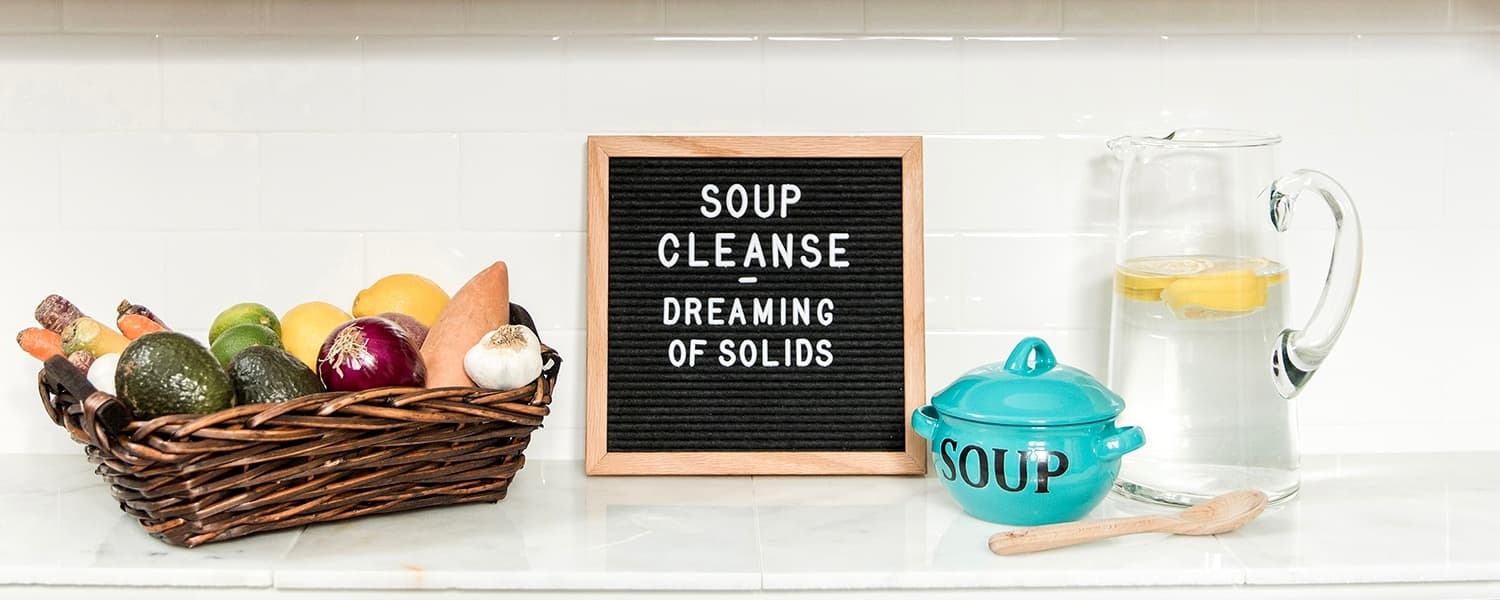
The soup cleanse had a pretty unanimous conclusion—it was miserable and pointless. We chose a soup cleanse because we thought warm soup on a cold day in February sounded better than juice. Plus, we hoped that soup wouldn’t cause major spikes and falls in our blood sugar, like juice would. Many cleanses promise health, vitality, and the ability to cure disease. One book even went so far as to say your kids would love you and their friends will want to hang out at your house. Who knew that cleansing could be so powerful! Despite what many self-proclaimed experts claim, unless you are in acute treatment for a substance use disorder, suffering from acute poisonings, or other such emergencies, your body does not need outside help to cleanse itself. You come into contact with toxins every day, and if you think about it, anything can be toxic given the right dose. For example, Tylenol is safe at the recommended dose, but toxic in high doses. So really, too much of anything can be harmful, including things that you wouldn’t think could be toxic, like water, oxygen, and even vitamins and minerals. Luckily, our bodies are designed to deal with varying levels of substances, from air to food to toiletries. Our livers, kidneys, and GI systems are so good at cleansing our bodies that we don’t need help from supplements or food. And I have yet to come across a well-designed, double-blind clinical research study that proves soup or juice (or any other cleanse) does anything but make you hungry and burn your money. Our takeaway message is: Serious toxicity levels or poisonings should be managed in an emergency room where true detoxification can take place. Our bodies can cleanse themselves, given we have a healthy liver and kidney. The best way to experience vitality and ward off disease is by eating a nutrient-rich, balanced diet, exercising, limiting alcohol, and not smoking. Detox diets lack scientific evidence and are often just used to make money. Don’t do a cleanse. How did the diet stack up nutritionally? I (Megan) am sure you won’t be surprised to learn that this diet lacked in almost every nutrient. It averaged 1,014 calories a day (well below what any of us typically eat), and only 41 grams of protein. No wonder we were all starving! During this cleanse, we did get enough fiber (35g) and vitamins A, C, K, folate, thiamine, and B6. Mineral wise, we got plenty of copper, iodine, manganese, and sodium, but we were lacking in all other vitamins and minerals. So this was definitely far from a well-balanced diet. It wasn’t a huge deal for three days, but also not ideal. From a nutritional standpoint, I definitely wouldn’t promote this. You could incorporate a few veggie-loaded soups into your normal diet, but you don’t need to only eat vegan, water-based soups. Our Team’s Quick Review Megan Ostler—MS, RDN, mom of 2, still breastfeeding There is no reason to do a cleanse, unless you want to be hangry and frustrated for three days. Read my review here. Michelle Alley—BS in nutrition, mom of 2, collegiate runner, training for a marathon If you want lowered energy levels and no excitment for food, then try the soup cleanse. Read my review here. Hannah Mann—Social media guru, busy mom, and regular gym goer One word to describe this cleanse: starvation. Read my review here. Trevor Mann—Marketing specialist, father to a stud, gym junkie, and sports fanatic This diet didn’t fulfill any of its promises and nothing was enjoyable to eat. There are much better ways to lose three pounds. Check out my experience here. Individual Experiences Megan Ostler I’m a little embarrassed to admit this, but despite all I know about nutrition and health as a dietitian, I got a little sucked into the cleanse mentality. Not too much, but while I was preparing, researching, and deciding what cleanse we would follow, I thought, maybe I will feel better, lighter, and “cleaner.” I love soup and I thought doing a liquid diet might be a nice break for my body. I was kinda looking forward to it and really keeping an open mind. I knew from science it wouldn’t actually cleanse my body of toxins, but maybe I would feel great and enjoy eating soup for three days in the bitter, cold winter. Well, the soup cleanse we did wasn’t a yummy minestrone or tomato bisque. The soups were all vegan, with mostly water, spices, veggies, and occasionally beans or grains. Because it lacked fat, it also lacked flavor, richness, and depth. So they weren’t exactly the yummy soups I savor in the winter. Not only were the soups disappointing, but the results were as well. I was starving after the first day and despite how much broth I “snacked” on, I couldn’t get satisfied and had no energy. Since I didn’t want to lose my milk supply for my daughter, I adapted the next two days and had larger portions with extra avocado and approved toppings, as well as increased levels of beans and quinoa. Still, all I could think about was food, specifically solid food. I didn’t experience a cleansing effect for my colon either. Everything GI wise was pretty normal for me, other than a growling stomach. I was also promised vitality, popularity, and all sorts of other ridiculous claims, none of which happened by the way. I didn’t get extra followers on Instagram and my kids didn’t appear to love me more—I feel lied to! (insert winky face) So in short, I know that these homeopathic “experts” selling these cleanses are great salespeople. Hey, I even thought there might be something to what they had to say, despite my knowledge, but when it came down to it, the cleanse was basically a low-calorie diet for three days. I lost two pounds, put it right back on, and had no energy. It didn’t do anything more than what you would expect soup to do. I can strongly say after doing the cleanse myself, that this one’s worth skipping. Hannah Mann I’m not going to sugarcoat it, this diet was horrible and I saw no benefits. From breakfast on the first day, I couldn’t get myself to eat even a small portion of the soup. I was starving the entire time. I would heat up a soup and add toppings when it came time to eat, but couldn’t get myself to eat more than a few bites before my appetite was completely lost. I started crying during dinner the first night because it was so hilarious how unappealing my meals had become. I was expecting some sort of cleansing effect to take place, so I pushed through to day two. But day two came and bathroom trips were still normal. I ended up sipping on iced herbal tea and starving for two days. By the end of the second night, I was feeding my son oatmeal before dinner. He wanted to grab the spoon and try to feed me the oatmeal. At first, I would reject it because it was against the cleanse. Then I would try to get him to take a few more bites, which was when I realized if I’m trying to get him to eat something healthy, but I’m showing him that I won’t eat it, why would he eat it? So I said forget it and took a bite of his oatmeal. After we went to bed, I made myself a quesadilla and loved every single bite. Michelle Alley What surprised me the most was how quickly I lost my appetite if I wasn’t excited about the meal I was going to consume. I found myself trying to force myself to eat the soup. Now in all honesty, a couple of the soups were pretty good, but I struggled with the fact that soup was my only option for three days. I struggled the most with eating it for breakfast. I am the type of person that’s excited to eat breakfast and it’s usually consumed immediately after I wake up. Well, during the cleanse, my breakfast wasn’t consumed until about 11:00 a.m. And that’s when I could stomach the soup. During the cleanse, you’re not supposed to do any exercise, other than yoga. I thought for sure I’d be hitting my yoga mat, but I quickly found I was lacking all energy. I napped often and even thought about just sleeping through the three days, so I could get through it. I was just so hungry! The majority of the time I felt like I was starving myself, which I basically was. The only time I wasn’t distracted by my hunger was if I was sleeping. There’s a reason that cleanses are meant to be short-lived, as they’re not a sustainable diet. And because they’re so short-lived, it’s hard to tell if they actually provide any benefits. Personally, I don’t think I received any benefit from the cleanse. I lacked all energy and found my brain foggy. I often forgot what I was working on or what I was supposed to be doing. And when my girls wanted to play outside in the snow, an activity that I enjoy with them, I found myself struggling to get off the couch. But then the mom guilt would sink in and I’d finally trudge out into the cold, a little bittered by the fact that I wouldn’t get to warm up with a cup of cocoa after. As for the actual “cleanse” effects (i.e. overachieving digestion), I had more of a cleanse effect with Whole30 than I did with this. While the soups did provide more diverse nutrients, protein, and fiber than other cleanses we looked into, a cleanse is absolutely not necessary for a healthy diet. Trevor Mann The soup cleanse has been the hardest diet so far. Not necessarily because the recipes didn’t taste good, but eating soup and broth for every meal/snack got really old. I tried to supplement more beans into my diet so that I could get as much protein as possible, but I still felt unsatisfied after my meals. I dreaded my next meal because I knew I wasn’t only going to be hungry after, but I wasn’t going to enjoy it either. I don’t typically crave any sort of food, and I do really well not eating sweets. During this diet, all I could think about was eating a big juicy burger and counting down the seconds until I could get one. My fitness goal isn’t to lose weight, but to gain muscle mass. Maybe if I was at a different stage in my fitness goals where I needed to trim down a few pounds quickly, this could be an option. I lost three pounds during the three days on the diet, even though I feel like it was just water weight and didn’t make any difference to my body composition. My energy levels on a daily basis were a little less than normal. Overall, I wasn’t a fan of the diet. I didn’t see any of the benefits that the diet creator promised, which makes me believe there are more enjoyable ways to lose three pounds. WARNING: This post is not intended to replace the advice of a medical professional. The above information should not be used to diagnose, treat, or prevent any disease or medical condition. Please consult your doctor before making any changes to your diet, sleep methods, daily activity, or fitness routine. iFit assumes no responsibility for any personal injury or damage sustained by any recommendations, opinions, or advice given in this article.‘
March 16, 2018