
How soon after a workout should you eat protein?
If you have ever finished a workout and immediately started calculating the minutes until your "window" closes, you are not alone. The idea of a strict post-workout deadline for eating protein has been floating around gyms and fitness apps for years. The real story is more forgiving, and honestly, more useful.
The anabolic window is wider than you think
For a long time, the advice was strict: eat protein within 30 minutes of finishing a workout or lose most of the benefit. That framing has not held up well. According to the National Academy of Sports Medicine (NASM), the classic 30 minute anabolic window has relaxed considerably under research scrutiny, and for most people, a protein and carb meal within a couple of hours of training captures the recovery benefit. [1]
That is a much more livable target than a 30 minute sprint to the fridge. It means you can finish your workout, shower, get the kids ready, or head into a meeting, and still eat in a way that supports your recovery.
What actually matters more than timing
Here is the part that gets lost in all the anabolic window talk: precise timing is the smallest piece of the puzzle. NASM frames it as a hierarchy. Total daily protein intake and food quality matter most. How your protein is distributed across the day comes next. Exact workout timing is the final few percent, a refinement rather than a foundation. [1]
In other words, if you are consistently getting enough protein across your meals each day, you do not need to stress over hitting an exact number of minutes after a workout. Consistency across the week will do more for your recovery than any single perfectly timed shake.
A simple way to put this into practice
You do not need a stopwatch or a supplement cabinet to make this work. After your next workout, try pairing protein and carbs into your next meal or snack. A protein shake, Greek yogurt, or eggs on toast all work well here. The point is not to hit an exact gram count or sprint the clock. It is to build a habit you can repeat every time you train.
If you train earlier in the day and eat lighter afterward, that is fine too. What matters most is that your overall day includes enough protein, spread out in a way that fits your schedule and appetite.

Building the habit with iFIT
One of the easiest ways to make this stick is to pair it with something you are already doing. Right after you finish a workout in the iFIT Personal Trainer App, use that moment as your cue: log your session, then handle your next meal or snack with protein in mind. Small, repeated pairings like this are how habits actually take hold, and they matter more than any single perfectly timed meal.
Looking for a good protein source? iFIT subscribers get 20% off all Thorne products, including their NSF Certified for Sport protein powder. Shop Thorne.
Frequently asked questions
How soon after a workout should I eat protein?
Within a couple of hours works well for most people. The old advice of a strict 30 minute window has relaxed considerably, and a protein containing meal or snack in that broader window still supports recovery. [1]
Does protein timing actually matter for muscle growth?
It matters, but far less than clients tend to think. According to NASM, precise timing is the smallest factor in the hierarchy, well behind total daily protein intake and how that protein is distributed across your meals. [1]
How much protein do I need after exercise?
Rather than focusing on an exact post-workout number, aim for consistent protein intake spread across your day. NASM notes that total daily intake and distribution matter more than any single post-workout target. [1]
What counts as a good post-workout protein source?
Simple, familiar options work fine. A protein shake, Greek yogurt, or eggs with toast are all reasonable ways to pair protein and carbs into your next meal after training.
References
National Academy of Sports Medicine. Nutrient Timing: What Trainers Should Tell Clients About Eating Around Workouts
The primary purpose of this blog post is to inform and entertain. Nothing on the post constitutes or is intended to be a substitute for professional medical advice, prevention, diagnosis, or treatment. Reliance on any information provided on the blog is solely at your own risk. Always seek the advice of your physician or other qualified health provider with any questions you may have regarding a medical condition, and please consult your doctor or other health care provider before making any changes to your diet, sleep methods, daily activity, or fitness routine. Do not disregard professional medical advice or delay seeking it because of information available on this blog. iFIT assumes no responsibility for any personal injury or damage sustained by any recommendations, opinions, or advice given in this article. Always follow the safety precautions included in the owner's manual of your fitness equipment.
You might also like
How soon after a workout should you eat protein?
Forget the 30-minute scramble. Here's what actually matters for protein timing and post-workout recovery.
September 11, 2026
What is a BCAA?
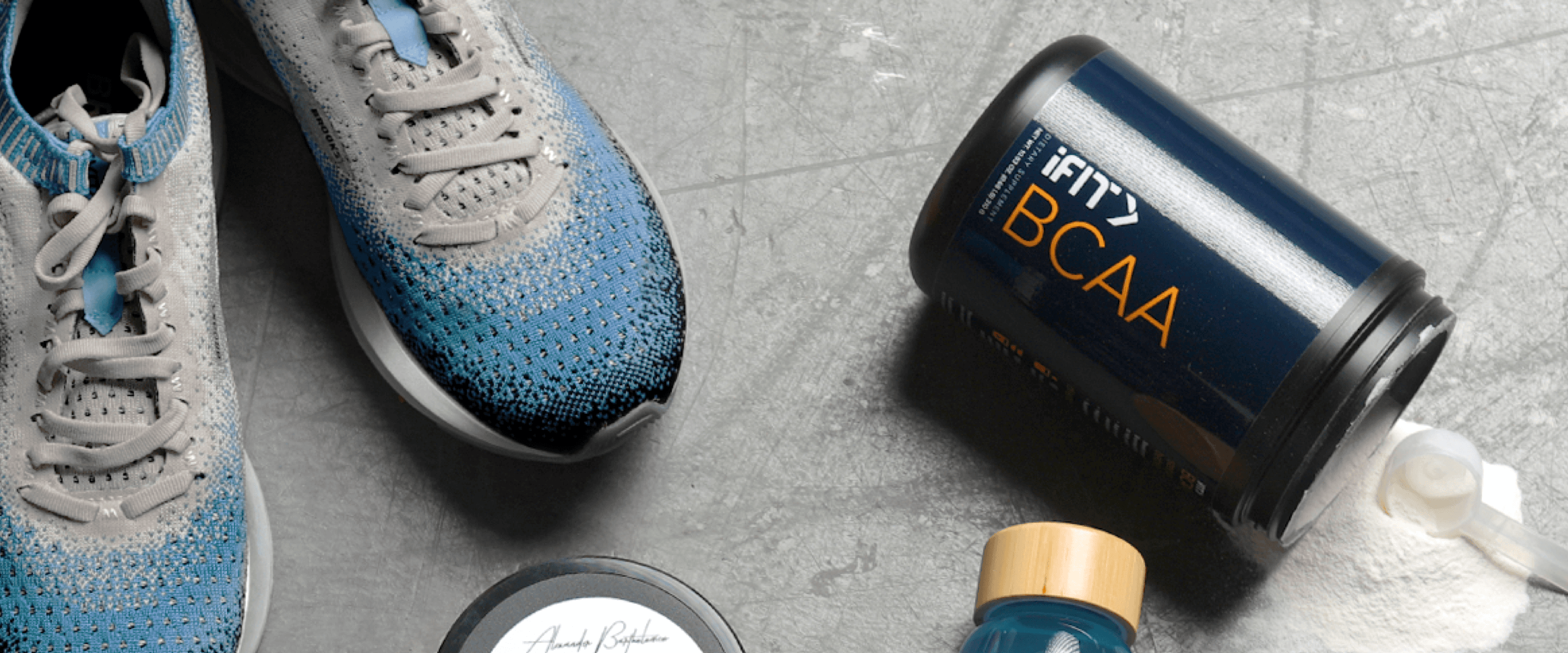
Have you stumbled upon the BCAA+ on our shop page, read about them online, or have a friend who swears by them? If so, you may be questioning what BCAAs are and why people take them. You may even wonder if you should be adding them to your training regimen. Well, wonder no longer! Read on to learn what BCAAs are, how your body uses them, and how they can impact your training! To shop iFit BCAA+, click here! What is a BCAA? BCAA stands for branched-chain amino acid, which is a subcategory of amino acids. There are a total of 20 amino acids that are used as the building blocks for proteins in the body. Protein is best known for making muscles in your body, but it is also used in your bones, tissues, enzymes, hormones, and more. There are only three amino acids within the subcategory of branched-chain amino acid: leucine, isoleucine, and valine. How are they used in the body? BCAAs have many uses, but in a sports context, we focus on the following: They provide a small amount of energy during exercise. (BCAAs are the only amino acids broken down in your muscles. Other amino acids break down in your liver.)They signal muscle protein synthesis for building and repairing muscles.They make up part of muscle structure. Why supplement them? Since your muscles burn BCAAs for fuel, the amount left to signal the process of building and repairing your muscles decreases. The theory is that supplementing before working out will increase the amount of BCAAs. This provides you with an adequate amount to trigger the process for building and repairing your muscles, even after some are used as fuel. Studies suggest that they may help with muscle recovery, prevent muscle damage, and combat soreness. How much do I need? Research suggests that consumption should be highest for leucine, as it is the main signaling amino acid. It seems to improve muscle recovery at about 2–3 grams. Research also indicates that a 2:1:1 ratio of leucine, isoleucine, and valine may be optimal. Can I get them from food? Absolutely! Dairy and whey are great sources of BCAAs. However, it takes about 2 ½ cups of milk to get 5 grams of BCAAs. So, for those looking for a lower-calorie option, supplementation is a great choice. If you're looking to get energized, hydrate your body, and recover quicker after your workouts, try the 3-in-1 iFit BCAA+ mix!
September 2, 2020