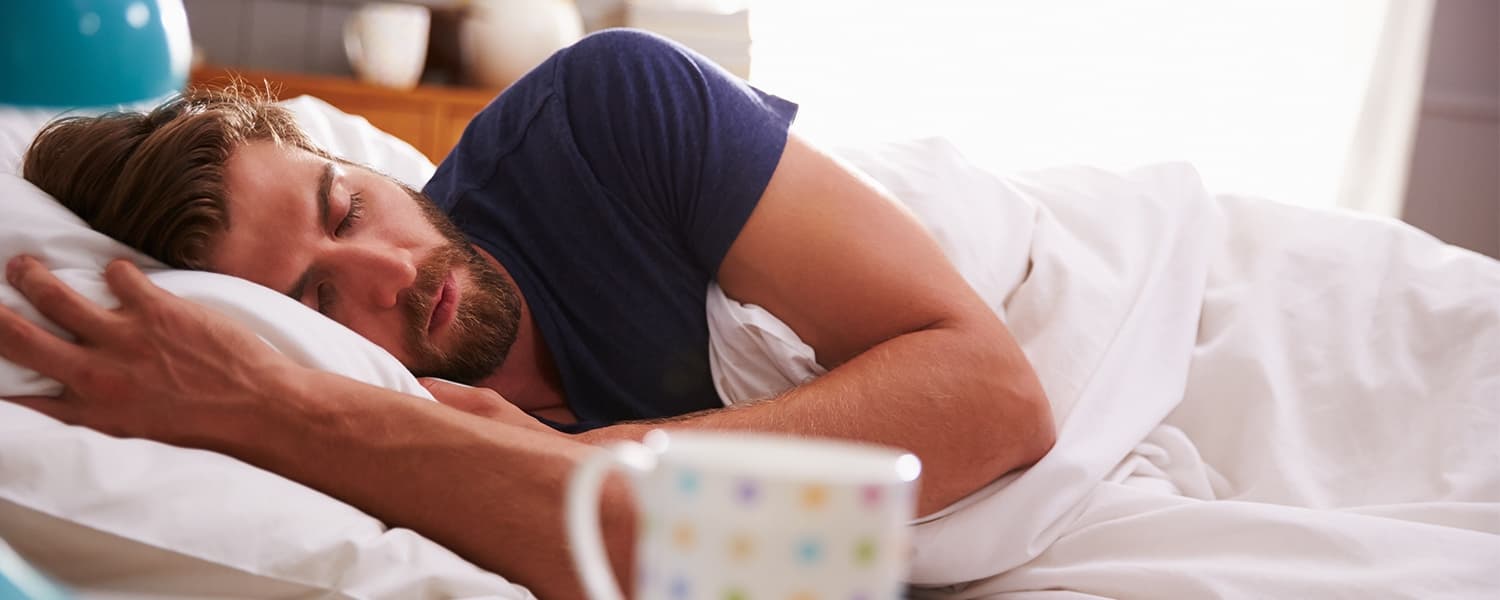
10 Tips to Better Sleep
Do you have trouble falling asleep or staying asleep? How about waking up after a solid night of rest feeling exhausted and ready for a nap, rather than work? It’s estimated that 50–70 million Americans chronically suffer from some type of sleep and wakefulness disorder, so rest assured (pun intended), you’re not alone.
These sleep disorders can affect daily function, health, and even your lifespan. The long-term effects of inadequate sleep and sleep disorders have been associated with a wide range of negative health consequences including: increased risk of hypertension, diabetes, obesity, depression, heart attack, and stroke.(1) That being said, it’s not something you should assume is “normal” and trudge on, coffee in hand.
The National Sleep Foundation suggests that most adults need 7–9 hours of sleep each night.(2) So if your average night is eight hours (*sigh*, if only...), that would be one-third of each day. In the long run, that’s one-third of your life! If you lived to be 99 years old, that would mean you would spend 33 years asleep in your lifetime (am I the only one that finds that number shocking?) Since we spend so much of our life asleep, you’d think we’d all be experts, right? Unfortunately, that isn’t the case. According to the Center of Disease Control, insufficient sleep is a public health problem.(3) As natural as sleeping seems to be, there is still a lot for us to learn.
Sleep hygiene
Sleep hygiene describes a holistic approach to sleeping that includes many behaviors, actions, and inactions.(4) Here are a few examples that you’re hopefully already doing, and if not, you should start.
Establish a regular wake and sleep cycle—go to bed and wake up at the same time. Vacations and weekends included (ugh...that means no lazy Sundays).
- Beds are for sleep and sex. No TV, working, reading, or stressing. End of story.
- Avoid napping. If you didn’t sleep well last night, the best thing you can do is carry that sleep momentum to the following night.
- Avoid exercising immediately before bed. Strenuous exercise within 2–3 hours of sleep can make it harder to fall asleep because you’ll have endorphins racing through your body.
- Keep your room cool and ventilated. In my opinion, between 60–75°F is ideal.
- Avoid having a large meal close to bedtime. Your changing glucose levels throughout the night could disrupt your sleep.
- Avoid caffeine. Now I’m not saying you have to break up with your cup of coffee, just limit the hours you drink it. Caffeine will run through your system for about six hours, so if you’re going to bed at 10, you’ll want to cut off your coffee intake by at least 4 p.m.
- Quit smoking. It’s not just hurting your overall health, but the effects of nicotine could be contributing to your sleep loss, as well.(5)
- If you aren’t asleep within 20 minutes, go into another room to read or relax until you feel tired. Staying in bed awake can teach your body a new, unhealthy habit.
- Don’t obsess over the clock. The more you watch the time, the more stressed you’ll become, making the situation worse, not better.
- Don’t use alcohol to fall asleep. This can create rebound insomnia—meaning you fall asleep easily, only to wake up later in the night.
So you read the list and you deserve an A+ in Sleep Hygiene 101. But you’re still not sleeping, or if you are, you’re waking up exhausted, rather than well-rested. What gives?
Weight loss
One thing that could be affecting your sleep that you might not think of is your weight. Overweight individuals have extra adipose tissue in the back of their throat. As the surrounding muscle structure relaxes during sleep, this tissue is no longer supported and can fall down over the airway, blocking airflow to the lungs. The solution? Shaving off a few (or several) of those extra pounds.
This doesn’t need to be jaw-dropping, earth-shattering weight loss either. Even a small amount of weight loss can assist in opening up your throat and improving sleep apnea symptoms.(6) Several sleep studies have shown the effectiveness of losing weight to reduce the severity of sleep-disordered breathing and obstructive sleep apnea. Some have also shown that a large reduction in body weight can lead to the virtual elimination of obstructive events in some patients.(7)
No dice?
If you’re still passing with flying colors (and walking around like a sleep-deprived zombie) it may be time to see a sleep doctor. They might conduct a polysomnography test to explore the possibility of sleep disorders. This study monitors data like your brain waves, blood oxygen levels, heart rate, respiratory rate, eye movement, and skeletal muscle activity. It typically takes place in a specialized sleep center or hospital. The technician will place sensors on your scalp, temples, chest, and legs, and elastic belts around your chest and stomach (among other things), then monitor you as you sleep.
If that sounds a little intense for you (I mean, how are you supposed to sleep with all those wires on you, anyway?), or you're not concerned enough quite yet to take the plunge and pay for a polysomnography test, you could start out with something a little simpler like one of our wearables. These little devices discretely monitor your sleep patterns (light, deep, or awake) from your wrist. While it shouldn’t be used to diagnose sleep disorders, it can give you personal insight into what’s disrupting your sleep. By tracking your diet, workout, and activity level throughout the day and comparing to your sleep stats that night, you may begin to see patterns that’ll help you get a better night’s rest.
Sweet dreams!
Emily Wiley
iFit Trainer
WARNING: This post is not intended to replace the advice of a medical professional. The above information should not be used to diagnose, treat, or prevent any disease or medical condition. Please consult your doctor before making any changes to your diet, sleep methods, daily activity, or fitness routine. iFit assumes no responsibility for any personal injury or damage sustained by any recommendations, opinions, or advice given in this article.
References:
- Institute of Medicine. Sleep disorders and sleep deprivation: an unmet public health problem. Washington, DC: National Academies Press; 2006.
- Institute of Medicine. Sleep disorders and sleep deprivation: an unmet public health problem. Washington, DC: National Academies Press; 2006
- “Insufficient Sleep Is a Public Health Problem.” National Center for Chronic Disease and Prevention and Health Promotion, Division of Adult and Community Health. Web. 3 Sept. 2015.
- “Sleep Hygiene” Lucile Packard Children’s Hospital at Stanford. Pediatric Pain Management Clinic. Web. 2000.
- Jefferson CD; Drake CL; Scofield HM et al. Sleep hygiene practices in a population-based sample of insomniacs. SLEEP 2005;28(5):611-615
- Melinda Smith, M.A., Lawrence Robinson, and Robert Segal, M.A. “Sleep Apnea: Symptoms, Treatments, Causes, and Cures.” Web. May 2016.
- Strobel RJ, Rosen RC. “Obesity and weight loss in obstructive sleep apnea: a critical review.” Sleep. 1996 Feb;19(2):104-15.
You might also like
.jpg&w=3840&q=75)
Why sleep is your fitness superpower for muscle recovery
The real work of getting stronger happens while you sleep. Here's why growth hormone and deep sleep matter for recovery.
September 11, 2026

Exercise While Taking GLP-1: A Muscle-First Plan
Navigating a calorie deficit on GLP-1 medications often brings unexpected side effects like lower energy and fatigue. Pushing through exhaustion isn't the answer—moving smarter is. This muscle-first guide dives deep into the essential lifestyle pillars that support your training consistency. Learn how precise hydration habits defend against fatigue, and discover the striking science of how sleep duration directly impacts your body composition during weight loss. Complete with a flexible, one-week sample schedule, this guide shows you how to adjust your training intensity on tired days so you can protect your progress without overexertion.
May 26, 2026
iFit Workouts to Strengthen Your Mind
World Mental Health Day is observed on October 10 each year. This globally recognized day is focused on raising awareness of mental health issues around the world and mobilizing efforts in support of mental health. Research shows that exercise may have a positive effect on your overall mental health. We all know the feeling of pride and accomplishment after completing a workout, but focusing specifically on your mental health is another way to improve your overall well-being. At iFit, we know that a strong mind is just as important as a strong body. That’s why we have introduced several series that are focused on mental health to help you strengthen your mind through motivational messages, meditation practices, and even a series focused on quality, restful sleep. Here are some of the wellness series available in the iFit Library: In this series, you’ll walk with sports psychologist and iFit Guide Dr. Jarrod Spencer. He’ll explain the mental health issues athletes often struggle with, like anxiety, depression, anger, confidence, vision, hurdles, and energy. He’ll provide you with tools to conquer these issues, along with stories of famous athletes, including Tiger Woods, Serena Williams, Stephen Curry, and Landon Donovan. Join this Series In this audio series, iFit Guide Kevin Courtney will guide you through basic practices of meditation that are intended to generate a calm and stable mind. As the series progresses, Kevin introduces more advanced techniques to enhance focus, cultivate awareness, and ultimately help you find your way to a bright, luminous mind. Join this Series This unique series with iFit Guide Jason Stephenson will help you slow down at the end of the day and peacefully transition to healing rest. He will help you overcome loud subconscious thoughts, calm your mind, and enter a deep state of tranquility. Join this Series iFit Guide Dr. Shauna Shapiro will lead you through six mindful walks, teaching you science-based practices of mindfulness and self-compassion. Her goal is to rewire your brain to bring about lasting change that can help transform your life. You'll learn specific practices to help you improve your sleep, increase your body positivity and self-esteem, and cultivate greater coping tools to manage your stress. Join this Series We hope you’ll join our iFit Guides for these unique, enlightening series, focused on your mental health and well-being.
October 20, 2020