.jpg&w=3840&q=75)
Your iFIT Reformer Membership Starts Here
Your NordicTrack reformer has arrived. The machine is set up, the membership is active, and you are ready to start. The question most new members have at this point is a simple one: where do I actually begin?
That is what this article is for. It covers how to orient yourself on the machine if you need it, who your iFIT Pilates instructors are, which series to start with based on where you are, and what the first few weeks on the platform look like when you follow the progression iFIT has already mapped out for you.
You do not need a plan. You need to know where to find the one that is already there.
If You Need Help With the Machine First
iFIT and the NordicTrack reformer are one integrated system. The platform handles the instruction, the progression, and the resistance guidance. The hardware handles the rest.
If you are brand new to reformers and want to understand the machine before your first session, including the carriage, the spring resistance system, the footbar positions, and a few safety basics worth knowing before class one, the NordicTrack beginner guide covers all of it: Reformer Pilates for Beginners: How to Start Strong at Home.
Once you have that foundation, come back here. The rest of this article is about what iFIT gives you from the moment you press play.
Meet Your iFIT Pilates Instructors
One of the things that makes iFIT different from a class catalogue is that the instructors are not interchangeable. Each one brings a distinct approach, a different emphasis, and a specific body of programming. Knowing who they are before you start helps you choose the right series for where you are right now.
Jeni DelPozo
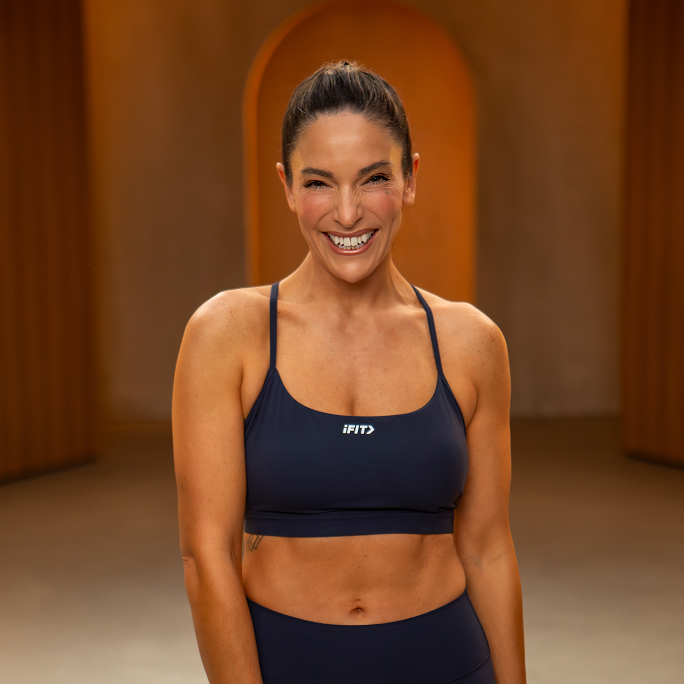
Jeni leads the Strong Foundations series alongside Abe Ahern, and her cuing is some of the clearest on the platform. She teaches the why behind every position, not just the what. New practitioners who feel uncertain about whether they are doing something correctly tend to click with Jeni's approach quickly. She teaches movement principles, not just movements.
Abe Ahern
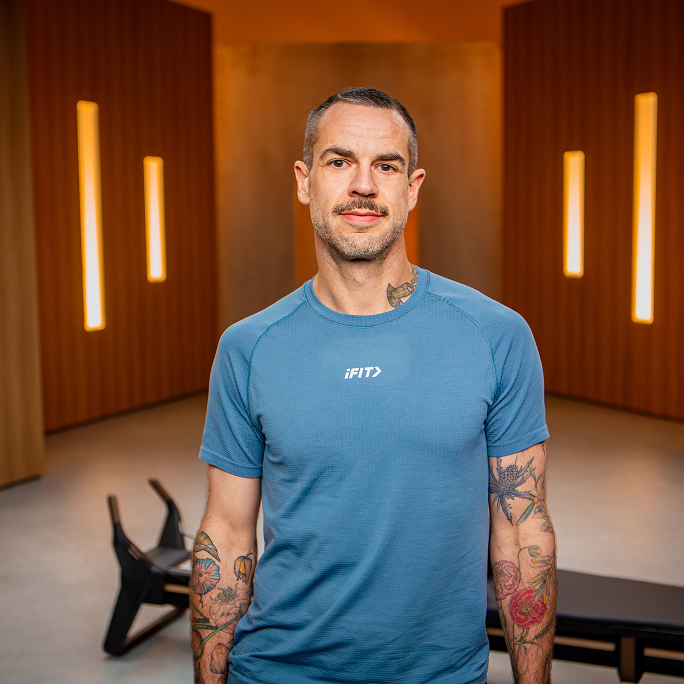
Abe co-leads Strong Foundations and also coaches the Base to Burn series. His sessions have a quality of precision: he builds exercises incrementally and explains the relationship between one movement and the next. Base to Burn is the series to choose if you want the time commitment to grow with your fitness rather than arrive fully formed on day one.
Ashley Paulson
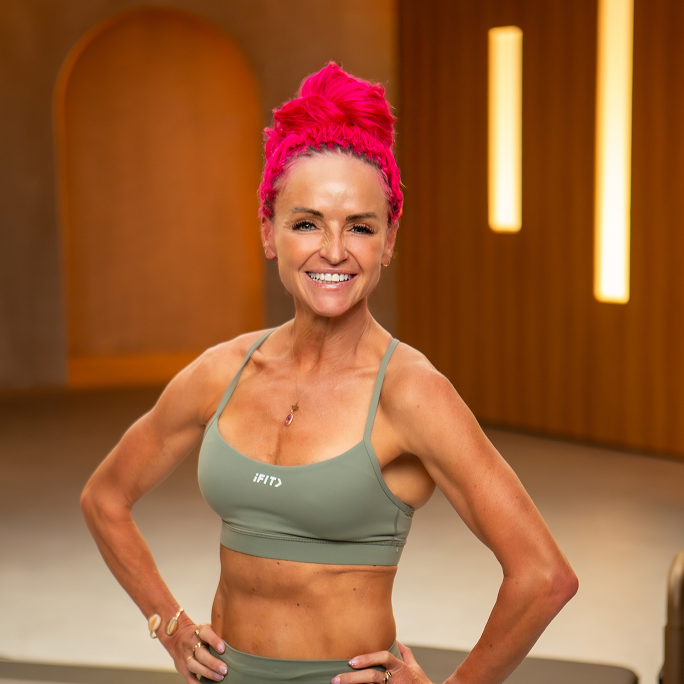
Ashley leads The Resilient Body, the series that follows Strong Foundations for members who are ready to bring in the jumpboard and Pilates box while keeping the progressive structure intact. Her sessions alternate cardio bursts with targeted strength work, and the pacing keeps things moving without sacrificing form.
Yvette McGaffin
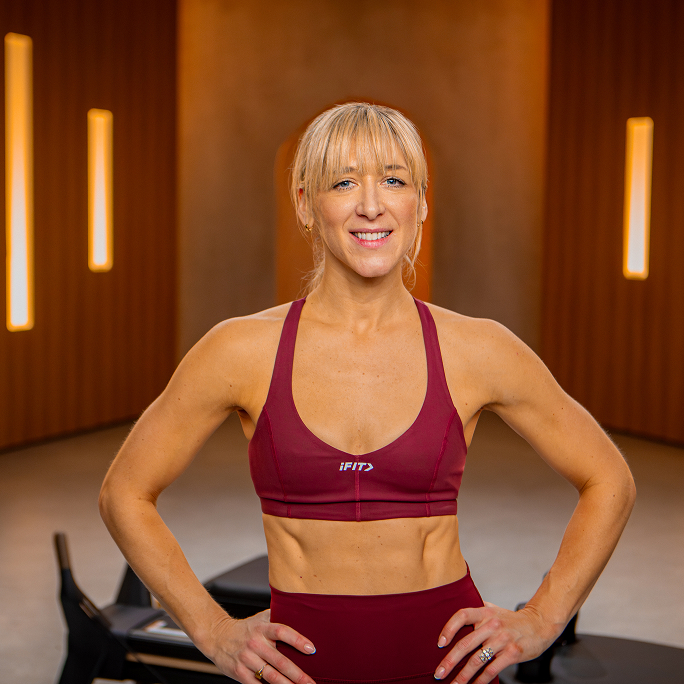
Yvette leads the Signature Series, which is where intermediate and experienced practitioners tend to land. Her programming focuses on powerhouse work and deep core stabilisation through classic Pilates exercises, with later sessions adding unilateral challenges. If you come to the reformer with existing Pilates experience from a studio, this is the right level to explore once you have spent a few sessions calibrating to the machine.
Where to Start: The iFIT Path for Reformer Pilates
iFIT's reformer library includes over 160 reformer-based classes with new content added regularly. The key is not choosing randomly from that library. It is following the progression structure the series format is built around.
Start here: Strong Foundations
Ten sessions, 45 minutes each, led by Jeni DelPozo and Abe Ahern. This is the right first series for anyone new to reformer Pilates, and it is also the right starting point for experienced studio practitioners who are new to iFIT or new to this specific machine. Not because the movements will be unfamiliar, but because the first few sessions of any new reformer are a calibration period: understanding how the machine responds, how the resistance feels, where your baseline is on this particular apparatus.
Strong Foundations covers leg presses, core work, glute activation, dynamic balance challenges, and foundational movements including the Hundred. By the final session, every major muscle group has been trained and the full movement vocabulary of the reformer feels like second nature.
When you are ready to progress: The Resilient Body
Eight sessions, 40 minutes each, led by Ashley Paulson. This series introduces the jumpboard and Pilates box while alternating cardio bursts with targeted work across the core, upper body, and lower body. It maintains the progressive structure of Strong Foundations while expanding the range of what each session asks of you.
If you want a gentler build: Base to Burn
Seven sessions, starting at 25 minutes and building incrementally to 60, led by Abe Ahern. For members who want to build the habit gradually rather than front-loading the commitment, this series is the better fit. The length of each session increases as your fitness does, which means the investment grows with you.
For intermediate and experienced practitioners: Signature Series
Five sessions, including a 60-minute total body finisher, led by Yvette McGaffin. Classic Pilates exercises built around powerhouse work and deep core stabilisation, with later sessions adding unilateral challenges. If you come to iFIT with an existing Pilates practice, start here after a session or two to orient yourself to the machine.
What the First Few Weeks Actually Look Like
The goal of the first month on a new reformer is not dramatic transformation. It is fluency: getting comfortable enough with the machine and the platform that iFIT's instruction can actually reach you during a session, rather than half your attention being on the mechanics.
Two sessions per week is the right cadence to start. It gives your body enough frequency to build the movement patterns the reformer requires, with adequate recovery between sessions. Research on consistent Pilates practice shows meaningful improvements in core strength, flexibility, lower-limb strength, agility, and balance emerging at the eight to twelve week mark.1 That timeline is not a warning. It is useful to know because it sets an accurate expectation: the work you are doing in week two is building something you will feel clearly in week eight.
A few things that are worth knowing as you go:
The soreness will be in unfamiliar places. Deep abdominals, hip stabilisers, the muscles along the inner shoulder blade. Those are the muscles reformer Pilates specifically trains. Soreness there is not a bad sign. It is the system working.
Soreness going away does not mean the training stopped working. When the post-session soreness fades in the third or fourth week, it means your body has adapted to that level of demand. That is when the series progression matters most. Moving forward in the programming is the right response, not training harder within the same session.
The improvements tend to show up off the machine first. Better posture, a more stable core during everyday activity, less tension in the lower back. These surface in daily life before they surface in fitness metrics. That is a reliable sign the training is doing what it is designed to do.
How the iFIT Platform Supports Your Progress
The session-to-session experience of training on iFIT goes beyond following along with a class. When your instructor cues a resistance change, your on-screen display shows your current setting and the instructor's side by side. If a class is filmed on a different reformer model with different settings, the in-workout widget automatically translates those settings to your specific machine. You never have to do the conversion yourself.
The Follow Trainer feature means your instructor's resistance cues connect directly to what is on your screen. The series format means each session is sequenced intentionally relative to the ones before and after it. And with over 160 reformer classes to move through once you have completed the beginner series, there is a long runway of programming that already knows where you are going.
iFIT is not content sitting on top of a reformer. It is the layer that turns a spring-and-carriage apparatus into a guided training system with a progression structure, instructor coaching, and a library that grows with you.
Explore More
Frequently Asked Questions
What iFIT Pilates series should I start with on my NordicTrack reformer?
Start with Strong Foundations, the ten-session beginner series led by Jeni DelPozo and Abe Ahern. It is the right entry point whether you are new to Pilates entirely or simply new to this machine and this platform. After completing Strong Foundations, The Resilient Body with Ashley Paulson is the natural next step.
Who are the iFIT Pilates instructors?
The core iFIT reformer Pilates instructors are Jeni DelPozo, Abe Ahern, Ashley Paulson, and Yvette McGaffin. Each leads specific series within the iFIT reformer library: Jeni and Abe co-lead Strong Foundations and Base to Burn, Ashley leads The Resilient Body, and Yvette leads the Signature Series for intermediate and advanced practitioners.
How often should I train on my iFIT reformer as a beginner?
Two sessions per week is the right starting point. It provides enough frequency to build movement patterns while allowing adequate recovery between sessions. After the first few weeks, adding a third session is a natural progression as your body adapts to the demands of the machine.1
Do I need prior Pilates experience to start on iFIT?
No prior experience is needed. The Strong Foundations series is designed specifically for beginners and teaches the movement vocabulary of the reformer as part of the training, not as a separate onboarding step. If you do have studio Pilates experience, the same series is a useful calibration period before stepping up to the Signature Series.
What is the difference between Strong Foundations and Base to Burn?
Strong Foundations is ten 45-minute sessions that cover the full range of foundational reformer movements. Base to Burn is a shorter beginner series of seven sessions that starts at 25 minutes and builds incrementally to 60. Strong Foundations is the standard entry point; Base to Burn is the right choice for members who want the time commitment to grow gradually alongside their fitness.
Reference
Su CH, Peng HY, Tien CW, Huang WC. Effects of a 12-Week Pilates Program on Functional Physical Fitness and Basal Metabolic Rate in Community-Dwelling Middle-Aged Women: A Quasi-Experimental Study
Disclaimer: The primary purpose of this blog post is to inform and entertain. Nothing on the post constitutes or is intended to be a substitute for professional medical advice, prevention, diagnosis, or treatment. Reliance on any information provided on the blog is solely at your own risk. Always seek the advice of your physician or other qualified health provider with any questions you may have regarding a medical condition, and please consult your doctor or other health care provider before making any changes to your diet, sleep methods, daily activity, or fitness routine. Do not disregard professional medical advice or delay seeking it because of information available on this blog. iFIT assumes no responsibility for any personal injury or damage sustained by any recommendations, opinions, or advice given in this article. Always follow the safety precautions included in the owner's manual of your fitness equipment.
You might also like
What is the iFIT Personal Trainer app, and how does it work
Meet Tailor, the AI coach inside the iFIT Personal Trainer app. See how it builds and adjusts your workout plan around your goals and schedule.
September 25, 2026

Support on your schedule: what 24/7 personal trainer access actually means
Tailor, the AI coach in the iFIT Personal Trainer app, builds and adjusts your workout plan whenever you have time. Here's what "24/7 access" really means.
September 25, 2026
Why a personalized workout plan works better than a one-size-fits-all routine
A generic workout plan is built for no one in particular. See why personalization is one of the clearest predictors of whether you actually stick with training.
September 25, 2026