
Now Available! Dynamic High Intensity Series With New iFIT Trainer Kayla Itsines
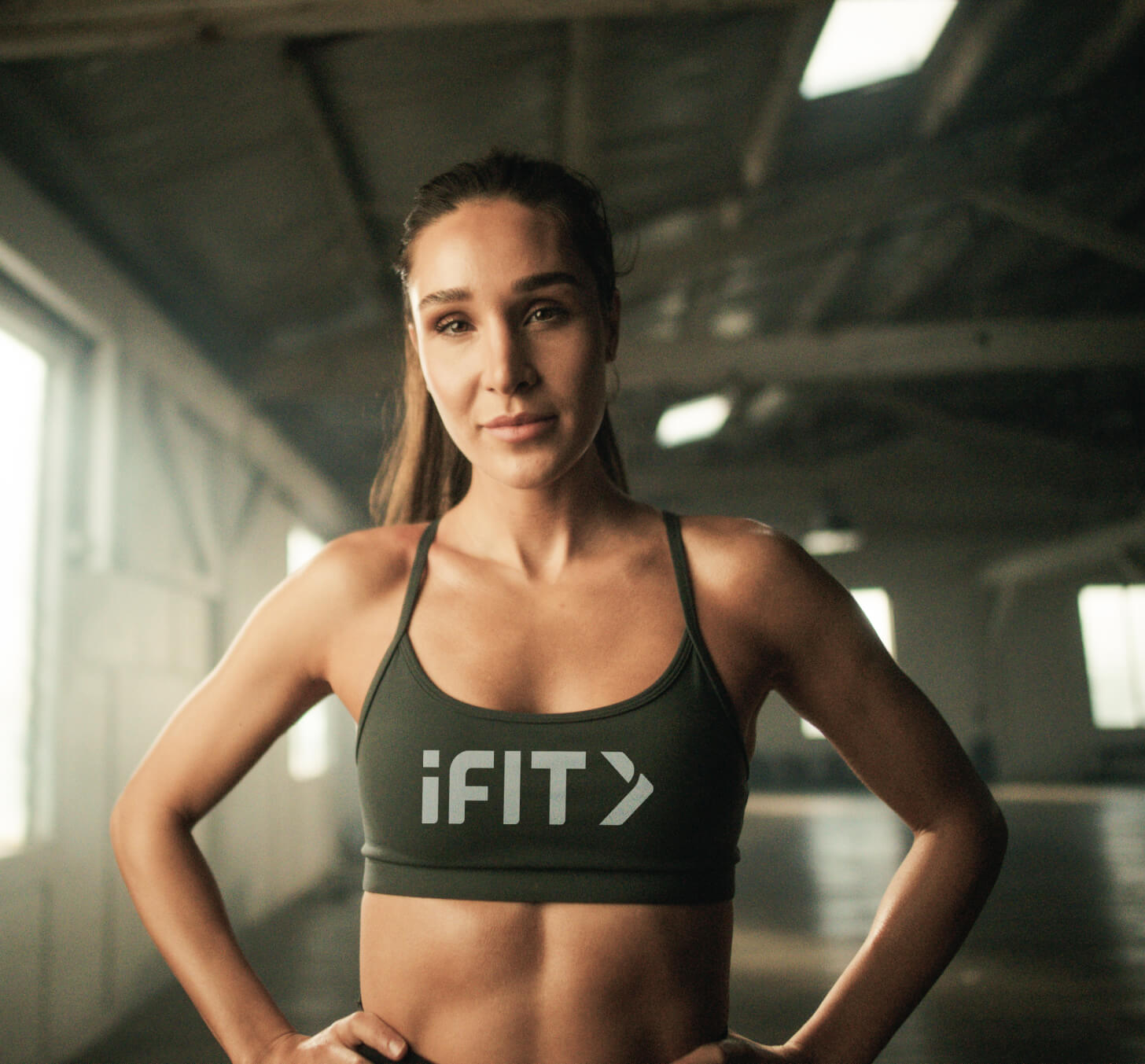
She’s a trailblazer in women’s fitness, has motivated millions through her books and social media, and is on a mission to help people everywhere discover the benefits of exercise. Most exciting of all? With the launch of the Dynamic High Intensity Series—her first workout series for iFIT—Kayla Itsines is about to become your new iFIT Trainer!
Kayla took the world of women’s fitness by storm when she co-founded Sweat, the wildly successful app-based fitness brand. She, along with a slew of other Sweat trainers, deliver accessible, high-intensity workouts that have helped women all over the world reach their fitness goals.
As your iFIT Trainer, Kayla’s goal is to help you gain confidence in prioritizing your wellness. She’s a straight-talking, firm believer in the fundamentals of health and fitness and will help you find meaningful, sustainable lifestyle changes to enhance your wellbeing.
What to expect
Train hard in this high-energy HIIT series with iFIT Trainer Kayla Itsines! The Dynamic High Intensity Series is designed to take your fitness to the next level. You’ll build strength and stamina as you rocket through quick workouts targeting specific muscle groups. As you become familiar with the fundamentals, Kayla will up the ante by introducing more complex exercises. She’ll keep the series fun, fresh, and full of energy!
About Sweat
Since launching in 2015, Sweat has become one of the largest online female fitness communities, reaching millions of women with Kayla’s unique fitness programming. Sweat empowers women by providing access to workouts, advice, and experiences created by women’s fitness experts. In July 2021, Sweat officially became part of the iFIT fitness family.
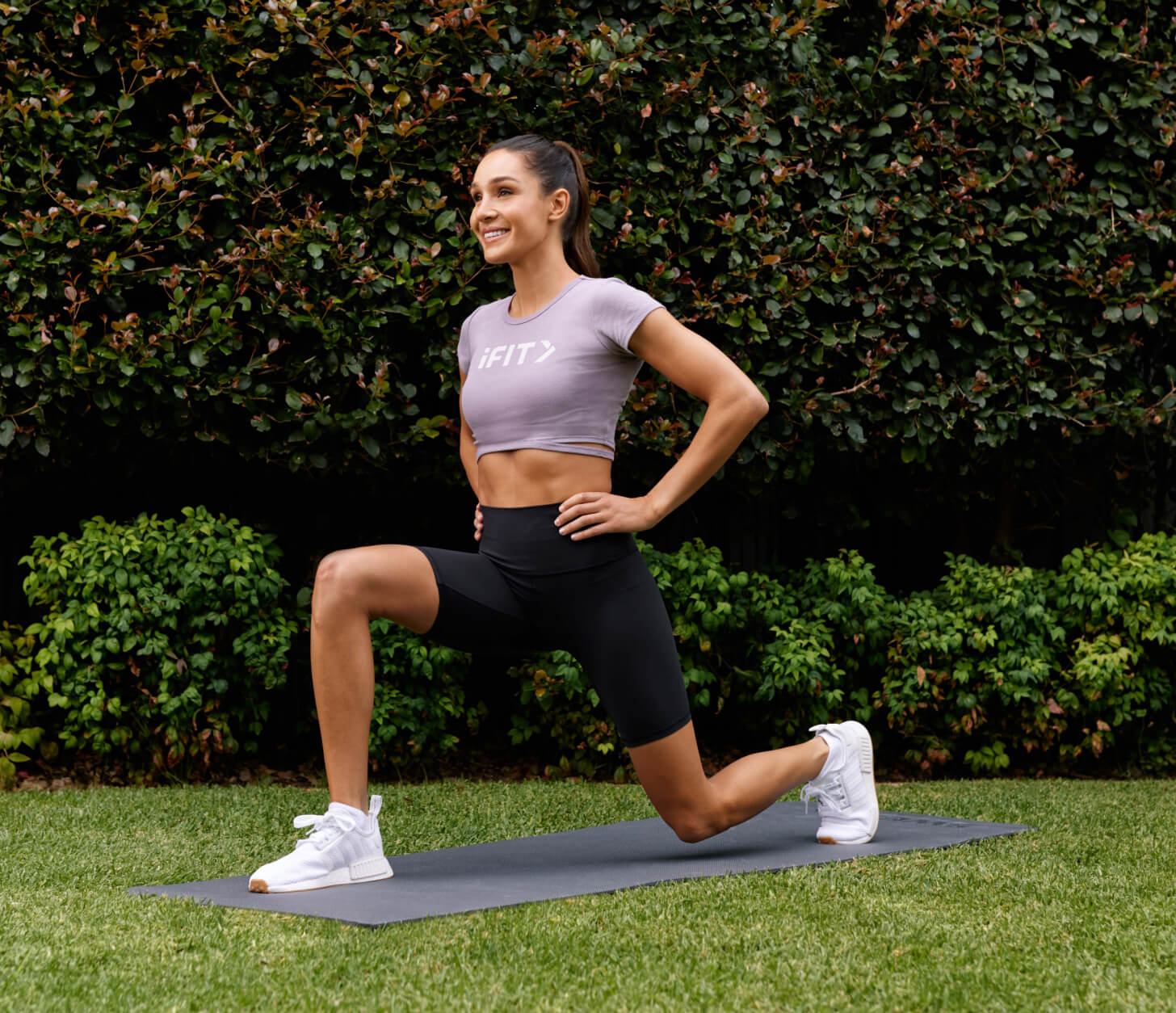
Like iFIT, Sweat is all about helping people improve their health by connecting them with trainers and workouts that inspire them. By working together, we are creating exciting new workouts that combine iFIT-enabled equipment and some of Sweat’s most beloved trainers, and we can’t wait to show you what we’re working on next!
Disclaimer: This blog post is not intended to replace the advice of a medical professional. The above information should not be used to diagnose, treat, or prevent any disease or medical condition. Please consult your doctor before making any changes to your diet, sleep methods, daily activity, or fitness routine. iFIT assumes no responsibility for any personal injury or damage sustained by any recommendations, opinions, or advice given in this article. Always follow the safety precautions included in the owner’s manual of your fitness equipment.
You might also like

iFIT Workout Series: January 2022
Welcome to 2022! We jumped into the New Year with the release of nine incredible workout series. Among them, Ashley Paulson and Knox Robinson’s marathons were released to let you relive the energy of race day. Kelsey Sheahan and AnaMaria Ramirez kept it tropical this month, whereas Jenny Fletcher, Chris Clark, and Stacie Clark made their way to the hills of Italy. We were also excited to welcome Kevin Scott and Kelsey Wells into the iFIT family with their new workout series. Here are this month’s workout series releases! Treadmill and elliptical workouts Bike workouts Rower workouts Strength workouts Who did you train with in January? Did you bike through Italy with Jenny Fletcher? Or practice yoga in Hawaii with AnaMaria Ramirez? Maybe you took on the challenge and ran Boston with Ashley! Get ready, iFIT, because this is just the beginning. We can’t wait to show you all of the exciting adventures you’ll take with your iFIT Trainers in 2022! Disclaimer: This blog post is not intended to replace the advice of a medical professional. The above information should not be used to diagnose, treat, or prevent any disease or medical condition. Please consult your doctor before making any changes to your diet, sleep methods, daily activity, or fitness routine. iFIT assumes no responsibility for any personal injury or damage sustained by any recommendations, opinions, or advice given in this article. Always follow the safety precautions included in the owner’s manual of your fitness equipment.
February 2, 2022

Series Feature: Dynamic High Intensity Series
Get ready to train hard and sweat it out with iFIT Trainer Kayla Itsines! In the Dynamic High Intensity Series, Kayla will coach you through 16 HIIT workouts designed to help you build strength, increase your stamina, and push your fitness to the next level. About iFIT Trainer Kayla Itsines Since creating and co-founding the Sweat App in 2015, iFIT Trainer Kayla Itsines has been a trailblazer in the fitness industry. Driven by a strong sense of community, Kayla has created one of the world's largest online fitness communities, reaching millions globally with her unique fitness programming. In 2021, she brought her training style to the iFIT platform. Kayla is excited to expand her community to help members discover health and wellness benefits and find the confidence to dream big and succeed. About the iFIT Studio With your iFIT Trainer cheering you on, incredible music (that you can change based on your musical interests!), and exciting workouts, the iFIT Studio delivers the electric energy of a studio workout directly to you! You’ll work one-on-one with Kayla in the iFIT Studio during this series. About the workouts Each week, Kayla will guide you through workouts that target your upper-body, lower-body, and abs, paired with a full-body bodyweight bootcamp. Kayla will turn up the intensity each week, encouraging you to challenge yourself throughout the series. Along the way, she’ll motivate you to push for “one more rep” to keep you feeling powerful! Ready to head to the iFIT Studio? Join the Dynamic High Intensity Series now! Join the Dynamic High Intensity Series Disclaimer: This blog post is not intended to replace the advice of a medical professional. The above information should not be used to diagnose, treat, or prevent any disease or medical condition. Please consult your doctor before making any changes to your diet, sleep methods, daily activity, or fitness routine. iFIT assumes no responsibility for any personal injury or damage sustained by any recommendations, opinions, or advice given in this article. Always follow the safety precautions included in the owner’s manual of your fitness equipment.
December 20, 2021

HIIT or Bootcamp: What’s the Difference Between These Full Body Workouts?
If you're not familiar with HIIT and bootcamp workouts, they're two of the most popular workout types in the fitness world today. They typically incorporate full body movements that are fast paced and use your own bodyweight, creating a serious cardio challenge for even the most seasoned athletes. Without the use of equipment, these types of workouts are quite accessible, making them a sought-after workout option for people worldwide. Bodyweight exercises are often underrated as they may not look as impressive as a heavy barbell squat or bench press. However, full body exercises that use your own weight, like jumping lunges, mountain climbers, and burpees, are just as effective in helping you reach your goals and improve your fitness level. While many people swear by the benefits of separating workouts by muscle group (i.e. upper body, lower body, and abs), workouts that target multiple muscle groups at once, like HIIT and bootcamp, can burn the same amount of calories, if not more. HIIT and bootcamp workouts often target your full body, which includes all of your major muscle groups. So, you’ll exercise your legs, arms, and core at the same time. Although similar, HIIT and bootcamp are not synonymous with one another. We’re taking a look at each of these workout types, highlighting what makes them worthwhile options for your next full body workout. Once you’ve learned more about HIIT and bootcamp, you can get started on a new fitness routine with iFIT full body workouts! What’s a HIIT workout? High-intensity interval training, or HIIT, is a type of workout that kicks up the tempo and makes you work hard to reach the end. A typical HIIT workout includes full body exercises like burpees, inchworms, squats, push-ups, and more. While HIIT workouts primarily involve sprints and jogging, they can also consist of cardio and strength training. What are some distinguishing characteristics of a HIIT workout? Your target heart rate during these workouts should be higher than it is during other cardio workouts. You should be breathing hard, sweating, and feeling depleted by the end of your workout. Because of the intensity of HIIT, the workouts are designed and intended to be short, accompanied by appropriate recoveries to help you maximize performance. When time is of the essence, HIIT full body workouts can bring the sweat-inducing exercise you want without spending over 30-35 minutes, excluding warmup and cooldown time. They can easily be done as a home workout or in a studio with a larger class. You don’t necessarily need a personal trainer to get a great HIIT workout in. Best of all, with quick HIIT workouts1, you can build your cardiorespiratory fitness right in your living room. HIIT workouts with iFIT You’ll find a variety of HIIT full body workout series on our fitness app, with locations ranging from the iFIT Studio to beautiful destinations all over the globe. Here are a few HIIT workout series for you to check out: Intro to HIIT Series with iFIT Trainer Ashley PaulsonBolivia Beginner Cardio HIIT Series with iFIT Trainer Hannah EdenMotivational HIIT Series with iFIT Trainer Dewayne MontgomeryRed Rock HIIT Series with iFIT Trainer Jonnie GaleVietnam Intermediate Cardio HIIT Series with iFIT Trainer Hannah Eden Each of these full body workout series are structured, challenging, and should leave you feeling drained! What’s a bootcamp workout? Is the military the first thing you think of when you hear “bootcamp?” If so, you’re right! Taking a few pages out of the military’s playbook, bootcamp full body workouts use calisthenic exercises like push-ups and lunges to create a high-intensity workout experience. While many bootcamp workout routines use bodyweight, others throw equipment like dumbbells or kettlebells into the mix. Though similar to HIIT workouts, bootcamp workouts have a few distinctive characteristics. Typically, they’re led by a personal trainer or coach. During the workout, the trainer will guide you through different exercises and call out the next exercise so you know when to move and when to take a breath. Also, bootcamp workouts are usually longer. An average class can range as long as 45-60 minutes, which may not be the best option for those new to fitness or those returning after an extended break or injury. However, the longer duration makes them slightly less intense than a HIIT workout. Since they are longer in duration than typical HIIT workouts, bootcamp workouts often have longer rest periods to accompany the lengthier workout session. Bootcamp workouts with iFIT If you’ve built up your stamina, iFIT bootcamp workouts may be a great challenge for you. One of our most popular bootcamp workout series—the French Polynesia Bootcamp Series—takes you to French Polynesia with iFIT Trainer Elyse Miller. Filmed in gorgeous locales, this workout series will make you work for those spectacular tropical views! Love workouts like these? There are so many more where that came from! Here are a few other bootcamp full body workouts that will put your fitness to the test: Bora Bora Bootcamp Series with iFIT Trainer Stacie ClarkLevel-Up Bootcamp Series with iFIT Trainer Jonnie GaleNext-Level Bootcamp Series with iFIT Trainer Paulo BarretoTest Your Limits Bootcamp Series with iFIT Trainer Gideon Akande These full body series should help you get into bootcamp shape! With your own iFIT personal trainer, you’ll work through curated sequences of bodyweight and cardio exercises that will improve your cardiovascular health, tone muscle, and get your body moving. How often should I do a full body workout? As you may already know, overuse injuries can arise from training too fast or too often. Naturally, this may be a concern of yours when thinking about exercising your entire body in a single workout. When it comes to full body classes, how many times a week should you do them? Will once a week suffice, or does that number need to increase to see results? Unfortunately, there’s not an easy, one-size-fits-all solution. You’ll find our recommendation down below, but it really depends on the person. In a study2 comparing split-body workout routines and total-body workout routines, the participants were separated into two groups—split-body and total-body. The split-body participants trained muscle groups one day a week versus the total-body group, which trained three days a week. At the end of the study, the total-body group showed greater muscle thickness, which may suggest benefits to higher frequency resistance training during the week. For this study, the full body workouts were the better option for muscle gain. So, how often should you do a full body workout? We’d recommend between 2-4 workouts per week, but ultimately, the best course of action is to listen to your body. If you’re feeling worn down, take a rest day and come back the following day (or the next) when you feel more refreshed. Also, it’s not a bad idea to break up your full body routine with isolated workouts, alternating between targeting your full body versus zoning in on specific muscle groups. Can I build strength and muscle with full body workouts? While they’re effective for cardiovascular health, full body workouts can also help you work on strength and build muscle. Another study examined the effect strength training frequency3 has on lean mass and strength. The high-frequency training group (HFT) trained each muscle group three days a week, whereas the low-frequency training (LFT) group trained just once a week. Over the course of eight weeks, the HFT and LFT group’s training routines focused on the pectoralis muscles, upper back, quadriceps, gastrocnemius, deltoids, biceps, triceps, and hamstrings. At the end of the strength training trial, researchers found no significant differences between the high-frequency and low-frequency groups. Each group had improvements in lean mass and strength! The LFT group shows us that full body training even just once a week can result in muscle and strength improvements. While it’s great to push yourself, it’s also important to know when to stop and reset. When coupling HIIT or bootcamp workouts with iFIT walking, running, or hiking workouts, you’ll need those two days of rest or longer, depending on how long you need to recuperate. Try an iFIT full body workout If you’re ready to join a HIIT or bootcamp full body workout series, iFIT offers a great selection of each workout type. When you download our fitness app and sign up for iFIT, you’ll gain access to an incredible selection of full body workouts. Each of these workouts is led by an iFIT Trainer who will educate you and continue to motivate you with every workout. Simply choose a workout that suits your style and level to start your fitness journey. iFIT offers a host of workout series that will keep you engaged and excited. The best full body workouts are those that make you feel empowered at the end, no matter the duration or difficulty. From short 20-minute workouts to longer ones, the iFIT app is a full body app that offers a variety of workout series. Whether you’re a beginner or more experienced, our personal trainers will be there for you to follow during your workouts, helping you on your journey to becoming a better version of yourself! References 1. Sabag, A., Little, J. P., & Johnson, N. A. (2021, March 24). Low‐volume high-intensity interval training for cardiometabolic health. The Physiological Society. https://physoc.onlinelibrary.wiley.com/doi/10.1113/JP281210. 2. Schoenfeld, B. J., Ratamess, N. A., Peterson, M. D., Contreras, B., & Tiryaki-Sonmez, G. (2015). Influence of resistance training frequency on muscular adaptations in well-trained men. Journal of Strength and Conditioning Research, 29(7), 1821–1829. https://doi.org/10.1519/JSC.0000000000000970. 3. Thomas, M. H., & Burns, S. P. (2016). Increasing lean mass and strength: a comparison of high frequency strength training to lower frequency strength training. International Journal of Exercise Science, 9(2), 159–167. https://www.ncbi.nlm.nih.gov/pmc/articles/PMC4836564/. Disclaimer: This blog post is not intended to replace the advice of a medical professional. The above information should not be used to diagnose, treat, or prevent any disease or medical condition. Please consult your doctor before making any changes to your diet, sleep methods, daily activity, or fitness routine. iFIT assumes no responsibility for any personal injury or damage sustained by any recommendations, opinions, or advice given in this article. Always follow the safety precautions included in the owner’s manual of your fitness equipment.
September 9, 2021